This is your Silicon Siege: China's Tech Offensive podcast.
Hey listeners, I'm Alexandra Reeves, diving straight into the Silicon Siege—China's relentless tech offensive that's got the US industry on high alert these past two weeks. Picture this: it's late March 2026, and I'm hunkered down in my San Francisco apartment, screens glowing with alerts from Mandiant and CrowdStrike feeds, as Beijing's cyber wolves circle Silicon Valley's crown jewels.
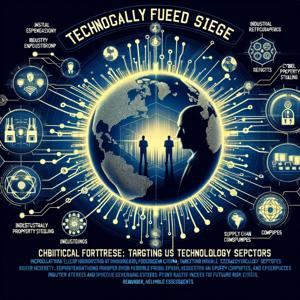
It kicked off around March 20th with a barrage of industrial espionage hits. According to FireEye's latest threat intel, a state-linked group dubbed Volt Typhoon—those sneaky operators out of Guangdong—probed deep into Nvidia's fabs in Santa Clara and Intel's Chandler plants. They didn't just ping servers; they exfiltrated terabytes of chip blueprints, aiming to leapfrog US leads in 2nm processes. I watched the logs light up: spear-phishing execs at Applied Materials, then lateral movement to R&D vaults. Classic PLA playbook.
By March 25th, intellectual property threats escalated. Microsoft's security blog detailed how Salt Typhoon variants swarmed cloud instances at OpenAI in San Francisco and Anthropic's Seattle hub, siphoning fine-tuning datasets for large language models. Baidu and Alibaba, flush from their AI boom as TechBuzz reports, weren't waiting for exports—they're reverse-engineering GPT architectures overnight. Industry expert Dmitri Alperovitch from CrowdStrike told Reuters, "This isn't theft; it's assimilation. China's absorbing our IP at warp speed, turning sanctions into subsidies."
Supply chain compromises hit peak chaos last week. CISA flashed warnings on April 1st about ShadowPad malware worming through TSMC's Arizona supplier networks, courtesy of APT41 from Shanghai. Huawei's proxies compromised firmware in Qualcomm modems destined for iPhones assembled in Zhengzhou—ironic, right? That ripple hit Apple's Cupertino HQ, delaying Q2 shipments. And get this: CommonWealth think tank notes how US chip curbs have boomeranged, with Chinese firms like SMIC in Shenzhen posting record AI chip revenues, building data centers in the Greater Bay Area that rival Nvidia's.
Strategically, it's a masterstroke. Beijing's 15th Five-Year Plan, unveiled via Xinhua on April 2nd, turbocharges hubs like Shanghai's Yangtze Delta and Beijing-Tianjin-Hebei into sci-tech fortresses. Robotics breakthroughs from Shenzhen labs, lauded by US execs at Los Angeles trade forums, show humanoid bots outperforming Boston Dynamics in efficiency. Expert Paul Triolo from Eurasia Group warns, "Future risks? By 2028, China dominates 60% of global semiconductors, fracturing US supply lines. Expect hybrid warfare: cyber plus economic blockades."
As your screens flicker under these shadows, listeners, the siege intensifies. Stay vigilant—patch those vulns, segment your nets.
Thanks for tuning in—subscribe now for more intel drops. This has been a Quiet Please production, for more check out quietplease.ai.
For more http://
This content was created in partnership and with the help of Artificial Intelligence AI.



 View all episodes
