
Sign up to save your podcasts
Or


Send us Fan Mail
Want to help someone with an eating disorder without turning into the food police? We sit down with eating disorder dietitian Kelly May to get painfully practical about what to say, what to avoid, and how to build support that actually reduces shame instead of fueling it.
We dig into the real goal of support: increasing openness, decreasing isolation, and protecting autonomy, not controlling meals or trying to “fix” recovery with the perfect line. Kelly breaks down why vague, unlimited support often collapses, and how simple agreements made outside the hard moments can change everything. We also talk about the tricky reality of friendships formed in treatment, how to handle food talk in the real world without moralizing nutrition, and why appearance-based comments like “you look healthier” can land so wrong.
You’ll hear concrete language you can use right away, including two phrases that keep trust when emotions spike: “How can I help?” and “I’m so glad you told me.” We also cover how to repair after you accidentally say something harmful, what effective boundaries look like when they include follow-through, and how supporters can address burnout by getting their own support and prioritizing the relationship, not just symptom management.
If you care about eating disorder recovery, HAES-aligned nutrition counseling, meal support, and mental health support that’s compassionate and realistic, this conversation is for you. Subscribe, share it with someone who supports a loved one, and leave a review with the one support question you wish more people would answer.
Show notes:
Trigger warning: this show is not medical, nutrition, or mental health treatment and is not a replacement for meeting with a Registered Dietitian, Licensed Mental Health Provider, or any other medical provider. You can find resources for how to find a provider, as well as crisis resources, in the show notes. Listener discretion is advised.
Resource links:
Alliance for Eating Disorders: https://www.allianceforeatingdisorders.com/
ANAD: https://anad.org/
NEDA: https://www.nationaleatingdisorders.org/
NAMI: https://nami.org/home
Action Alliance: https://theactionalliance.org/
NIH: https://www.nimh.nih.gov/
How to find a provider:
https://map.nationaleatingdisorders.org/
https://www.psychologytoday.com/us
https://www.healthprofs.com/us/nutritionists-dietitians?tr=Hdr_Brand
Suicide & crisis awareness hotline: call 988 (available 24/7)
Eating Disorder hotline: call or text 800-931-2237 (Phone line is available Monday-Thursday 11 am-9 pm ET and Friday 11 am-5 pm ET; text line is available Monday-Thursday 3-6 pm ET and Friday 1-5 pm ET)
If you are experiencing a psychiatric or medical emergency, please call 911 or go to your nearest emergency room.
Support the show
 View all episodes
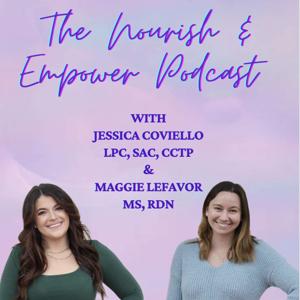
 By Jessica Coviello & Maggie Lefavor
Send us Fan Mail
Want to help someone with an eating disorder without turning into the food police? We sit down with eating disorder dietitian Kelly May to get painfully practical about what to say, what to avoid, and how to build support that actually reduces shame instead of fueling it.
We dig into the real goal of support: increasing openness, decreasing isolation, and protecting autonomy, not controlling meals or trying to “fix” recovery with the perfect line. Kelly breaks down why vague, unlimited support often collapses, and how simple agreements made outside the hard moments can change everything. We also talk about the tricky reality of friendships formed in treatment, how to handle food talk in the real world without moralizing nutrition, and why appearance-based comments like “you look healthier” can land so wrong.
You’ll hear concrete language you can use right away, including two phrases that keep trust when emotions spike: “How can I help?” and “I’m so glad you told me.” We also cover how to repair after you accidentally say something harmful, what effective boundaries look like when they include follow-through, and how supporters can address burnout by getting their own support and prioritizing the relationship, not just symptom management.
If you care about eating disorder recovery, HAES-aligned nutrition counseling, meal support, and mental health support that’s compassionate and realistic, this conversation is for you. Subscribe, share it with someone who supports a loved one, and leave a review with the one support question you wish more people would answer.
Show notes:
Trigger warning: this show is not medical, nutrition, or mental health treatment and is not a replacement for meeting with a Registered Dietitian, Licensed Mental Health Provider, or any other medical provider. You can find resources for how to find a provider, as well as crisis resources, in the show notes. Listener discretion is advised.
Resource links:
Alliance for Eating Disorders: https://www.allianceforeatingdisorders.com/
ANAD: https://anad.org/
NEDA: https://www.nationaleatingdisorders.org/
NAMI: https://nami.org/home
Action Alliance: https://theactionalliance.org/
NIH: https://www.nimh.nih.gov/
How to find a provider:
https://map.nationaleatingdisorders.org/
https://www.psychologytoday.com/us
https://www.healthprofs.com/us/nutritionists-dietitians?tr=Hdr_Brand
Suicide & crisis awareness hotline: call 988 (available 24/7)
Eating Disorder hotline: call or text 800-931-2237 (Phone line is available Monday-Thursday 11 am-9 pm ET and Friday 11 am-5 pm ET; text line is available Monday-Thursday 3-6 pm ET and Friday 1-5 pm ET)
If you are experiencing a psychiatric or medical emergency, please call 911 or go to your nearest emergency room.
Support the show