
Sign up to save your podcasts
Or


As Canada prepares to transition from summer to fall and winter, the hope is that the COVID-19 pandemic can be controlled enough to prevent a severe spike in infections that could overwhelm the health-care system.
"The scenario that we're in, and that is likely the best-case scenario for some time to come, is what's known as the slow burn – where we continue to have sporadic cases and occasional outbreaks but we don't get to the point where our health-care system is overwhelmed," says Vivek Goel, a professor at the University of Toronto's Dalla Lana School of Public Health and a special adviser to the president and provost, helping to guide the university's COVID-19 planning efforts.
In episode 24 of his podcast on the pandemic, Goel – a renowned public health expert and founding head of Public Health Ontario, which was set up in response to the 2003 SARS outbreak – says the 'slow burn' scenario will mean learning to live with COVID-19 for some time to come, as it could be years before a global immunization campaign is completed.
"We have to get back to our usual activities with the necessary precautions – staying home if we have symptoms, practicing regular hand hygiene, respiratory etiquette and wearing a mask when necessary and recommended."
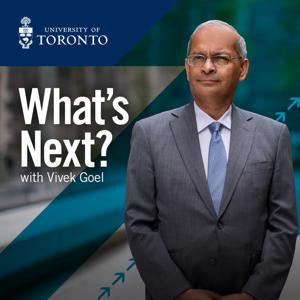
The COVID-19: What's Next podcast is created by Goel, the founding head of Public Health Ontario, which was set up in response to the 2003 SARS outbreak, in collaboration with a University of Toronto Communications team led by producer Lisa Lightbourn.
Note: The information in this podcast is current as of the posting date. Listeners should consult their local public health agency for the latest information in their jurisdiction.
 View all episodes
 By University of Toronto
As Canada prepares to transition from summer to fall and winter, the hope is that the COVID-19 pandemic can be controlled enough to prevent a severe spike in infections that could overwhelm the health-care system.
"The scenario that we're in, and that is likely the best-case scenario for some time to come, is what's known as the slow burn – where we continue to have sporadic cases and occasional outbreaks but we don't get to the point where our health-care system is overwhelmed," says Vivek Goel, a professor at the University of Toronto's Dalla Lana School of Public Health and a special adviser to the president and provost, helping to guide the university's COVID-19 planning efforts.
In episode 24 of his podcast on the pandemic, Goel – a renowned public health expert and founding head of Public Health Ontario, which was set up in response to the 2003 SARS outbreak – says the 'slow burn' scenario will mean learning to live with COVID-19 for some time to come, as it could be years before a global immunization campaign is completed.
"We have to get back to our usual activities with the necessary precautions – staying home if we have symptoms, practicing regular hand hygiene, respiratory etiquette and wearing a mask when necessary and recommended."
The COVID-19: What's Next podcast is created by Goel, the founding head of Public Health Ontario, which was set up in response to the 2003 SARS outbreak, in collaboration with a University of Toronto Communications team led by producer Lisa Lightbourn.
Note: The information in this podcast is current as of the posting date. Listeners should consult their local public health agency for the latest information in their jurisdiction.