
Sign up to save your podcasts
Or

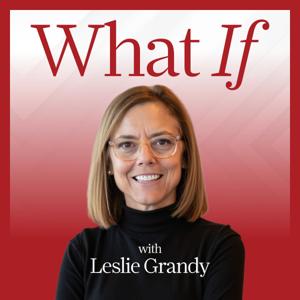

What if the biggest barrier to innovation isn't a lack of ideas, but the way leadership signals who's allowed to have them?
In this episode of What If?, Leslie Grandy explores what creative leadership actually looks like inside organizations and why so many companies mistake optics for impact when it comes to innovation.
When leaders ask "what if?", they do more than spark ideas. They create psychological permission the signal that curiosity, challenge, and early thinking are not only allowed, but expected. Without that signal, teams default to safe bets, incremental improvements, and inherited assumptions that quietly slow innovation to a crawl.
Drawing from her experience at Amazon, T-Mobile, and Best Buy, Leslie breaks down:
You'll hear a behind-the-scenes story of T-Mobile's Cameo product, an idea that failed not because it lacked insight, but because the organization wasn't designed to support what it imagined. Leslie contrasts that with Amazon's dual operating model: data-driven optimization paired with judgment-based invention, and why Jeff Bezos warned against the "tyranny of data."
This episode is for leaders who want more than performative innovation. For teams tired of being reactive. And for organizations ready to stop outsourcing creativity to labs, decks, or consultants and start embedding it everywhere.
Because creative leadership isn't about protecting existing systems. It's about consistently inviting better ones to emerge.
Reflection question: What if the signal your culture is sending isn't "be creative," but "don't rock the boat"?
 View all episodes
 By Leslie Grandy
What if the biggest barrier to innovation isn't a lack of ideas, but the way leadership signals who's allowed to have them?
In this episode of What If?, Leslie Grandy explores what creative leadership actually looks like inside organizations and why so many companies mistake optics for impact when it comes to innovation.
When leaders ask "what if?", they do more than spark ideas. They create psychological permission the signal that curiosity, challenge, and early thinking are not only allowed, but expected. Without that signal, teams default to safe bets, incremental improvements, and inherited assumptions that quietly slow innovation to a crawl.
Drawing from her experience at Amazon, T-Mobile, and Best Buy, Leslie breaks down:
You'll hear a behind-the-scenes story of T-Mobile's Cameo product, an idea that failed not because it lacked insight, but because the organization wasn't designed to support what it imagined. Leslie contrasts that with Amazon's dual operating model: data-driven optimization paired with judgment-based invention, and why Jeff Bezos warned against the "tyranny of data."
This episode is for leaders who want more than performative innovation. For teams tired of being reactive. And for organizations ready to stop outsourcing creativity to labs, decks, or consultants and start embedding it everywhere.
Because creative leadership isn't about protecting existing systems. It's about consistently inviting better ones to emerge.
Reflection question: What if the signal your culture is sending isn't "be creative," but "don't rock the boat"?