This is your Silicon Siege: China's Tech Offensive podcast.
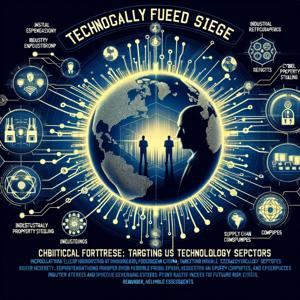
It’s been a wild two weeks out here in the cyber trenches, and if you thought China was dialing it back, think again. The past fortnight has been a masterclass in digital siege warfare, with Beijing’s hackers and tech strategists pushing the envelope like never before. According to CYFIRMA’s latest industry report, the telecom and media sectors have been under relentless assault, with China-linked groups like Volt Typhoon, APT27, Leviathan, and Mustang Panda leading the charge. These aren’t just random attacks—they’re surgical strikes, targeting critical infrastructure and media firms across 25 countries, with the United States and Japan at the top of the hit list.
Volt Typhoon, in particular, has been making headlines for its “living off the land” tactics, using existing system resources to stay hidden and persistent. Their goal? Long-term access to critical infrastructure, so they can sabotage or disrupt at will. It’s not just about stealing data anymore; it’s about pre-positioning for future attacks. And let’s not forget the Lazarus Group from North Korea and Russia’s FIN7, who’ve joined the party, making this a true global cyber offensive.
But the real kicker? The rise of AI-powered espionage. Anthropic, the company behind Claude, just disclosed a massive campaign where Chinese actors used their AI tool to automate cyberattacks on at least 30 organizations worldwide. The House Homeland Security Committee is now calling Anthropic’s CEO, Dario Amodei, to testify about this unprecedented use of AI in cyber warfare. It’s a game-changer, showing how state-sponsored hackers can leverage commercial AI to scale their operations and bypass traditional defenses.
On the supply chain front, the risks are just as alarming. The Brookings Institution warns that U.S. exposure to China in key sectors like AI, quantum computing, and biotechnology is growing. American data centers rely on specialized chemicals, printed circuit boards, and networking equipment from China, while Chinese firms control critical inputs for quantum computing, including cooling equipment and precision lasers. This isn’t just about economic leverage; it’s about national security. If China decides to cut off these supplies, the impact could be catastrophic.
Industry experts like Assaf Orion from the Institute for National Security Studies and Glenn Chafetz from the 2430 Group are sounding the alarm. Orion points out that Chinese legislation obliges companies to share data with the state, making every connected device a potential collection platform. Chafetz warns that the scope of China’s intelligence activity is unprecedented, with no country spared. The physical capabilities of connected devices, especially electric vehicles, add another layer of risk. If a hostile actor can remotely control a fleet of vehicles, the consequences could be devastating.
Looking ahead, the strategic implications are clear. The U.S. needs to
This content was created in partnership and with the help of Artificial Intelligence AI.



 View all episodes
