
Sign up to save your podcasts
Or

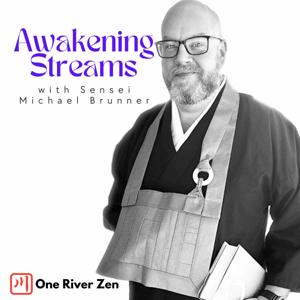

In this episode of Awakening Streams, Sensei Sōen Michael Brunner offers a Zen teishō on Mumonkan Case 9, “Daitsu Chishō.” The koan presents a striking paradox: Daitsu Chishō Buddha sat in meditation for ten kalpas, yet did not attain Buddhahood. The monk’s question—why not?—reveals a deeply rooted assumption about practice, effort, time, and spiritual arrival.
The teishō opens by naming a common experience in Zen practice. When life feels reactive, misaligned, or difficult, we assume something essential is missing. We take up practice with sincerity—sitting, studying, meeting in dokusan, working with koans—often carrying a quiet belief that if we practice long enough or purify ourselves enough, something will finally click. Awakening is imagined as a future result, produced over time.
Turning to the case, Sensei Sōen examines how this assumption shapes the monk’s confusion. Ten kalpas—an unimaginably long span of time—should be more than sufficient if Buddhahood were something attained through effort. Rather than correcting the amount of time, Priest Jō of Kōyō steps completely outside the framework of cause, effect, and spiritual progress. His response—“Because he is a non-attained Buddha”—reorients the entire question.
The teishō explores how the name Daitsu Chishō itself points beyond a personal narrative. Daitsu (“pervading everywhere”) and Chishō (“wisdom”) describe not an individual accomplishment, but the nature of reality itself: a wisdom already complete, already functioning, and never absent. From this essential point of view, Buddhahood is not something produced by practice or time, even though wholehearted practice remains vital and necessary.
Drawing on classical Zen teaching and lived examples, Sensei Sōen points to how reality responds immediately and completely, without deliberation or attainment. Life itself answers—before thought, before explanation, before spiritual achievement. What obscures this is not a lack of effort, but the assumption that awakening must arrive later, under different conditions.
As the talk unfolds, the structure of attainment begins to collapse. Questions and answers lose their footing. The context of the koan shifts from abstract doctrine to lived life itself—work, relationships, the body, and time unfolding as it is. The non-attained Buddha is revealed not as a failure, but as the expression of enlightenment that has never needed to be acquired.
The teishō concludes by returning the koan to the listener. If nothing was ever missing, what does practice mean now? The case does not offer an answer to think through, but an invitation to see directly—by letting go of how awakening is supposed to look and allowing it to manifest exactly where one stands.
Key ThemesMumonkan (Gateless Gate), Case 9
Daitsu Chishō and the non-attained Buddha
Practice and the assumption of spiritual arrival
Time, effort, and the illusion of progress
Buddhahood as function, not achievement
Koan practice as lived encounter
Letting go of how awakening “should” appear
About Awakening StreamsAwakening Streams is the Zen teaching podcast of One River Zen, a Soto Zen practice community based in Ottawa, Illinois. The podcast features teishō, koan teachings, and reflections grounded in classical Zen and everyday practice.
🔹 Learn more: https://oneriverzen.org
🔹 Teaching archive: https://oneriverzen.org/daily-zen
🪷 Awakening Streams: The One River Zen Podcast
Teachings and reflections with Sensei Michael Brunner (Sōen) of One River Zen Center, 121 E Prospect St, Ottawa IL 61350.
🌐 Learn more & join practice: https://www.oneriverzen.org
🎧 Listen to more episodes: Awakening Streams Podcast
🙏 Support the Sangha: https://www.oneriverzen.org/donate
#SenseiMichaelBrunner #MichaelBrunnerOttawa #OneRiverZen #ZenKoan #ZenPodcast #OttawaIL #SotoZen
 View all episodes
 By Sensei Michael Brunner, One River Zen
In this episode of Awakening Streams, Sensei Sōen Michael Brunner offers a Zen teishō on Mumonkan Case 9, “Daitsu Chishō.” The koan presents a striking paradox: Daitsu Chishō Buddha sat in meditation for ten kalpas, yet did not attain Buddhahood. The monk’s question—why not?—reveals a deeply rooted assumption about practice, effort, time, and spiritual arrival.
The teishō opens by naming a common experience in Zen practice. When life feels reactive, misaligned, or difficult, we assume something essential is missing. We take up practice with sincerity—sitting, studying, meeting in dokusan, working with koans—often carrying a quiet belief that if we practice long enough or purify ourselves enough, something will finally click. Awakening is imagined as a future result, produced over time.
Turning to the case, Sensei Sōen examines how this assumption shapes the monk’s confusion. Ten kalpas—an unimaginably long span of time—should be more than sufficient if Buddhahood were something attained through effort. Rather than correcting the amount of time, Priest Jō of Kōyō steps completely outside the framework of cause, effect, and spiritual progress. His response—“Because he is a non-attained Buddha”—reorients the entire question.
The teishō explores how the name Daitsu Chishō itself points beyond a personal narrative. Daitsu (“pervading everywhere”) and Chishō (“wisdom”) describe not an individual accomplishment, but the nature of reality itself: a wisdom already complete, already functioning, and never absent. From this essential point of view, Buddhahood is not something produced by practice or time, even though wholehearted practice remains vital and necessary.
Drawing on classical Zen teaching and lived examples, Sensei Sōen points to how reality responds immediately and completely, without deliberation or attainment. Life itself answers—before thought, before explanation, before spiritual achievement. What obscures this is not a lack of effort, but the assumption that awakening must arrive later, under different conditions.
As the talk unfolds, the structure of attainment begins to collapse. Questions and answers lose their footing. The context of the koan shifts from abstract doctrine to lived life itself—work, relationships, the body, and time unfolding as it is. The non-attained Buddha is revealed not as a failure, but as the expression of enlightenment that has never needed to be acquired.
The teishō concludes by returning the koan to the listener. If nothing was ever missing, what does practice mean now? The case does not offer an answer to think through, but an invitation to see directly—by letting go of how awakening is supposed to look and allowing it to manifest exactly where one stands.
Key ThemesMumonkan (Gateless Gate), Case 9
Daitsu Chishō and the non-attained Buddha
Practice and the assumption of spiritual arrival
Time, effort, and the illusion of progress
Buddhahood as function, not achievement
Koan practice as lived encounter
Letting go of how awakening “should” appear
About Awakening StreamsAwakening Streams is the Zen teaching podcast of One River Zen, a Soto Zen practice community based in Ottawa, Illinois. The podcast features teishō, koan teachings, and reflections grounded in classical Zen and everyday practice.
🔹 Learn more: https://oneriverzen.org
🔹 Teaching archive: https://oneriverzen.org/daily-zen
🪷 Awakening Streams: The One River Zen Podcast
Teachings and reflections with Sensei Michael Brunner (Sōen) of One River Zen Center, 121 E Prospect St, Ottawa IL 61350.
🌐 Learn more & join practice: https://www.oneriverzen.org
🎧 Listen to more episodes: Awakening Streams Podcast
🙏 Support the Sangha: https://www.oneriverzen.org/donate
#SenseiMichaelBrunner #MichaelBrunnerOttawa #OneRiverZen #ZenKoan #ZenPodcast #OttawaIL #SotoZen