
Sign up to save your podcasts
Or


In this second installment, we push past the outer edges of individual galaxies to the largest, most violent events since the Big Bang: colliding galaxy clusters.
For years, mainstream astronomers thought they had a "smoking gun" that completely buried modified gravity.
This was the famous Bullet Cluster, where an invisible mass seemed to sail right through a cosmic smash-up, leaving normal matter far behind, a classic hallmark of dark matter.
But the plot thickens. Armed with groundbreaking 2025-2026 data from the James Webb Space Telescope, the debate has been blown wide open.
While new imagery reveals our universe's invisible components to be more "ghostly" than ever, alternative gravity advocates are fighting back with a provocative claim: dark matter simulations can't explain how these massive structures are moving so fast.
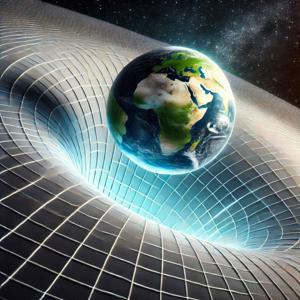
We dive into the mind-bending mathematical tricks, trying to prove that "dark matter" isn't a physical particle at all, but a geometric quirk of spacetime itself.
It’s a high-stakes theoretical showdown where fixing the early universe might just break our reality today.
 View all episodes
 By TheTuringApp.com
5
33 ratings
In this second installment, we push past the outer edges of individual galaxies to the largest, most violent events since the Big Bang: colliding galaxy clusters.
For years, mainstream astronomers thought they had a "smoking gun" that completely buried modified gravity.
This was the famous Bullet Cluster, where an invisible mass seemed to sail right through a cosmic smash-up, leaving normal matter far behind, a classic hallmark of dark matter.
But the plot thickens. Armed with groundbreaking 2025-2026 data from the James Webb Space Telescope, the debate has been blown wide open.
While new imagery reveals our universe's invisible components to be more "ghostly" than ever, alternative gravity advocates are fighting back with a provocative claim: dark matter simulations can't explain how these massive structures are moving so fast.
We dive into the mind-bending mathematical tricks, trying to prove that "dark matter" isn't a physical particle at all, but a geometric quirk of spacetime itself.
It’s a high-stakes theoretical showdown where fixing the early universe might just break our reality today.

836 Listeners

12,100 Listeners

47,654 Listeners

2,062 Listeners
69 Listeners
7 Listeners

1,748 Listeners