
Sign up to save your podcasts
Or



In this episode of Data Stakes, host Debbie sits down with Michelle Taylor, Senior Research Analyst at the National Community College Benchmarking Institute (NCCBI). They discuss the origins and 20-year evolution of the National Community College Benchmarking Project (NCCBP) and why it remains an essential, adaptable resource for two-year institutions of all sizes.
Michelle breaks down how community colleges are leveraging customized benchmarking data to make smarter resource allocation decisions, track return on investment (ROI), and navigate modern higher education challenges like the enrollment cliff. Key Takeaways:
Data Stakes is sponsored by the Data Analytics Alliance for Higher Education.
Is data ever truly neutral? In this episode of Data Stakes, Jeremy Goodman—founder of Jeremy Goodman Consulting and former VP at Olin College of Engineering—joins Debbie to challenge the long-held "Switzerland" myth in Institutional Research.
Drawing on his unique background in both theater and higher education, Jeremy explains how applying improv techniques, like active listening and audience empathy, can radically improve how data professionals communicate their findings to campus stakeholders. Beyond just presenting reliable numbers, the conversation explores the importance of bringing your holistic identity to the table. Jeremy and Debbie discuss balancing personal perspective with professional integrity, the real-world human impact of rigid data categorizations, and why meeting an audience at their current "data literacy" level is the true key to driving strategic change.
Finally, they reflect on the often-introverted nature of the IR field and share actionable ways veteran professionals can better welcome newcomers who might be battling imposter syndrome.
Sponsored by the Data Analytics Alliance for Higher Education. Have questions about today's conversation? Reach out to Debbie at [email protected].
Is your Institutional Research (IR) or Institutional Effectiveness (IE) office feeling the strain of endless, urgent data requests? In this special roundtable episode of the Data Stakes podcast, host Debbie Phelps sits down with three higher education data experts to tackle one of the most difficult—yet critical—skills for data professionals to master: saying "no."
Following their packed-house session at the AIR Forum, Katherine Gipalo (Florida State University), Samantha Nix (Florida State University), and Samantha James (Georgia Tech) share their experiences and strategies for managing stakeholder expectations, overcoming the fear of failure, and protecting data teams from burnout.
In this episode, we cover:
Whether you're running a one-person shop or leading a growing team, this conversation is packed with actionable advice to help you regain control of your data portfolio and build a healthier, more sustainable data culture on your campus.
Listen to Episode 15 now!
(Data Stakes is sponsored by the Data Analytics Alliance for Higher Education. To learn more about our upcoming quarterly meeting or today's topic, reach out to [email protected])
How do you turn massive amounts of public data into a customized, actionable benchmarking strategy that campus leadership actually understands?
In this episode of Data Stakes, Debbie is joined by Jon Gallegos, Data Analyst at WSU Tech, to unpack his recent AIR Forum presentation, "The Benchmarking Process from Initiation to Implementation." Jon walks us through the exact technical and strategic steps he used to build a benchmarking data store from the ground up.
Key Takeaways:
Plus, Jon discusses a custom calculation—the Outcome Efficiency Index—that bridges the gap between campus finances and student awards.
In this episode of Data Stakes, host Debbie sits down with Dr. Jason Simon, co-founder of SCL Impact LLC, to explore the missing ingredient in higher education analytics: campus culture. While institutions often pour massive resources into technical tools and data warehouses, Dr. Simon argues that "adaptive challenges"—the human elements, relationships, and institutional norms—are what actually dictate success or failure.
Tune in as they discuss why data professionals need to step out of their silos, the importance of asking "why" before pulling data, and actionable strategies for building robust data literacy across campus. Whether you are an IR professional looking to expand your influence or a campus leader aiming to make data a non-negotiable in decision-making, this conversation offers a powerful roadmap for moving data ownership from "me to we."
In this episode of Data Stakes, Debbie is joined by Lee Howell, Senior Director of Administrative Operations and Logistics at Florida State University, to discuss a transformative framework for institutional research: Metric Strategies.
Lee breaks down how higher education institutions can shift their mindset by empowering staff across all departments to "find their place" in the data ecosystem. They explore how to move data ownership from a siloed "me" to a collaborative "we," the importance of challenging inherited legacy processes, and how artificial intelligence is quickly becoming an essential part of the metric strategies toolkit.
Key Takeaways:
(Note: Listeners can find the slide deck from Lee’s 2026 AIR Forum presentation linked in the show notes below!)
Data governance doesn't have to be intimidating. All too often, the topic induces sighs and eye-rolls across higher education campuses. But what if data governance was viewed not as a set of restrictive rules, but as a framework to empower your colleagues and maximize institutional value?
In this episode of Data Stakes, host Debbie sits down with Dr. Tara Webb, Associate Vice President and Chief Data Officer at Rhodes College, to demystify the complexities of data governance. Drawing from her highly acclaimed presentation at the 2025 AIR Forum, Dr. Webb shares her "Adaptive Data Governance" framework—an iterative, just-in-time approach that prioritizes progress over perfection.
Whether you are trying to convince skeptical colleagues to buy into a new process or are looking for ways to build a single "source of truth" on your campus, this episode is packed with practical, actionable advice for professionals at any stage of their data maturity journey.
Key Takeaways in this Episode:
Resources & Links Mentioned:
Is your institution’s latest data technology rollout feeling more like a failing relationship than a lasting partnership? You aren't alone. In this episode of Data Stakes, Debbie sits down with John Ingram—Assistant Director of Institutional Research at Delaware Valley University and chapter author of the upcoming book, Priority Partners: Turning Vendor Spending into Mission Strengths.
John and Debbie dive deep into the often-overlooked "Effectiveness Equation" of vendor management in higher education. Using a highly relatable dating analogy, they explore why technical success doesn't always equal operational success. Together, they unpack how institutions can show up as better partners by defining success early, prioritizing data governance, and understanding that lasting alignment—not just flashy tools—is the true foundation of a multi-year tech marriage.
Whether your campus is vetting a new data system or actively trying to rescue an off-track implementation, this episode provides actionable advice and a practical framework to ensure both you and your vendor are driving toward the same goals.
Key Takeaways in this Episode:
In this episode of Data Stakes, Debbie is joined by Dr. Ken Matthews, Vice President of Academic Affairs and Institutional Effectiveness at St. Cloud Technical and Community College, to discuss how higher education institutions can transform accreditation from a simple compliance checklist into a powerful engine for institutional growth. They dive into the intersection of knowledge management, strategic planning, and the evolving challenges facing higher ed today.
Key topics covered in this episode:
Episode Summary Higher education is evolving at a faster rate than anyone could have anticipated. How can institutions move past simply reacting to change and start actively anticipating it?
In this episode of Data Stakes, Debbie sits down with Dr. Viviana Unda, Head of Institutional Research and Planning at El Camino College, to explore the transformative power of "Futures Thinking" in higher education. Drawing on her recent coursework from the University of Cambridge, Dr. Unda breaks down the crucial differences between standard forecasting and strategic foresight.
Together, they discuss how to build campus buy-in for future-focused initiatives, why data visualizations are never truly "neutral," and how applying frameworks like the Futures Triangle can revolutionize how institutional research teams tell data stories. Dr. Unda also shares exclusive insights from her upcoming chapter in Priority Partners, offering practical advice on building stronger, outcome-aware relationships with third-party vendors.
Key Takeaways & Episode Highlights
Resources Mentioned in this Episode:
About the Sponsor Data Stakes is sponsored by the Data Analytics Alliance for Higher Education. Visit our website to learn more about our upcoming quarterly meeting featuring Dr. Brent Drake from the John Gardner Institute, where we'll be discussing the impact of AI on data analytics.
Have questions about today's conversation? Reach out to Dave Phelps at Datatelligent.
From the publisher's feed
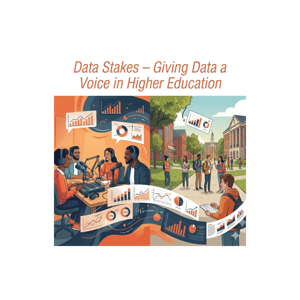
Join host Debbie Phelps for Data Stakes – Giving Data a Voice in Higher Education, a podcast dedicated to empowering institutional researchers and higher education leaders.…
In each episode, we delve into the pressing topics that shape the modern campus, from the intricacies of mandatory reporting to the strategies that support student success. You will hear directly from the people in the roles—peers in institutional research and effectiveness—sharing their personal journeys, hard-won success stories, and the critical lessons they have learned along the way. Whether you are looking to improve your data storytelling or streamline your operations, Table Stakes offers the actionable insights you need.
What we discuss: