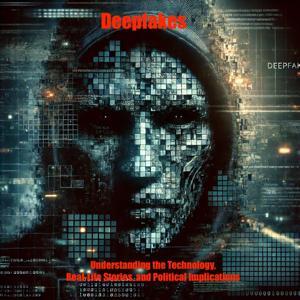
The Rise of Deepfakes: Understanding the Technology, Real-Life Stories, and Political Implications In the rapidly evolving landscape of digital media, few technologies have caused as much concern and fascination as deepfakes. These highly realistic, AI-generated audio and visual manipulations have captured the public's imagination, sparking debates about ethics, security, and the very nature of truth in the digital age. This article explores the intricacies of deepfakes, their potential dangers, particularly in the political sphere, and some real-life stories that illustrate their profound impact. The emergence of deepfakes has not only raised concerns about misinformation but has also opened up new possibilities in various fields, from entertainment to education. As the technology becomes more accessible, its applications continue to expand, blurring the lines between reality and fiction in ways that were once unimaginable. This dual nature of deepfakes - as both a potential threat and a powerful tool - underscores the complexity of the challenges we face in the digital age. What Are Deepfakes? Definition and Origins Deepfakes are synthetic media created using deep learning, a subset of artificial intelligence (AI). The term "deepfake" is a portmanteau of "deep learning" and "fake," reflecting the technology's ability to create convincing forgeries of images, videos, and audio. The technology behind deepfakes involves the use of neural networks, particularly Generative Adversarial Networks (GANs), which can learn to replicate the features of a source material and apply them to new content. The origins of deepfake technology can be traced back to academic research in machine learning and computer vision. However, it was the democratization of these tools through open-source software and increased computing power that led to the proliferation of deepfakes we see today. This accessibility has sparked both innovation and concern, as the barrier to entry for creating convincing deepfakes continues to lower. GANs consist of two parts: the generator and the discriminator. The generator creates fake content, while the discriminator evaluates the content's authenticity. Through an iterative process, the generator improves its output until the discriminator can no longer distinguish between real and fake, resulting in highly convincing deepfakes. This adversarial process is at the heart of deepfake creation, allowing for the generation of increasingly realistic synthetic media. As the technology improves, the quality of deepfakes has reached a point where they can fool not only human observers but also some digital detection systems. The rapid advancement of deepfake technology has been driven by several factors, including improvements in AI algorithms, the availability of large datasets for training, and the development of more powerful graphics processing units (GPUs). These technological advancements have made it possible to create deepfakes that are i
This content was created in partnership and with the help of Artificial Intelligence AI.



 View all episodes
