
Sign up to save your podcasts
Or


The fastest way to lose trust is to “win” with power. We start with a simple question that shows up everywhere from leadership meetings to group chats: how do you disagree with people without becoming disagreeable? Along the way, we call out a pattern that feels normal right now, using authority, volume, or status to force agreement, and we name the real cost: you create compliance, not commitment, and you train people to stop thinking out loud.
We talk through why power moves can look effective in the moment but limit growth over time. A team built on yes-people can’t adapt, and a leader who always needs to be right eventually hits a wall. One of the most helpful reframes we’ve ever heard anchors the conversation: do you want to be right, or do you want to be in relationship? We unpack what “relationship” means in a practical workplace sense, keeping enough respect and curiosity to understand another perspective and stay effective together.
Then we get tactical. We lean on a simple decision approach that emphasizes options, because options turn conflict into collaboration. You’ll hear specific phrases you can use with a boss when you’re nervous to speak up, like “I see this differently. Are you willing to have a conversation about it?” and “Can we explore other options, or has the decision been made?” We also cover how to handle peer conflict, how to avoid the stuff-it-then-explode cycle, and how to decide when an issue is truly worth pushing on.
If you want better conflict resolution, stronger communication skills, and more psychological safety on your team, hit play.
 View all episodes
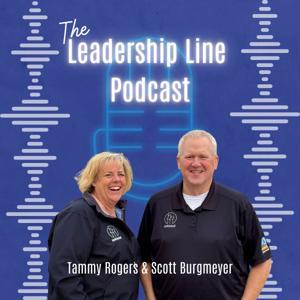
 By Tammy Rogers and Scott Burgmeyer
The fastest way to lose trust is to “win” with power. We start with a simple question that shows up everywhere from leadership meetings to group chats: how do you disagree with people without becoming disagreeable? Along the way, we call out a pattern that feels normal right now, using authority, volume, or status to force agreement, and we name the real cost: you create compliance, not commitment, and you train people to stop thinking out loud.
We talk through why power moves can look effective in the moment but limit growth over time. A team built on yes-people can’t adapt, and a leader who always needs to be right eventually hits a wall. One of the most helpful reframes we’ve ever heard anchors the conversation: do you want to be right, or do you want to be in relationship? We unpack what “relationship” means in a practical workplace sense, keeping enough respect and curiosity to understand another perspective and stay effective together.
Then we get tactical. We lean on a simple decision approach that emphasizes options, because options turn conflict into collaboration. You’ll hear specific phrases you can use with a boss when you’re nervous to speak up, like “I see this differently. Are you willing to have a conversation about it?” and “Can we explore other options, or has the decision been made?” We also cover how to handle peer conflict, how to avoid the stuff-it-then-explode cycle, and how to decide when an issue is truly worth pushing on.
If you want better conflict resolution, stronger communication skills, and more psychological safety on your team, hit play.