
Sign up to save your podcasts
Or


Send us Fan Mail
Black-and-white recovery rules can sound “safe” on paper, but they often create the exact thing we’re trying to prevent: secrecy. We sit down with returning guest Johanna Scoglio, educator, writer, peer supporter, and author of *When the Water Still Holds Me*, to talk about harm reduction in eating disorder recovery and why it can be the missing bridge between clinical goals and real life.
We unpack what harm reduction actually looks like in practice, including a concrete example around movement. Instead of “never move again,” we explore nuanced questions that protect safety while honoring autonomy: What’s driving the urge? What feels compulsive versus joyful? What boundaries and accountability help you stay grounded? We also talk about collaboration that truly includes the client, how to pace goals so they’re sustainable, and how providers can hold both compassion and clear limits without slipping into shame or power struggles.
Treatment can also leave scars. Johanna shares what helps rebuild trust after harmful or traumatic care: validation, consistency, and a willingness to repair. We close with embodiment tools that don’t require constant body love, from yoga and breath work to sensory awareness and the surprising peace of being in the water.
Sponsored by Hilltop Behavioral Health. If you found something helpful here, subscribe, share this with someone who needs it, and leave a review so more people can find the support they deserve.
To get connected with Johanna, check out: https://www.adragonflysdream.com/
To learn about Johanna's memoir, check out: https://www.amazon.com/When-Water-Still-Holds-Long-Term/dp/B0GM8MWXT4
Show notes:
Trigger warning: this show is not medical, nutrition, or mental health treatment and is not a replacement for meeting with a Registered Dietitian, Licensed Mental Health Provider, or any other medical provider. You can find resources for how to find a provider, as well as crisis resources, in the show notes. Listener discretion is advised.
Resource links:
Alliance for Eating Disorders: https://www.allianceforeatingdisorders.com/
ANAD: https://anad.org/
NEDA: https://www.nationaleatingdisorders.org/
NAMI: https://nami.org/home
Action Alliance: https://theactionalliance.org/
NIH: https://www.nimh.nih.gov/
How to find a provider:
https://map.nationaleatingdisorders.org/
https://www.psychologytoday.com/us
https://www.healthprofs.com/us/nutritionists-dietitians?tr=Hdr_Brand
Suicide & crisis awareness hotline: call 988 (available 24/7)
Eating Disorder hotline: call or text 800-931-2237 (Phone line is available Monday-Thursday 11 am-9 pm ET and Friday 11 am-5 pm ET; text line is available Monday-Thursday 3-6 pm ET and Friday 1-5 pm ET)
If you are experiencing a psychiatric or medical emergency, please call 911 or go to your nearest emergency room.
Support the show
 View all episodes
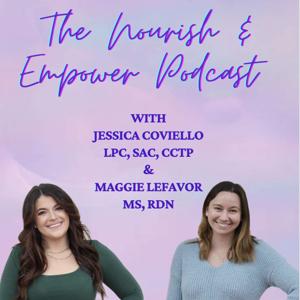
 By Jessica Coviello & Maggie Lefavor
Send us Fan Mail
Black-and-white recovery rules can sound “safe” on paper, but they often create the exact thing we’re trying to prevent: secrecy. We sit down with returning guest Johanna Scoglio, educator, writer, peer supporter, and author of *When the Water Still Holds Me*, to talk about harm reduction in eating disorder recovery and why it can be the missing bridge between clinical goals and real life.
We unpack what harm reduction actually looks like in practice, including a concrete example around movement. Instead of “never move again,” we explore nuanced questions that protect safety while honoring autonomy: What’s driving the urge? What feels compulsive versus joyful? What boundaries and accountability help you stay grounded? We also talk about collaboration that truly includes the client, how to pace goals so they’re sustainable, and how providers can hold both compassion and clear limits without slipping into shame or power struggles.
Treatment can also leave scars. Johanna shares what helps rebuild trust after harmful or traumatic care: validation, consistency, and a willingness to repair. We close with embodiment tools that don’t require constant body love, from yoga and breath work to sensory awareness and the surprising peace of being in the water.
Sponsored by Hilltop Behavioral Health. If you found something helpful here, subscribe, share this with someone who needs it, and leave a review so more people can find the support they deserve.
To get connected with Johanna, check out: https://www.adragonflysdream.com/
To learn about Johanna's memoir, check out: https://www.amazon.com/When-Water-Still-Holds-Long-Term/dp/B0GM8MWXT4
Show notes:
Trigger warning: this show is not medical, nutrition, or mental health treatment and is not a replacement for meeting with a Registered Dietitian, Licensed Mental Health Provider, or any other medical provider. You can find resources for how to find a provider, as well as crisis resources, in the show notes. Listener discretion is advised.
Resource links:
Alliance for Eating Disorders: https://www.allianceforeatingdisorders.com/
ANAD: https://anad.org/
NEDA: https://www.nationaleatingdisorders.org/
NAMI: https://nami.org/home
Action Alliance: https://theactionalliance.org/
NIH: https://www.nimh.nih.gov/
How to find a provider:
https://map.nationaleatingdisorders.org/
https://www.psychologytoday.com/us
https://www.healthprofs.com/us/nutritionists-dietitians?tr=Hdr_Brand
Suicide & crisis awareness hotline: call 988 (available 24/7)
Eating Disorder hotline: call or text 800-931-2237 (Phone line is available Monday-Thursday 11 am-9 pm ET and Friday 11 am-5 pm ET; text line is available Monday-Thursday 3-6 pm ET and Friday 1-5 pm ET)
If you are experiencing a psychiatric or medical emergency, please call 911 or go to your nearest emergency room.
Support the show