
Sign up to save your podcasts
Or

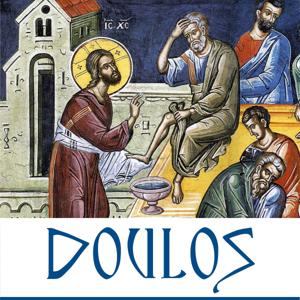


Who is this King of Glory? With the image of Jesus on the cross, recall Isaiah 53:3:
He was despised and rejected by men;
a man of sorrows, and acquainted with grief;
and as one from whom men hide their faces
he was despised, and we esteemed him not.
Fr. Timothy Lowe looks to the Gospel of Matthew as the climax to the biblical story in the people's search for a leader. The Son of Man is presented as an anti-king, securing no power in an army, palace, or wealth. As one who submits to the will of His Father, the Son of Man will come in glory to judge on that very basis, separating those who serve the will of the Father from those who do not. This is our hope, even as we are made to tremble.
King Josiah led his people in a magnificent building campaign to beautify their temple. But it all came to a screeching halt when the Book of the Law, neglected for generations by the Kings of Israel, was discovered and its words read aloud. King Josiah realized the Lord's judgment was at hand, and so he led his people in repentance. "There was no king like him, who turned to the Lord with all his heart and with all his soul and with all his might." Still, the Lord declares to remove Judah and Israel from His sight, and casts off His chosen city.
Fr. Timothy Lowe, in reflecting on the "despair of the Lord," the very meaning of Josiah's name, reminds us there may be a time when repentance is no longer an option.
We had hoped the young King Solomon, in his request to the Lord for wisdom, would avoid the typical temptations that come with power and prestige. But the frailty of the human ego shows itself again in the wayward path Solomon takes in seeking not the Lord, but wealth and security in other gods and earthly alliances. In this line of biblical kings, is there any hope that one would lead according to the commandments of the Lord, and walk in His ways?
If you had only one wish, what would it be?
The young King Solomon asked not for long life, nor riches, nor victory over his enemies. We learn from the story in I Kings that the Lord was pleased that Solomon instead asked for a "listening heart," to govern and discern what is right. Fr. Timothy Lowe reminds us that the right beginning, the initial baptism and the right confession of faith doesn't necessarily secure God's favor. It's in the doing and walking in faithful obedience, ever mindful of the condition, "If you keep my commandments, then I will lengthen your days."
If we claim to live as a servant of God, a doulos tou theou, we must reckon with the daily choice: Do I serve and protect my own interests and my own life? Or serve the will of God, even at the cost of my own comfort and life?
Fr. Chris Salamy compares the story of the man, Adam, in the Garden of Eden with the story of the man, Jesus, in the Garden of Gethsemane. He reminds us that serving our own wills surely ends in death, while serving the will of our Heavenly Father opens unto life.
Fr. Chris Salamy is the author of The Way of the Warrior Saint: How to Live a Crucifixional Life. Learn more at https://www.warriorsaints.org/book/
Who is the real David? On the one hand, a humble shepherd boy who courageously obeys the Lord and is anointed king of Israel. On the other hand, adulterer and murderer in his dealings with Bathsheba and Uriah. On the first hand, sorrowfully repentant, and Psalmist. On the other hand, abandons his duty in providing justice for his daughter, Tamar, who is raped by David's firstborn. On the first hand, commissions his successor, Solomon, to keep the commandments of the Lord and to walk in faithfulness. On the other hand, in his final dying words, entrusts his personal vendettas to Solomon to carry out vengeance against those who humiliated him.
Fr. Timothy reminds us, "It's not how we begin life, but how we end it. No one is good, but God alone. Do not imagine otherwise. It is the only corrective to our egos."
Not long after the Lord establishes his shepherd, David, over his people Israel, does King David turn to devour his own flock. Bored and distracted at home while his armies fight the king's battles, David takes another man's wife. To cover up his adultery, he betrays and murders his loyal and faithful servant, Uriah the Hittite.
We are reminded again through this story that, "No one is good but God alone," and "Whoever would be greatest must be servant of all." Fr. Timothy Lowe suggests, "If you say these things and repeat them, trust me, it will finally sink in and live there and be the corrective to all temptations."
Safe from his enemies and finally secure in his own palace, King David desires to build the Lord a house of cedar. The Lord reminds David through His prophet Nathan that the ark of the Lord moves and dwells in a tent. The Lord has no need for a house. Furthermore, it is the Lord who establishes David and his house, and not the other way around. Taking him from the pasture, the Lord has established David as shepherd over His flock. The warning for His doulos is to attend to the business of caring for the people and not to be distracted with the business of buildings.
The story allows us to pause and ask, Who builds? Whose house? Whose glory?
Constantly searching for impressive candidates - from elected officials, to job postings, to new recruits on parish councils - we hope to find leaders in whom we can trust. Yet every leader who comes from the seed of Adam falls short.
Fr. Timothy Lowe looks to the story of God's regret that He had made Saul king over Israel, a similar regret we hear in Genesis after God had created man. From this harsh reality emerges our only hope in submitting to the Lord as King and His mercy through His anointed One.
Good leaders manage expectations. Good leaders provide clarity and a path forward to eliminate surprise and disappointment. Since the beginning, the Lord makes it clear that all will be well for those who do His will.
As Jesus concludes the Sermon on the Mount in Matthew's Gospel, he reiterates His Father's expectation. The crowds who follow Him are impressed with His prophesies, healings, and mighty works, yet they are nevertheless filled with false expectations about entering the Kingdom. Jesus addresses their self-deception, "Not every one who says to me, 'Lord,Lord,' shall enter the kingdom of heaven, but he who dos the will of my Father who is in heaven." So why are the crowds astonished at his teaching?
From the publisher's feed