
Sign up to save your podcasts
Or

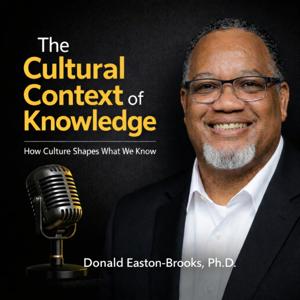

This is part 2 of the 7-part series, Learning Is a Struggle (Learner Edition). Many learners think studying means memorizing—and then feel frustrated when the information disappears during a test or can’t be used in real problems. In Episode 6, Dr. Donald Easton-Brooks breaks down the difference between memorization and learning, why memorization can be useful (and where it fails), and how to build understanding you can apply. You’ll also learn the four common reasons memorization feels difficult—cognitive factors, environment and lifestyle, underlying conditions, and study habits—and what to do about each. By the end, you’ll have a practical, repeatable approach: memorize the basics, then turn them into learning through explanation, examples, and application.
Audience
College and High school students
First-generation college students, student-atheletes, and re-turning students
Struggling learners who feel “behind” or doubt their ability
Adult learners returning to school or training programs
Learners who rely on cramming, rereading, or last-minute studying
Students in content-heavy courses (psychology, biology, history) and problem-solving courses (math, chemistry, statistics)
Keywords: memorization vs learning, how to study effectively, Bloom’s Taxonomy, active recall, retrieval practice, deep understanding, test preparation, study habits, learning strategies, cognitive load, test anxiety, first-generation students, struggling learners, long-term retention, applying knowledge.
 View all episodes
 By Donald Easton-Brooks Ph.D.
This is part 2 of the 7-part series, Learning Is a Struggle (Learner Edition). Many learners think studying means memorizing—and then feel frustrated when the information disappears during a test or can’t be used in real problems. In Episode 6, Dr. Donald Easton-Brooks breaks down the difference between memorization and learning, why memorization can be useful (and where it fails), and how to build understanding you can apply. You’ll also learn the four common reasons memorization feels difficult—cognitive factors, environment and lifestyle, underlying conditions, and study habits—and what to do about each. By the end, you’ll have a practical, repeatable approach: memorize the basics, then turn them into learning through explanation, examples, and application.
Audience
College and High school students
First-generation college students, student-atheletes, and re-turning students
Struggling learners who feel “behind” or doubt their ability
Adult learners returning to school or training programs
Learners who rely on cramming, rereading, or last-minute studying
Students in content-heavy courses (psychology, biology, history) and problem-solving courses (math, chemistry, statistics)
Keywords: memorization vs learning, how to study effectively, Bloom’s Taxonomy, active recall, retrieval practice, deep understanding, test preparation, study habits, learning strategies, cognitive load, test anxiety, first-generation students, struggling learners, long-term retention, applying knowledge.