
Sign up to save your podcasts
Or

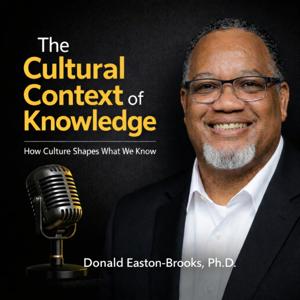

This is part 3 of the 7-part series of Learning Is a Struggle (Learner Edition). Most people don’t struggle because they’re “not smart”—they struggle because they study in a way that doesn’t match what the task requires. In Episode 7, Dr. Donald Easton-Brooks introduces Bloom’s Taxonomy as a practical learning map you can use to diagnose where you’re stuck: remembering, understanding, applying, analyzing, evaluating, or creating. You’ll learn how to tell the difference between “I don’t remember it” and “I don’t understand it,” why many learners get trapped in memorization, and how cultural context and lived experience shape what feels familiar—or confusing—when new information comes in. By the end, you’ll have a simple method for choosing the right study move based on the Bloom level you actually need.
Audience
High school and college students who feel stuck despite studying
First-generation college students building study skills
Struggling learners who confuse memorization with understanding
Adult learners returning to school or career training
Students in lecture-heavy courses and problem-solving courses
Learners preparing for exams, finals, or high-stakes assessments
Keywords:
Bloom’s Taxonomy, how to study smarter, learning map, study strategies, active learning, remembering vs understanding, applying knowledge, higher-order thinking, critical thinking skills, exam preparation, learning process, cultural context of learning, first-generation students, struggling learners
 View all episodes
 By Donald Easton-Brooks Ph.D.
This is part 3 of the 7-part series of Learning Is a Struggle (Learner Edition). Most people don’t struggle because they’re “not smart”—they struggle because they study in a way that doesn’t match what the task requires. In Episode 7, Dr. Donald Easton-Brooks introduces Bloom’s Taxonomy as a practical learning map you can use to diagnose where you’re stuck: remembering, understanding, applying, analyzing, evaluating, or creating. You’ll learn how to tell the difference between “I don’t remember it” and “I don’t understand it,” why many learners get trapped in memorization, and how cultural context and lived experience shape what feels familiar—or confusing—when new information comes in. By the end, you’ll have a simple method for choosing the right study move based on the Bloom level you actually need.
Audience
High school and college students who feel stuck despite studying
First-generation college students building study skills
Struggling learners who confuse memorization with understanding
Adult learners returning to school or career training
Students in lecture-heavy courses and problem-solving courses
Learners preparing for exams, finals, or high-stakes assessments
Keywords:
Bloom’s Taxonomy, how to study smarter, learning map, study strategies, active learning, remembering vs understanding, applying knowledge, higher-order thinking, critical thinking skills, exam preparation, learning process, cultural context of learning, first-generation students, struggling learners