
Sign up to save your podcasts
Or

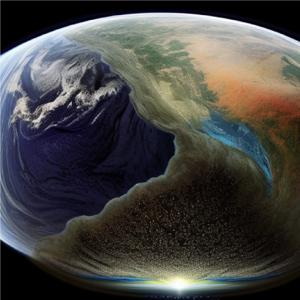

Asia is the largest and most populous continent in the world. It is home to a vast diversity of cultures, languages, and religions. The continent's formation began about 4.5 billion years ago, when the Earth's crust began to separate into tectonic plates. The Indian subcontinent was originally part of Gondwana, a supercontinent that also included Africa, South America, Australia, and Antarctica. About 50 million years ago, the Indian subcontinent began to drift northwards, eventually colliding with Asia. This collision caused the Himalayas to rise, and it also created the vast plateaus of Central Asia.
The formation of Asia was a long and complex process, and it is still ongoing. The continent's geography is constantly changing, as tectonic plates continue to move and collide. This process has created some of the world's most spectacular landscapes, including the Himalayas, the Gobi Desert, and the Tibetan Plateau. It has also shaped the continent's climate and environment, making Asia a home to a wide variety of plants and animals.
The formation of Asia has had a profound impact on the continent's history and culture. The continent's diverse geography has led to the development of many different cultures, and its strategic location has made it a crossroads of trade and commerce for centuries. Asia is home to some of the world's oldest civilizations, including the Indus Valley civilization and the Shang dynasty. It is also the birthplace of many major religions, including Hinduism, Buddhism, and Islam.
The formation of Asia is a story that is still being written. The continent is facing many challenges, including climate change, environmental degradation, and political instability. However, Asia is also a continent of great potential, and it is poised to play a leading role in the 21st century.
 View all episodes
 By Robert G. Kraushaar
Asia is the largest and most populous continent in the world. It is home to a vast diversity of cultures, languages, and religions. The continent's formation began about 4.5 billion years ago, when the Earth's crust began to separate into tectonic plates. The Indian subcontinent was originally part of Gondwana, a supercontinent that also included Africa, South America, Australia, and Antarctica. About 50 million years ago, the Indian subcontinent began to drift northwards, eventually colliding with Asia. This collision caused the Himalayas to rise, and it also created the vast plateaus of Central Asia.
The formation of Asia was a long and complex process, and it is still ongoing. The continent's geography is constantly changing, as tectonic plates continue to move and collide. This process has created some of the world's most spectacular landscapes, including the Himalayas, the Gobi Desert, and the Tibetan Plateau. It has also shaped the continent's climate and environment, making Asia a home to a wide variety of plants and animals.
The formation of Asia has had a profound impact on the continent's history and culture. The continent's diverse geography has led to the development of many different cultures, and its strategic location has made it a crossroads of trade and commerce for centuries. Asia is home to some of the world's oldest civilizations, including the Indus Valley civilization and the Shang dynasty. It is also the birthplace of many major religions, including Hinduism, Buddhism, and Islam.
The formation of Asia is a story that is still being written. The continent is facing many challenges, including climate change, environmental degradation, and political instability. However, Asia is also a continent of great potential, and it is poised to play a leading role in the 21st century.