
Sign up to save your podcasts
Or

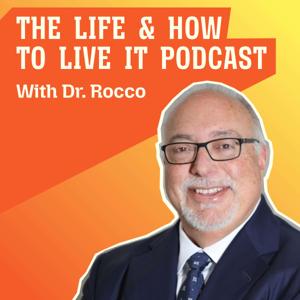

Hey there. If you like the show I would love to get your feedback and give you a shoutout. Bye for now. Dr Rocco
Life and How to Live It Podcast with Dr. RoccoEpisode: End-of-Life Planning with Marion Power, RN
In this episode, I’m joined by a very dear friend and someone I’ve learned an enormous amount from — Marion Power. Marion is a longtime registered nurse who has worked in the operating room, emergency department, and hospice. Her experiences in those settings led her to her current speciality as a geriatric care manager, helping seniors and their families navigate the challenges of ageing. Her focus is on helping people make positive, informed decisions about their care — with the goal of remaining at home for as long as possible. Marian also loves long-distance walking in France, teaches yoga, and is an avid quilter. I think you’re going to get a lot out of this conversation.
What Is a Geriatric Care Manager?
Many people haven’t heard this term before, and I think that’s worth changing. A geriatric care manager assesses, coordinates, and oversees the care of older adults who can no longer live fully independently — or whose family members are struggling to support them. They come in, evaluate the whole picture — medical, cognitive, legal, financial, and home safety — and help you understand what your options are and what resources are available in your community.
Marion shared the story of one of her very first clients, John, who had suffered two debilitating strokes, lived alone, and had no children or spouse. With Marian’s help, John assembled a care team — a live-in caregiver, a grocery shopper, someone to take him out — and he stayed in his own home for seven more years. By all accounts, he was a cheerful guy who had a pretty good life despite his disabilities. That story stuck with me. It’s a powerful reminder that end-of-life planning isn’t just about the final weeks — it can shape years of meaningful living.
How to Find a Geriatric Care Manager
Geriatric care managers are not typically assigned through hospitals, so you have to seek them out. The best resource is the Ageing Life Care Association, a national organisation that vets its members and maintains a searchable directory. You can find it at aginglifecare.org. In the upper right-hand corner, click “Find an Expert,” enter your ZIP code, and you’ll find care managers in your area. The calibre of professionals on that site is high — there are real requirements to be listed there.
What the Process Looks Like
Marion typically starts with a home visit — and she tries to get as many family members there as possible so everyone is on the same page. She does a thorough assessment covering medical needs, cognitive status, legal documents, home safety, medications, finances, and what the client and family each want — which, she notes, are often two very different things. From there, she generates a prioritised plan of care across all of those categories. She also accompanies clients to doctor’s appointments as a patient advocate — asking the questions family members don’t know to ask — and checks in regularly to help move through the list.
One thing she said that really hit home: it’s like coaching. “Have we accomplished this? What do you need my help with?” She’s not there to take over — she’s there to support.
The Essential Legal Documents — Start Here
If you’re over 60 and you don’t have these in place, this is where to begin. I’ll admit, I was in that boat myself before this conversation.
• Will — directs where your assets go. Needs to be done with an elder law attorney.
• Power of Attorney — designates someone to manage your financial and legal affairs. Elder law attorney required.
• Healthcare Proxy — names someone to make medical decisions on your behalf if you can’t. This one you can do yourself using downloadable forms.
• Living Will — states your wishes for end-of-life medical care: CPR, intubation, and so on. Also can be completed independently.
• Trust — worth exploring with an elder law attorney if you have significant assets.
Once those documents exist, tell your family. Show them. Let them know where the paperwork is kept. Marion made the point that if a parent has a stroke and ends up in the ER unconscious, and two children disagree about what he would have wanted — because no one ever wrote it down — you have difficulty on top of difficulty. Clear documents prevent that.
On the question of insurance: geriatric care management is not covered by most insurance and is billed privately. That said, Marion offers sliding scale fees, and even a single consultation — roughly six hours of her time including the home visit, the report, and the review — can be worth its weight in gold just to know what your options are and get the ball rolling.
On Being Present When Someone Is Dying
Marion closed with something I didn’t want to rush past. She said that being present with a loved one as they die is valuable — and while it can be frightening, it’s an experience worth taking the time to have. It’s the culmination of a relationship. It can be a chance to heal. It moves beyond our rational thinking into something spiritual. And it is a gift: for the person dying, and for you. Between a good care manager and hospice, she said, you can make that experience happen at home, in familiar surroundings, surrounded by the people and things that person loves.
That stayed with me.
Dr. Rocco’s Rex
Make your next vacation a walking or cycling trip. You slow down to about two miles an hour instead of 70, and everything changes — you actually see the countryside, you meet local people, you stop and smell the roses. It’s great exercise, which works up a great appetite, so you can enjoy the food without guilt. And you don’t have to do it as a hardcore backpacker — there are companies all over the world that will plan your itinerary, arrange lodging, and even shuttle your luggage between stops so all you have to do is walk. Give it some thought.
One More Thing
Did you know that Alaska is 429 times larger than Rhode Island — and yet Rhode Island has a bigger population? Rhode Island comes in at 1.1 million people versus Alaska’s 750,000. So if you’re really looking to get away from it all, you know where to go.
Guest Billboard Message
“Stay engaged... It’s worth it.” — Marion Power
Support the show
Feel free to visit my website
https://www.neaccoaching.com/podcast
 View all episodes
 By Dr Rocco Chiappini
Hey there. If you like the show I would love to get your feedback and give you a shoutout. Bye for now. Dr Rocco
Life and How to Live It Podcast with Dr. RoccoEpisode: End-of-Life Planning with Marion Power, RN
In this episode, I’m joined by a very dear friend and someone I’ve learned an enormous amount from — Marion Power. Marion is a longtime registered nurse who has worked in the operating room, emergency department, and hospice. Her experiences in those settings led her to her current speciality as a geriatric care manager, helping seniors and their families navigate the challenges of ageing. Her focus is on helping people make positive, informed decisions about their care — with the goal of remaining at home for as long as possible. Marian also loves long-distance walking in France, teaches yoga, and is an avid quilter. I think you’re going to get a lot out of this conversation.
What Is a Geriatric Care Manager?
Many people haven’t heard this term before, and I think that’s worth changing. A geriatric care manager assesses, coordinates, and oversees the care of older adults who can no longer live fully independently — or whose family members are struggling to support them. They come in, evaluate the whole picture — medical, cognitive, legal, financial, and home safety — and help you understand what your options are and what resources are available in your community.
Marion shared the story of one of her very first clients, John, who had suffered two debilitating strokes, lived alone, and had no children or spouse. With Marian’s help, John assembled a care team — a live-in caregiver, a grocery shopper, someone to take him out — and he stayed in his own home for seven more years. By all accounts, he was a cheerful guy who had a pretty good life despite his disabilities. That story stuck with me. It’s a powerful reminder that end-of-life planning isn’t just about the final weeks — it can shape years of meaningful living.
How to Find a Geriatric Care Manager
Geriatric care managers are not typically assigned through hospitals, so you have to seek them out. The best resource is the Ageing Life Care Association, a national organisation that vets its members and maintains a searchable directory. You can find it at aginglifecare.org. In the upper right-hand corner, click “Find an Expert,” enter your ZIP code, and you’ll find care managers in your area. The calibre of professionals on that site is high — there are real requirements to be listed there.
What the Process Looks Like
Marion typically starts with a home visit — and she tries to get as many family members there as possible so everyone is on the same page. She does a thorough assessment covering medical needs, cognitive status, legal documents, home safety, medications, finances, and what the client and family each want — which, she notes, are often two very different things. From there, she generates a prioritised plan of care across all of those categories. She also accompanies clients to doctor’s appointments as a patient advocate — asking the questions family members don’t know to ask — and checks in regularly to help move through the list.
One thing she said that really hit home: it’s like coaching. “Have we accomplished this? What do you need my help with?” She’s not there to take over — she’s there to support.
The Essential Legal Documents — Start Here
If you’re over 60 and you don’t have these in place, this is where to begin. I’ll admit, I was in that boat myself before this conversation.
• Will — directs where your assets go. Needs to be done with an elder law attorney.
• Power of Attorney — designates someone to manage your financial and legal affairs. Elder law attorney required.
• Healthcare Proxy — names someone to make medical decisions on your behalf if you can’t. This one you can do yourself using downloadable forms.
• Living Will — states your wishes for end-of-life medical care: CPR, intubation, and so on. Also can be completed independently.
• Trust — worth exploring with an elder law attorney if you have significant assets.
Once those documents exist, tell your family. Show them. Let them know where the paperwork is kept. Marion made the point that if a parent has a stroke and ends up in the ER unconscious, and two children disagree about what he would have wanted — because no one ever wrote it down — you have difficulty on top of difficulty. Clear documents prevent that.
On the question of insurance: geriatric care management is not covered by most insurance and is billed privately. That said, Marion offers sliding scale fees, and even a single consultation — roughly six hours of her time including the home visit, the report, and the review — can be worth its weight in gold just to know what your options are and get the ball rolling.
On Being Present When Someone Is Dying
Marion closed with something I didn’t want to rush past. She said that being present with a loved one as they die is valuable — and while it can be frightening, it’s an experience worth taking the time to have. It’s the culmination of a relationship. It can be a chance to heal. It moves beyond our rational thinking into something spiritual. And it is a gift: for the person dying, and for you. Between a good care manager and hospice, she said, you can make that experience happen at home, in familiar surroundings, surrounded by the people and things that person loves.
That stayed with me.
Dr. Rocco’s Rex
Make your next vacation a walking or cycling trip. You slow down to about two miles an hour instead of 70, and everything changes — you actually see the countryside, you meet local people, you stop and smell the roses. It’s great exercise, which works up a great appetite, so you can enjoy the food without guilt. And you don’t have to do it as a hardcore backpacker — there are companies all over the world that will plan your itinerary, arrange lodging, and even shuttle your luggage between stops so all you have to do is walk. Give it some thought.
One More Thing
Did you know that Alaska is 429 times larger than Rhode Island — and yet Rhode Island has a bigger population? Rhode Island comes in at 1.1 million people versus Alaska’s 750,000. So if you’re really looking to get away from it all, you know where to go.
Guest Billboard Message
“Stay engaged... It’s worth it.” — Marion Power
Support the show
Feel free to visit my website
https://www.neaccoaching.com/podcast