
Sign up to save your podcasts
Or

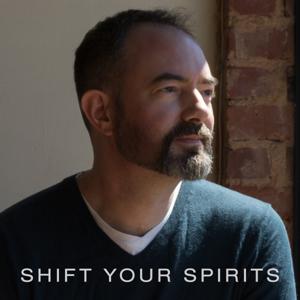

Dr. Julia Spinolo is a Doctor of Nursing Practice and Reiki Master who offers energy healing, intuitive coaching, and spiritual guidance. She combines her knowledge of science based medicine and energetic healing modalities to help clients return to their centered selves.
We're talking about best practices for energy healers.
If you are a Reiki Master or a practitioner of another healing modality, this is a great set of ethical guidelines.
And if you are considering energy healing as a client or patient, we talk about the positive attributes you should be looking for in a practitioner, common red flags you might want to be aware of, and what kind of expectations you should have about outcomes.
juliaspinolo.com
Resources (Research)
Medical Girl Mystical World Dr. Julia Spinolo's Show
Don't Fear Placebos Akimbo: a podcast from Seth Godin
Slade's Books & Courses
Get an intuitive reading with Slade
Automatic Intuition
Edit your pledge on Patreon
Julia:
I was working as a college professor and going on about life. Had my terminal degree. Thought that life was good, had a great house, had a great husband, great marriage, and then I was diagnosed with breast cancer. This was almost four years ago, which threw my world upside down.
So I went through having a double mastectomy and then months of chemotherapy and then recovering. And luckily, turned out fine. Everything is fine. I'm still doing fine. But I just did not feel like myself.
I got my energy back but my mind was very foggy. Had classic chemo-brain, which is where you feel like you're in a constant fog and you can't connect your thoughts or you forget things and I'm one of these very meticulous people that are on my game all the time. I'm very on the ball and I just wasn't myself.
My husband, funny enough, is an oncologist. He looked at me and he said, "Well maybe this is your new normal."
I was like, "No, I'm not going to let this be my new normal."
So I started looking at other ways besides western medicine to see if I could start to feel better. So going back in my history, I've always been kind of a metaphysical child. I have always been interested in having psychic readings. I had my first psychic reading when I was 12. I had my aura saged at 18 on a mountaintop, and I've always been kind of connected to that world.
So anyway, I go to a group meditation and they were offering pranic energy healings afterwards. I was like, you know what? I'm just going to try this to see. I had no expectations whatsoever, but I heard that it was good. People really raved about it so I'm like, why not?
So I'm sitting there with no intention of what's going on. Let's just see what happens.
So I had this 15 minute pranic energy healing done and it was almost immediately that I felt clear. My thoughts were... It was like the fucking light bulb came on and I was just elated. And I just fell into this. I said, "I gotta learn more about this. I know that I can do this. I'm a healer already being in medicine, because that's what we do. We help heal people and we're going to go into that later in our discussion.
But as I said, I know that I can do this. So I did. I started studying, actually I looked at different modalities. I looked at pranic energy, of course you have tai chi, accupuncture, accupressure, all of that is energy work. There are so many different modalities, but reiki really resonated with me. So I studied for months and became a reiki master and really started doing that work.
During this work with the energy, I did a lot of self healing and a lot of work on myself. That self work is very key for any practitioner because you've got to be right with yourself before you work with anybody else. So I did. I did a lot of healing on my own. Studied the energy work and then started seeing clients.
That's how I got into this and now that's what I solely do full time. I use my medical expertise in conjunction with the energy work, because really it's all connected. The body is connected to our energy. People that have these physical manifestations, there's some root cause of what's going on and that's basically what's going on energetically. And some people are like, well what do you mean?
So my thought is that everything is energy. Our cells are made up of cells that are vibrating at different frequencies that make up our different organs. But also the things that we can't see, such as our thoughts, our prayers, that kind of thing, all of that is energy.
What I look at is, this is a classic example. I'm fortunate to work with a primary care group, so I'm introducing this energy work into primary care medicine, which is so freaking cool. But basically people will come to me because I'm the last resort, which I really wish it wouldn't be like that. But unfortunately, it is. Because it's like, they can't figure out what the hell is going on with me. Can you help me?
Because it is.
So I'll do case studies. I had a woman who was coming in and she was having all these stomach ailments and she had the battery of tests and everything was coming out fine. Everything. I mean, she had ran a gamut of tests, doctors are scratching their heads like, you know, this is just how it is and here we're going to give you this medicine that's gonna help with these symptoms, and unfortunately with western medicine, we do. We kind of shrug and be like, "Well, there's a drug for that. Let's give you that and see how you do."
I'm more of like, okay, what's really going on here?
So she comes to me and we start talking and kind of digging down deep. It comes across that she's had really shitty relationships where her ego, her self-esteem, was just shot. When that happens, that tells me, okay, where the energy of our self esteem is in our solar plexus, which is right in our belly, the centre of our belly. So after we went through this, and the healing that she went through, and me giving her the tools to do the self-care, keep her where she's in alignment.
Because it's not just me doing the work. It's a two-way street here. The client needs to be giving the input in.
Somebody doesn't come to me, I'll wave my hands around them or wave a magic wand and POOF, they're done. It doesn't go like that.
So they've got to do that work too. So we work together and I mean, this can take time! It can take months of meeting and working through this. Sometimes you integrate with a therapist, if there's something that I'm not comfortable with, I definitely use other resources to help with patients.
And she got to where her symptoms went away because she felt better about herself, and it wasn't... It was so rewarding to see her, that look on her face and she doesn't have to take the medicine now and she feels great about herself.
I kind of went on a little tangent there..
Slade:
Well let me ask you something. Let me take you back for a minute. Because I remember, I mean, you and I are friends and we talk a lot. We've had conversations about this stuff. And you told me, at one point, that you were skeptical about this type of work itself. So I'm interested, what was it that, what was the skepticism that you had and what changed for you around that?
Julia:
Because with my background, I was trained in evidence-based medicine. So I needed to have a number of studies to convince me that this works. That's what medicine is. That's how trials are done. We do these trials. Okay, what was the most effective treatment for this plan? So that's how we plan our course for patients.
That's what I was thinking, well if this stuff works, where is the stuff out there that's proving it?
And when I started looking at this, I did, as a researcher at heart, I started researching this and you know what? There is stuff out there.
People don't look for that. They're like, people get uncomfortable because it's something that we can't see. It's something that's not measurable. The only thing that's really measurable is the effects on how the person feels. But also if you look at their blood pressure, for example, if they have high blood pressure, they're taking the medicine and it's not working, they go to have energy work. The thing is that the practitioners are not keeping record of that. And there's nothing that goes back to say, "Yeah this works." We're only going by word of mouth.
I really strongly advocate to have that data to show, yes, this does work. That gives it the validity that it needs, that people really need to show, like, yes, this can work.
Slade:
So when you were researching, you said one of the things that you were most drawn to was reiki. Was that because there was more research around reiki that convinced you?
Julia:
You know, that's a really good question. I chose reiki because it just resonated with me. I like the flow of it. I like the teachings of it. I like that you can take what it has and you can make it your own. There's some energy modalities where you have these rules and regulations. You've gotta do it this way, that step kind of thing. You have some of that fluidity with reiki, so that's what really got me into it.
But then when I started looking into the research, it was kind of like a confirmation. Yeah, this is the stuff that I really like and I can use to support the work that I do.
Slade:
So I know you. I know you immediately went and read a bunch of brainy stuff about this, so, I want to know in layman's terms the highlights for us.
Tell us. What are some of the scientific studies that back this up?
Because you're right. A lot of people don't even go and investigate it that much, but you've investigated it. So tell us what you'd found out.
Julia:
Well there's a lot. If people wanted to know the statistical information, like the p-values and that good stuff, that nerdy stuff, they can go to my website which will tell them at the end of the show, under Offerings, there is a tab for Resources.
Slade:
Okay.
Julia:
And that has a lot of studies in there. There's more that I could put in there, but I don't like to overwhelm people. But it has like the gist of it, just for people to say like, "Okay, this stuff really does work."
So to answer your question, there are studies that have statistically significant results in patients that have acute coronary syndrome, which is heart disease. They that have received reiki have a reduction of anxiety and perceived stress. This is all measurable results.
This one was really cool for me. People that received, and these are just patients in the study, patients in this study who received reiki before their colonoscopy. After they received reiki, they required less Demerol, which is pain medication, after the procedure than patients who did not have any energy healing. So that's significant, especially with our opioid epidemic and our addiction to pain medication. So that's a plus in my book.
Patients that had mild Alzheimer's Disease had an increase in mental functioning and improved memory and their behavioural problems had lessened.
Cancer patients who received reiki reported less fatigue and anxiety, and I'm a testament to that, which significantly improved their quality of life.
And this is a really cool thing because a lot of hospitals are now implementing energy work into their practices in the hospital. So they're actually taking nurses and having them go through reiki training to help not only their patients, and have their patients more comfortable, but also they're using it on their staff to prevent burnout. And healthcare professionals who have received reiki treatments have a reduction of burnout symptoms, which is compassion fatigue. But also it increases their focus and their problem-solving skills, which is a benefit to patients because they make less mistakes.
Yeah, so it's not just for the patients. It's for the patients. It's for everybody.
For the primary care group that I work with, I work with the staff and the patients, because I believe that the environment needs to be healing for the patients. Because that's going to radiate off of them. If they're feeling good, it's going to radiate out. And when those patients come in to that office, they're going to feel like, hey, I'm supported, it feels good here, I know that they're here to help me. So it's a win-win.
I know that you have questions about placebo, so I can hold this one study for you while we talk about that, or if you want me to talk about that now, I can.
Slade:
Let's go ahead and talk about placebo because I've been studying it from more of a marketing angle and I'll speak to that. But talk to me about placebo, because I think it has kind of a dirty word and I think we can change the connotation about it. But talk to me about that in the studies.
Julia:
Okay. So just to say that, initially when I started this is, because it wasn't my intent to get better with having this chemo brain, so as a placebo, I was kind of on the fence with it. Was I, did I really think this was going to kill me and well maybe it is.
And people chalk it up to placebo. Let me say something about the placebo effect. The thing is, is that if it works, it works. Period. If the patient feels better, whether or not it's placebo or not, if they're feeling better, it's kind of like, Who cares?? They're feeling better.
A lot of times, with us, we have to make it make sense to us. We need to have that statistical data for some of us. We need to have that word of mouth that somebody says to us. If somebody says it's placebo effect, it doesn't necessarily mean it's all in their head.
Now I'm gonna give you this study where reiki was done on newborn babie
 View all episodes
 By Slade Roberson

4.9
106106 ratings
Dr. Julia Spinolo is a Doctor of Nursing Practice and Reiki Master who offers energy healing, intuitive coaching, and spiritual guidance. She combines her knowledge of science based medicine and energetic healing modalities to help clients return to their centered selves.
We're talking about best practices for energy healers.
If you are a Reiki Master or a practitioner of another healing modality, this is a great set of ethical guidelines.
And if you are considering energy healing as a client or patient, we talk about the positive attributes you should be looking for in a practitioner, common red flags you might want to be aware of, and what kind of expectations you should have about outcomes.
juliaspinolo.com
Resources (Research)
Medical Girl Mystical World Dr. Julia Spinolo's Show
Don't Fear Placebos Akimbo: a podcast from Seth Godin
Slade's Books & Courses
Get an intuitive reading with Slade
Automatic Intuition
Edit your pledge on Patreon
Julia:
I was working as a college professor and going on about life. Had my terminal degree. Thought that life was good, had a great house, had a great husband, great marriage, and then I was diagnosed with breast cancer. This was almost four years ago, which threw my world upside down.
So I went through having a double mastectomy and then months of chemotherapy and then recovering. And luckily, turned out fine. Everything is fine. I'm still doing fine. But I just did not feel like myself.
I got my energy back but my mind was very foggy. Had classic chemo-brain, which is where you feel like you're in a constant fog and you can't connect your thoughts or you forget things and I'm one of these very meticulous people that are on my game all the time. I'm very on the ball and I just wasn't myself.
My husband, funny enough, is an oncologist. He looked at me and he said, "Well maybe this is your new normal."
I was like, "No, I'm not going to let this be my new normal."
So I started looking at other ways besides western medicine to see if I could start to feel better. So going back in my history, I've always been kind of a metaphysical child. I have always been interested in having psychic readings. I had my first psychic reading when I was 12. I had my aura saged at 18 on a mountaintop, and I've always been kind of connected to that world.
So anyway, I go to a group meditation and they were offering pranic energy healings afterwards. I was like, you know what? I'm just going to try this to see. I had no expectations whatsoever, but I heard that it was good. People really raved about it so I'm like, why not?
So I'm sitting there with no intention of what's going on. Let's just see what happens.
So I had this 15 minute pranic energy healing done and it was almost immediately that I felt clear. My thoughts were... It was like the fucking light bulb came on and I was just elated. And I just fell into this. I said, "I gotta learn more about this. I know that I can do this. I'm a healer already being in medicine, because that's what we do. We help heal people and we're going to go into that later in our discussion.
But as I said, I know that I can do this. So I did. I started studying, actually I looked at different modalities. I looked at pranic energy, of course you have tai chi, accupuncture, accupressure, all of that is energy work. There are so many different modalities, but reiki really resonated with me. So I studied for months and became a reiki master and really started doing that work.
During this work with the energy, I did a lot of self healing and a lot of work on myself. That self work is very key for any practitioner because you've got to be right with yourself before you work with anybody else. So I did. I did a lot of healing on my own. Studied the energy work and then started seeing clients.
That's how I got into this and now that's what I solely do full time. I use my medical expertise in conjunction with the energy work, because really it's all connected. The body is connected to our energy. People that have these physical manifestations, there's some root cause of what's going on and that's basically what's going on energetically. And some people are like, well what do you mean?
So my thought is that everything is energy. Our cells are made up of cells that are vibrating at different frequencies that make up our different organs. But also the things that we can't see, such as our thoughts, our prayers, that kind of thing, all of that is energy.
What I look at is, this is a classic example. I'm fortunate to work with a primary care group, so I'm introducing this energy work into primary care medicine, which is so freaking cool. But basically people will come to me because I'm the last resort, which I really wish it wouldn't be like that. But unfortunately, it is. Because it's like, they can't figure out what the hell is going on with me. Can you help me?
Because it is.
So I'll do case studies. I had a woman who was coming in and she was having all these stomach ailments and she had the battery of tests and everything was coming out fine. Everything. I mean, she had ran a gamut of tests, doctors are scratching their heads like, you know, this is just how it is and here we're going to give you this medicine that's gonna help with these symptoms, and unfortunately with western medicine, we do. We kind of shrug and be like, "Well, there's a drug for that. Let's give you that and see how you do."
I'm more of like, okay, what's really going on here?
So she comes to me and we start talking and kind of digging down deep. It comes across that she's had really shitty relationships where her ego, her self-esteem, was just shot. When that happens, that tells me, okay, where the energy of our self esteem is in our solar plexus, which is right in our belly, the centre of our belly. So after we went through this, and the healing that she went through, and me giving her the tools to do the self-care, keep her where she's in alignment.
Because it's not just me doing the work. It's a two-way street here. The client needs to be giving the input in.
Somebody doesn't come to me, I'll wave my hands around them or wave a magic wand and POOF, they're done. It doesn't go like that.
So they've got to do that work too. So we work together and I mean, this can take time! It can take months of meeting and working through this. Sometimes you integrate with a therapist, if there's something that I'm not comfortable with, I definitely use other resources to help with patients.
And she got to where her symptoms went away because she felt better about herself, and it wasn't... It was so rewarding to see her, that look on her face and she doesn't have to take the medicine now and she feels great about herself.
I kind of went on a little tangent there..
Slade:
Well let me ask you something. Let me take you back for a minute. Because I remember, I mean, you and I are friends and we talk a lot. We've had conversations about this stuff. And you told me, at one point, that you were skeptical about this type of work itself. So I'm interested, what was it that, what was the skepticism that you had and what changed for you around that?
Julia:
Because with my background, I was trained in evidence-based medicine. So I needed to have a number of studies to convince me that this works. That's what medicine is. That's how trials are done. We do these trials. Okay, what was the most effective treatment for this plan? So that's how we plan our course for patients.
That's what I was thinking, well if this stuff works, where is the stuff out there that's proving it?
And when I started looking at this, I did, as a researcher at heart, I started researching this and you know what? There is stuff out there.
People don't look for that. They're like, people get uncomfortable because it's something that we can't see. It's something that's not measurable. The only thing that's really measurable is the effects on how the person feels. But also if you look at their blood pressure, for example, if they have high blood pressure, they're taking the medicine and it's not working, they go to have energy work. The thing is that the practitioners are not keeping record of that. And there's nothing that goes back to say, "Yeah this works." We're only going by word of mouth.
I really strongly advocate to have that data to show, yes, this does work. That gives it the validity that it needs, that people really need to show, like, yes, this can work.
Slade:
So when you were researching, you said one of the things that you were most drawn to was reiki. Was that because there was more research around reiki that convinced you?
Julia:
You know, that's a really good question. I chose reiki because it just resonated with me. I like the flow of it. I like the teachings of it. I like that you can take what it has and you can make it your own. There's some energy modalities where you have these rules and regulations. You've gotta do it this way, that step kind of thing. You have some of that fluidity with reiki, so that's what really got me into it.
But then when I started looking into the research, it was kind of like a confirmation. Yeah, this is the stuff that I really like and I can use to support the work that I do.
Slade:
So I know you. I know you immediately went and read a bunch of brainy stuff about this, so, I want to know in layman's terms the highlights for us.
Tell us. What are some of the scientific studies that back this up?
Because you're right. A lot of people don't even go and investigate it that much, but you've investigated it. So tell us what you'd found out.
Julia:
Well there's a lot. If people wanted to know the statistical information, like the p-values and that good stuff, that nerdy stuff, they can go to my website which will tell them at the end of the show, under Offerings, there is a tab for Resources.
Slade:
Okay.
Julia:
And that has a lot of studies in there. There's more that I could put in there, but I don't like to overwhelm people. But it has like the gist of it, just for people to say like, "Okay, this stuff really does work."
So to answer your question, there are studies that have statistically significant results in patients that have acute coronary syndrome, which is heart disease. They that have received reiki have a reduction of anxiety and perceived stress. This is all measurable results.
This one was really cool for me. People that received, and these are just patients in the study, patients in this study who received reiki before their colonoscopy. After they received reiki, they required less Demerol, which is pain medication, after the procedure than patients who did not have any energy healing. So that's significant, especially with our opioid epidemic and our addiction to pain medication. So that's a plus in my book.
Patients that had mild Alzheimer's Disease had an increase in mental functioning and improved memory and their behavioural problems had lessened.
Cancer patients who received reiki reported less fatigue and anxiety, and I'm a testament to that, which significantly improved their quality of life.
And this is a really cool thing because a lot of hospitals are now implementing energy work into their practices in the hospital. So they're actually taking nurses and having them go through reiki training to help not only their patients, and have their patients more comfortable, but also they're using it on their staff to prevent burnout. And healthcare professionals who have received reiki treatments have a reduction of burnout symptoms, which is compassion fatigue. But also it increases their focus and their problem-solving skills, which is a benefit to patients because they make less mistakes.
Yeah, so it's not just for the patients. It's for the patients. It's for everybody.
For the primary care group that I work with, I work with the staff and the patients, because I believe that the environment needs to be healing for the patients. Because that's going to radiate off of them. If they're feeling good, it's going to radiate out. And when those patients come in to that office, they're going to feel like, hey, I'm supported, it feels good here, I know that they're here to help me. So it's a win-win.
I know that you have questions about placebo, so I can hold this one study for you while we talk about that, or if you want me to talk about that now, I can.
Slade:
Let's go ahead and talk about placebo because I've been studying it from more of a marketing angle and I'll speak to that. But talk to me about placebo, because I think it has kind of a dirty word and I think we can change the connotation about it. But talk to me about that in the studies.
Julia:
Okay. So just to say that, initially when I started this is, because it wasn't my intent to get better with having this chemo brain, so as a placebo, I was kind of on the fence with it. Was I, did I really think this was going to kill me and well maybe it is.
And people chalk it up to placebo. Let me say something about the placebo effect. The thing is, is that if it works, it works. Period. If the patient feels better, whether or not it's placebo or not, if they're feeling better, it's kind of like, Who cares?? They're feeling better.
A lot of times, with us, we have to make it make sense to us. We need to have that statistical data for some of us. We need to have that word of mouth that somebody says to us. If somebody says it's placebo effect, it doesn't necessarily mean it's all in their head.
Now I'm gonna give you this study where reiki was done on newborn babie