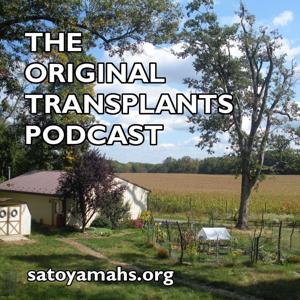
The Original Transplants Podcast Episode 59: Meat Garden
The Original Transplants Podcast Episode 59 begins with a visit to the bee yard, including an update on package installations, diagnosing queenlessness, and spring feeding techniques with homestead apiarist Will. Then, Sarah reviews three varieties of spring fever in the chicken coop: broodiness, Mycoplasma flare-ups, and wantonly crossing the road. The edible landscape is back in production as Sarah manages the seedling lifecycle from seed to transplant, including challenges with germination, seed hoarding, and pest predation. Most early season crops are now planted in the garden, with hot season crops starting in the garage nursery. Elsewhere on the edible landscape, the stewards are pulling (and eating!) invasive garlic mustard, pruning berry canes and shrubs, and spraying copper fungicide for pathogen management. For homestead fun, we are hunting morels, sustainably harvesting ramps (wild leeks), and planting a meat garden. Agricultural news on what we can learn about pathogen resistance from feral honeybee colonies and native pollinators.
Notes:
Food plots guides by National Deer Association:
https://www.deerassociation.com/manage/food-plots/
Feral colonies provide clues to enhancing honey bee tolerance to pathogens from Penn State News:
https://news.psu.edu/story/644600/2021/01/19/research/feral-colonies-provide-clues-enhancing-honey-bee-tolerance
Study: Bumble bees lacking high-quality habitat have higher pathogen loads from Penn State News:
https://news.psu.edu/story/643015/2020/12/21/research/study-bumble-bees-lacking-high-quality-habitat-have-higher-pathogen
Beescape:
https://beescape.org/
Nesting resources [for pollinators] by Xerces Society for Invertebrate Conservation:
https://www.xerces.org/pollinator-conservation/nesting-resources
Plant lists & collections from Lady Bird Johnson Wildflower Center:
https://www.wildflower.org/collections/



 View all episodes
