
Sign up to save your podcasts
Or

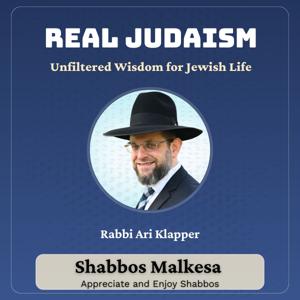

Is holiness meant to escape the physical world—or transform it? This episode tackles one of the deepest misunderstandings about Torah spirituality. Drawing from the unique structure of Tefillas Musaf on Shabbos, Rabbi Klapper shows that Judaism does not split life into “holy moments” and “real life.” Instead, Shabbos introduces a fourth tefillah that exists only once a week because it represents something entirely new: the power to unite shamayim and aretz. Musaf is not about asking, striving, or fixing—it’s about connection. Like Yosef HaTzadik, who stood firm in the lowest place on earth while remaining bound to his father above, Musaf expresses the midah of Yesod: channeling Divine shefa downward and lifting the physical upward at the same time.
Through Yosef’s life, Avraham’s mission, and the contrast with Bilaam’s worldview, the episode exposes a fault line between Torah and many other belief systems. Holiness is not found by abandoning the body, nor by living two separate lives. It is created when food, work, struggle, and restraint are all brought into Hashem’s service. Shabbos trains us in this unification—preparing the world to become a place where the Shechinah can rest. The practical reflection is simple and demanding: don’t wait for holiness to happen “somewhere else.” This Shabbos, take one physical act—eating, resting, speaking—and consciously turn it into a bridge between heaven and earth. That is how Malchus is built.
Hosted by Rabbi Ari Klapper and produced by Eli Podcast Productions, this episode is part of the Real Judaism series, available on RealJudaism.org. Don't forget to subscribe and share to stay connected with our daily lessons and timeless Torah insights!
 View all episodes
 By Rabbi Ari Klapper
Is holiness meant to escape the physical world—or transform it? This episode tackles one of the deepest misunderstandings about Torah spirituality. Drawing from the unique structure of Tefillas Musaf on Shabbos, Rabbi Klapper shows that Judaism does not split life into “holy moments” and “real life.” Instead, Shabbos introduces a fourth tefillah that exists only once a week because it represents something entirely new: the power to unite shamayim and aretz. Musaf is not about asking, striving, or fixing—it’s about connection. Like Yosef HaTzadik, who stood firm in the lowest place on earth while remaining bound to his father above, Musaf expresses the midah of Yesod: channeling Divine shefa downward and lifting the physical upward at the same time.
Through Yosef’s life, Avraham’s mission, and the contrast with Bilaam’s worldview, the episode exposes a fault line between Torah and many other belief systems. Holiness is not found by abandoning the body, nor by living two separate lives. It is created when food, work, struggle, and restraint are all brought into Hashem’s service. Shabbos trains us in this unification—preparing the world to become a place where the Shechinah can rest. The practical reflection is simple and demanding: don’t wait for holiness to happen “somewhere else.” This Shabbos, take one physical act—eating, resting, speaking—and consciously turn it into a bridge between heaven and earth. That is how Malchus is built.
Hosted by Rabbi Ari Klapper and produced by Eli Podcast Productions, this episode is part of the Real Judaism series, available on RealJudaism.org. Don't forget to subscribe and share to stay connected with our daily lessons and timeless Torah insights!