
Sign up to save your podcasts
Or

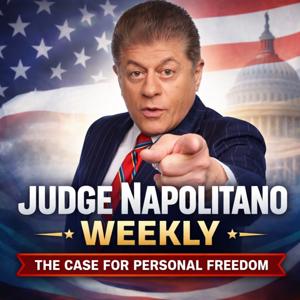

The fastest way to lose a free society is to let the government watch first and justify later. Judge Andrew Napolitano makes the case that America is drifting toward an “American heresy” against the Fourth Amendment: warrantless surveillance that treats privacy as a privilege instead of a right.
I walk through Justice Louis Brandeis’s timeless articulation of privacy as the right to be left alone, then trace the idea back to James Madison and the Bill of Rights. The founders were reacting to general warrants, sweeping search powers often blessed by secret processes, and they wrote constitutional limits to stop that kind of intrusion. Those limits were meant to protect more than “houses, papers, and effects” because freedom also lives in our thoughts, beliefs, and private associations.
 View all episodes
 By Produced and Distributed by OMG Media Partners, LLC.
The fastest way to lose a free society is to let the government watch first and justify later. Judge Andrew Napolitano makes the case that America is drifting toward an “American heresy” against the Fourth Amendment: warrantless surveillance that treats privacy as a privilege instead of a right.
I walk through Justice Louis Brandeis’s timeless articulation of privacy as the right to be left alone, then trace the idea back to James Madison and the Bill of Rights. The founders were reacting to general warrants, sweeping search powers often blessed by secret processes, and they wrote constitutional limits to stop that kind of intrusion. Those limits were meant to protect more than “houses, papers, and effects” because freedom also lives in our thoughts, beliefs, and private associations.