
Sign up to save your podcasts
Or

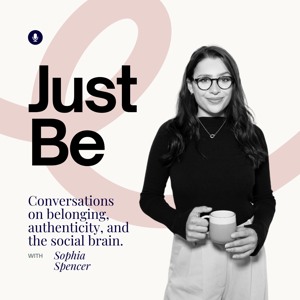

Why do some rooms make you feel smaller, even when you know you belong there? In this episode of Just Be, therapist Sophia Spencer unpacks the psychology of inferiority — that quiet, often painful sense of being less than others — and explores how it develops, why it’s not always a problem, and when it becomes one.
Drawing on Alfred Adler’s original concept of inferiority and linking it with modern neuroscience, Sophia explains how these feelings can arise from both internal wiring and external conditioning. From childhood experiences and family messages to broader social systems like sexism, racism, and classism — inferiority can be both learned and imposed.
You’ll learn:
Sophia ties together everything explored so far — from the Belongingness Hypothesis to Theory of Mind — revealing how feeling “less than” is not a flaw, but a reflection of how deeply human we are. Healing comes from context, compassion, and reconnecting with your innate right to belong — exactly as you are.
🧠 Referenced Concepts
 View all episodes
 By Sophia Spencer
Why do some rooms make you feel smaller, even when you know you belong there? In this episode of Just Be, therapist Sophia Spencer unpacks the psychology of inferiority — that quiet, often painful sense of being less than others — and explores how it develops, why it’s not always a problem, and when it becomes one.
Drawing on Alfred Adler’s original concept of inferiority and linking it with modern neuroscience, Sophia explains how these feelings can arise from both internal wiring and external conditioning. From childhood experiences and family messages to broader social systems like sexism, racism, and classism — inferiority can be both learned and imposed.
You’ll learn:
Sophia ties together everything explored so far — from the Belongingness Hypothesis to Theory of Mind — revealing how feeling “less than” is not a flaw, but a reflection of how deeply human we are. Healing comes from context, compassion, and reconnecting with your innate right to belong — exactly as you are.
🧠 Referenced Concepts