
Sign up to save your podcasts
Or

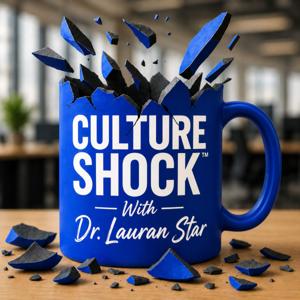

Psychological safety may be one of the most important concepts in organizational psychology.
It's also become one of the most misunderstood.
Somewhere between academic research, leadership workshops, and LinkedIn influencers, psychological safety got hijacked. What started as a powerful framework for truth-telling, innovation, and accountability has increasingly been rebranded as comfort, conflict avoidance, and emotional protection.
And those are not the same thing.
In this episode of Culture Shock™, Dr. Lauran Star pulls apart the myth, the misuse, and the unintended consequences of psychological safety culture.
Because being challenged is not the same as being harmed.
Discomfort is not the same as danger.
And organizations that confuse safety with comfort may be creating the very dysfunction they're trying to prevent.
In this episode:
We'll explore how social media, politics, institutional distrust, and modern culture have changed the way people experience conflict—and why organizations are increasingly caught in the middle.
Because psychological safety was never meant to eliminate discomfort.
It was meant to make truth possible.
And if people can't challenge ideas, question decisions, admit mistakes, or tell leaders the truth without consequences, then you don't have psychological safety.
You have performance-managed silence.
The goal isn't a workplace where nobody gets uncomfortable.
The goal is a workplace where the truth is safe to tell.
Welcome to Culture Shock™.
Where workplace culture collides with societal chaos.
What you tolerate becomes your culture.
 View all episodes
 By Dr. Lauran Star
Psychological safety may be one of the most important concepts in organizational psychology.
It's also become one of the most misunderstood.
Somewhere between academic research, leadership workshops, and LinkedIn influencers, psychological safety got hijacked. What started as a powerful framework for truth-telling, innovation, and accountability has increasingly been rebranded as comfort, conflict avoidance, and emotional protection.
And those are not the same thing.
In this episode of Culture Shock™, Dr. Lauran Star pulls apart the myth, the misuse, and the unintended consequences of psychological safety culture.
Because being challenged is not the same as being harmed.
Discomfort is not the same as danger.
And organizations that confuse safety with comfort may be creating the very dysfunction they're trying to prevent.
In this episode:
We'll explore how social media, politics, institutional distrust, and modern culture have changed the way people experience conflict—and why organizations are increasingly caught in the middle.
Because psychological safety was never meant to eliminate discomfort.
It was meant to make truth possible.
And if people can't challenge ideas, question decisions, admit mistakes, or tell leaders the truth without consequences, then you don't have psychological safety.
You have performance-managed silence.
The goal isn't a workplace where nobody gets uncomfortable.
The goal is a workplace where the truth is safe to tell.
Welcome to Culture Shock™.
Where workplace culture collides with societal chaos.
What you tolerate becomes your culture.