
Sign up to save your podcasts
Or

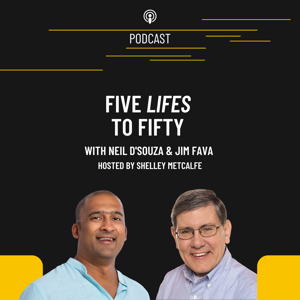

In episode 10, we welcome special guest Connie Hensler, Global Director of Environmental Management and Product Stewardship at global flooring manufacturer Interface. A long-term and passionate advocate of a more sustainable approach to design and manufacturing, Connie joins Neil, Jim and Shelley to discuss how to break traditional product development thinking with moonshot goals, all while achieving financial - and sustainable - success.
In this Episode
Shelley - For the sake of our listeners who may not know much about Interface, can you describe what Interface manufactures and its history with sustainability, because it's got a bit of a unique history. [00:34]
Neil - Do you remember how big of a company you were back in 1994? [01:54]
Neil - So how did it start? [03:21]
Jim - A lot of the interaction we've had with companies in the past is top down. Even the employees are 100% behind it. There's often like a middle manager that begins to stand in the way. Did you have the same belief in action by the middle managers as you did from the top down? And the factory floor? [04:19]
Neil - Sustainability has been around for a while; the good part of about 40 years. But when I talk to product managers and engineers, many of them do not know what it is. And these are highly educated people that are focusing on creating products that are typically very technical that require trade off analysis and stuff like that. How did you end up translating the ambitions of being more sustainable to the entry level or the shop floor employees and what they had to do on a daily basis? [05:05]
Neil - If I'm reading you correctly, you translated, or someone translated that we want to reduce waste. This is something easy compared to the steps to translating reducing carbon impact to the shop floor. If you just had a waste impact and you said, reduce the weight of the bag of scrap, at the end of the day, this is much easier. So how low did you have to go to operationalize this? [06:41]
Neil - Was there any epiphany that came out of using lifecycle assessments that you did not have before? [08:14]
Shelley - There's this other aspect of mission zero that I think would be interesting to look at, and I've heard you mention before that traditional solutions tend to be incremental, and Interface didn't do that. Instead, it set a target to eliminate its environmental impact and called that mission zero. How did not choosing an incremental target change the problem you were trying to solve? [09:12]
Jim - When you think about the defined net positive kind of thing, how do you look at ten years down the road and the carpet being replaced or remodeled or things like that? Do you establish partners that will come in and do the recovery reuse, or do you do that yourself? How do you handle the end of life in the design portion of your project? [10:34]
Jim - With the Green Building council and LEED initiative that's been around for decades, is LEED still a major player in your market? [13:23]
Neil - Just to open up that question a bit more, what is driving consumers or your customers to buy your product as opposed to anyone else?
Neil - Why do people still love your product as opposed to anyone else? [14:17]
Neil - But wouldn't they need to pay more for it? Connie, how do they react to that? [14:44]
Neil - Connie, does that restrict the jumps you can make? Typically, when you look at efficiency as the prime driver of reducing impact, you’ll make 10%, 20%, 30% improvements. And you do this iteratively, but at some point there’s the law of diminishing returns and then you need to change the game once again, which takes investments a lot of times. Think of the investments that you make in thinking about how to use recycled materials in your product for setting up these relationships for reuse so that the entire portfolio reduces its environmental impact. The question is do you think product managers should consider or leave their options open to potentially having a more costly product, but with a dramatically different outcome, or do you think that it doesn't need to be that way at all? [15:59]
Neil - Is that something that you could use? In Europe, for example, there is tremendous amounts of money for those kind of capital investments. I think that can significantly alter the outcome of the impact of the product. There are even loans that one can get now which are ESG based loans that have better interest rates to fund exactly these kinds of initiatives. Were these helpful to you as a company? Is this something that other product managers should look into as relevant, or do you think this wasn't necessary for your growth path? [17:21]
Neil - Speaking of this, at the end of the day, do we have the means to get to the outcome we're looking to do? Getting to zero was mission zero, as you called it. That's the goal that you set. And the parameters that you set were cost parity, performance parity, and then reduced impact. You mentioned that there were compensation plans that were tied to this. Was there anything else that the company needed to start? The place that I come from is for product managers where this is new, and there are still tons of them where this hasn't been implemented more than, I'd say, experiments. You do a bit of investigation to know what your hotspots are. There's very few, half a billion-dollar companies and up that have never investigated this. I think there's a large portion of 100 million to $5 billion revenue companies that have done something in this space. But for those that have not only done anything significant in terms of investigating what the opportunities are and whether it makes business sense, how to get them to take that first step. [18:43]
Jim - When you go back through the corporate goal of net zero, and that transferred down to individual products. Every product manager in the design has a goal that they can contribute and link back to that overall goal. Could you talk a little bit about how that happens? [20:51]
Neil - This is very interesting. Typically, when, when I talk to product managers, they will look at a product that is not a big cash cow. So, if they change it and something goes wrong, it doesn't affect the business a lot. Don't change something that's working. What you just said is fundamentally opposite and it's true. If you work with a product and create even a perfect innovation and take it to zero, it may not have an impact because it was never a big portion of your business to begin with. Was there a mind shift that needed to happen for you to start considering the big chunks? Because that's a huge risk to affect products that are currently your biggest sellers and probably the most profitable products that you have. [22:49]
Jim - We've been working a couple with companies about doing portfolio assessments and you mentioned the portfolio a minute ago. Do you have a portfolio assessment approach? Or is it more on a product-by-product basis? [24:22]
Jim - When I first met Ray Anderson, I participated in the president's council sustainable development back in the early nineties and Ray Anderson was there and Sam Johnson with SC Johnson too; major players in the whole scalability market. And to see Interface - from the early nineties continually through multiple leaders and multiple management structures - still have that same vision that Ray put in place is a testimony to Interface and what you have done and are still doing. [26:06]
Shelley - That's a great story and you've shared some great learnings for our listeners from Interfaces’ success like building sustainability into core products, not to be afraid of picking a really ambitious goal like mission zero and to measure it, and not be afraid of setting your own constraints to achieve those things. You've really showed how some of those ideas have not only moved your company towards sustainability, but you've been successful too. Connie, I'd love to end with a final thought from you for our listeners, something that you might like them to think about and take away from today. [27:11]
Links to Things We talk about
Who’s talking?
To read about who you are listening to, visit https://five-lifes-to-fifty.castos.com/ and click on our bios.
We want to hear from you
Do you have a story about how you are using what you heard?
Is there a question you would like answered?
We want to know! Write to us at [email protected].
 View all episodes
 By Neil D'Souza and Jim Fava
In episode 10, we welcome special guest Connie Hensler, Global Director of Environmental Management and Product Stewardship at global flooring manufacturer Interface. A long-term and passionate advocate of a more sustainable approach to design and manufacturing, Connie joins Neil, Jim and Shelley to discuss how to break traditional product development thinking with moonshot goals, all while achieving financial - and sustainable - success.
In this Episode
Shelley - For the sake of our listeners who may not know much about Interface, can you describe what Interface manufactures and its history with sustainability, because it's got a bit of a unique history. [00:34]
Neil - Do you remember how big of a company you were back in 1994? [01:54]
Neil - So how did it start? [03:21]
Jim - A lot of the interaction we've had with companies in the past is top down. Even the employees are 100% behind it. There's often like a middle manager that begins to stand in the way. Did you have the same belief in action by the middle managers as you did from the top down? And the factory floor? [04:19]
Neil - Sustainability has been around for a while; the good part of about 40 years. But when I talk to product managers and engineers, many of them do not know what it is. And these are highly educated people that are focusing on creating products that are typically very technical that require trade off analysis and stuff like that. How did you end up translating the ambitions of being more sustainable to the entry level or the shop floor employees and what they had to do on a daily basis? [05:05]
Neil - If I'm reading you correctly, you translated, or someone translated that we want to reduce waste. This is something easy compared to the steps to translating reducing carbon impact to the shop floor. If you just had a waste impact and you said, reduce the weight of the bag of scrap, at the end of the day, this is much easier. So how low did you have to go to operationalize this? [06:41]
Neil - Was there any epiphany that came out of using lifecycle assessments that you did not have before? [08:14]
Shelley - There's this other aspect of mission zero that I think would be interesting to look at, and I've heard you mention before that traditional solutions tend to be incremental, and Interface didn't do that. Instead, it set a target to eliminate its environmental impact and called that mission zero. How did not choosing an incremental target change the problem you were trying to solve? [09:12]
Jim - When you think about the defined net positive kind of thing, how do you look at ten years down the road and the carpet being replaced or remodeled or things like that? Do you establish partners that will come in and do the recovery reuse, or do you do that yourself? How do you handle the end of life in the design portion of your project? [10:34]
Jim - With the Green Building council and LEED initiative that's been around for decades, is LEED still a major player in your market? [13:23]
Neil - Just to open up that question a bit more, what is driving consumers or your customers to buy your product as opposed to anyone else?
Neil - Why do people still love your product as opposed to anyone else? [14:17]
Neil - But wouldn't they need to pay more for it? Connie, how do they react to that? [14:44]
Neil - Connie, does that restrict the jumps you can make? Typically, when you look at efficiency as the prime driver of reducing impact, you’ll make 10%, 20%, 30% improvements. And you do this iteratively, but at some point there’s the law of diminishing returns and then you need to change the game once again, which takes investments a lot of times. Think of the investments that you make in thinking about how to use recycled materials in your product for setting up these relationships for reuse so that the entire portfolio reduces its environmental impact. The question is do you think product managers should consider or leave their options open to potentially having a more costly product, but with a dramatically different outcome, or do you think that it doesn't need to be that way at all? [15:59]
Neil - Is that something that you could use? In Europe, for example, there is tremendous amounts of money for those kind of capital investments. I think that can significantly alter the outcome of the impact of the product. There are even loans that one can get now which are ESG based loans that have better interest rates to fund exactly these kinds of initiatives. Were these helpful to you as a company? Is this something that other product managers should look into as relevant, or do you think this wasn't necessary for your growth path? [17:21]
Neil - Speaking of this, at the end of the day, do we have the means to get to the outcome we're looking to do? Getting to zero was mission zero, as you called it. That's the goal that you set. And the parameters that you set were cost parity, performance parity, and then reduced impact. You mentioned that there were compensation plans that were tied to this. Was there anything else that the company needed to start? The place that I come from is for product managers where this is new, and there are still tons of them where this hasn't been implemented more than, I'd say, experiments. You do a bit of investigation to know what your hotspots are. There's very few, half a billion-dollar companies and up that have never investigated this. I think there's a large portion of 100 million to $5 billion revenue companies that have done something in this space. But for those that have not only done anything significant in terms of investigating what the opportunities are and whether it makes business sense, how to get them to take that first step. [18:43]
Jim - When you go back through the corporate goal of net zero, and that transferred down to individual products. Every product manager in the design has a goal that they can contribute and link back to that overall goal. Could you talk a little bit about how that happens? [20:51]
Neil - This is very interesting. Typically, when, when I talk to product managers, they will look at a product that is not a big cash cow. So, if they change it and something goes wrong, it doesn't affect the business a lot. Don't change something that's working. What you just said is fundamentally opposite and it's true. If you work with a product and create even a perfect innovation and take it to zero, it may not have an impact because it was never a big portion of your business to begin with. Was there a mind shift that needed to happen for you to start considering the big chunks? Because that's a huge risk to affect products that are currently your biggest sellers and probably the most profitable products that you have. [22:49]
Jim - We've been working a couple with companies about doing portfolio assessments and you mentioned the portfolio a minute ago. Do you have a portfolio assessment approach? Or is it more on a product-by-product basis? [24:22]
Jim - When I first met Ray Anderson, I participated in the president's council sustainable development back in the early nineties and Ray Anderson was there and Sam Johnson with SC Johnson too; major players in the whole scalability market. And to see Interface - from the early nineties continually through multiple leaders and multiple management structures - still have that same vision that Ray put in place is a testimony to Interface and what you have done and are still doing. [26:06]
Shelley - That's a great story and you've shared some great learnings for our listeners from Interfaces’ success like building sustainability into core products, not to be afraid of picking a really ambitious goal like mission zero and to measure it, and not be afraid of setting your own constraints to achieve those things. You've really showed how some of those ideas have not only moved your company towards sustainability, but you've been successful too. Connie, I'd love to end with a final thought from you for our listeners, something that you might like them to think about and take away from today. [27:11]
Links to Things We talk about
Who’s talking?
To read about who you are listening to, visit https://five-lifes-to-fifty.castos.com/ and click on our bios.
We want to hear from you
Do you have a story about how you are using what you heard?
Is there a question you would like answered?
We want to know! Write to us at [email protected].