
Sign up to save your podcasts
Or

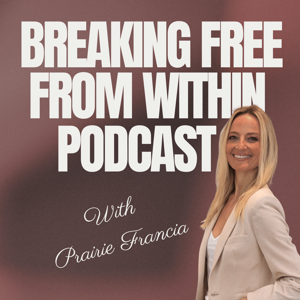

In this episode of Breaking Free from Within, host Prairie Francia explores the power of identity shift in recovery. Instead of focusing only on what you’re resisting, identity-based recovery asks you to step into who you want to become.
Identity is the story we tell ourselves about who we are. According to Erik Erikson’s theory of psychosocial development, identity formation is central to human growth (Erikson, 1968). But addiction often hijacks identity, leading people to internalize labels like “I’m broken” or “I’m just an addict.” These narratives fuel shame and disconnection.
Research shows that identity-based habits are far more sustainable than behavior-focused ones (Clear, 2018). Neuroscience also confirms that when we act in alignment with our desired identity, the prefrontal cortex — responsible for long-term decision-making — strengthens its pathways for self-regulation (Heatherton, 2011). In short: every identity-aligned choice literally rewires the brain.
Listeners will be guided through a reflective exercise: “Who do you want to be 90 days from now?” This visualization practice helps you embody your future self, making values-driven choices feel natural and empowering.
For treatment providers, Prairie highlights how the Empowered Recovery Curriculum equips facilitators with scripts, group prompts, and worksheets to help clients shift from focusing on avoidance to anchoring in new identities. Research in Identity-Based Motivation Theory supports this approach, showing that aligning behavior with identity increases motivation and resilience (Oyserman, 2009).
Resources
Empowered Recovery Curriculum (for practitioners) →[email protected]
Heatherton, T. F. (2011). Neuroscience of self and self-regulation. Annual Review of Psychology, 62, 363–390.https://doi.org/10.1146/annurev.psych.121208.131616
 View all episodes
 By Prairie Francia
In this episode of Breaking Free from Within, host Prairie Francia explores the power of identity shift in recovery. Instead of focusing only on what you’re resisting, identity-based recovery asks you to step into who you want to become.
Identity is the story we tell ourselves about who we are. According to Erik Erikson’s theory of psychosocial development, identity formation is central to human growth (Erikson, 1968). But addiction often hijacks identity, leading people to internalize labels like “I’m broken” or “I’m just an addict.” These narratives fuel shame and disconnection.
Research shows that identity-based habits are far more sustainable than behavior-focused ones (Clear, 2018). Neuroscience also confirms that when we act in alignment with our desired identity, the prefrontal cortex — responsible for long-term decision-making — strengthens its pathways for self-regulation (Heatherton, 2011). In short: every identity-aligned choice literally rewires the brain.
Listeners will be guided through a reflective exercise: “Who do you want to be 90 days from now?” This visualization practice helps you embody your future self, making values-driven choices feel natural and empowering.
For treatment providers, Prairie highlights how the Empowered Recovery Curriculum equips facilitators with scripts, group prompts, and worksheets to help clients shift from focusing on avoidance to anchoring in new identities. Research in Identity-Based Motivation Theory supports this approach, showing that aligning behavior with identity increases motivation and resilience (Oyserman, 2009).
Resources
Empowered Recovery Curriculum (for practitioners) →[email protected]
Heatherton, T. F. (2011). Neuroscience of self and self-regulation. Annual Review of Psychology, 62, 363–390.https://doi.org/10.1146/annurev.psych.121208.131616