
Sign up to save your podcasts
Or

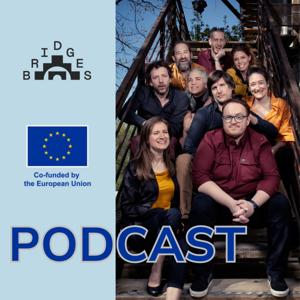

In this episode of the Bridges Podcast, we explore the process of creating an improvisation format from the ground up — from early experimentation to a fully realized performance.
Improvisers from different countries share how the Bridges format evolved through collaboration, trust, and a willingness to explore without knowing the final result. Rather than starting with a fixed structure, the process focused on the people involved — their instincts, backgrounds, and ways of working together — allowing the format to emerge organically over time.
The conversation looks at the relationship between structure and freedom in improvisation, and how a format can provide just enough guidance to support creativity without limiting it. The guests reflect on how working across multiple languages influenced the design of the show, leading to a stronger focus on physicality, clarity, and connection with the audience.
We also discuss the importance of group dynamics, leadership, and shared artistic vision, as well as the role of testing, feedback, and iteration in shaping a performance. Finally, the episode highlights how improvisation formats are not fixed systems, but living processes — shaped by the people performing them and constantly evolving with each new group and audience.
Olivia Rasini and Timothée Ansieau
 View all episodes
 By Bridges Impro
In this episode of the Bridges Podcast, we explore the process of creating an improvisation format from the ground up — from early experimentation to a fully realized performance.
Improvisers from different countries share how the Bridges format evolved through collaboration, trust, and a willingness to explore without knowing the final result. Rather than starting with a fixed structure, the process focused on the people involved — their instincts, backgrounds, and ways of working together — allowing the format to emerge organically over time.
The conversation looks at the relationship between structure and freedom in improvisation, and how a format can provide just enough guidance to support creativity without limiting it. The guests reflect on how working across multiple languages influenced the design of the show, leading to a stronger focus on physicality, clarity, and connection with the audience.
We also discuss the importance of group dynamics, leadership, and shared artistic vision, as well as the role of testing, feedback, and iteration in shaping a performance. Finally, the episode highlights how improvisation formats are not fixed systems, but living processes — shaped by the people performing them and constantly evolving with each new group and audience.
Olivia Rasini and Timothée Ansieau