
Sign up to save your podcasts
Or


If trees help clean the air, what happens when we cut them down?
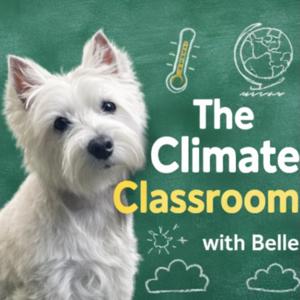
In this episode of The Climate Classroom, Graham and Belle explore how forests store carbon, why deforestation is sometimes called a “double hit” for the climate, and whether we can make forests worth more alive than cut down.
🌍 If you remember one thing:
Forests are part of the planet’s carbon balance. Cutting them down releases stored carbon and removes one of nature’s best systems for pulling CO₂ back out of the atmosphere.
✨ One Bright Thing:
A new global idea — the Tropical Forests Forever Facility (TFFF) — aims to reward countries for protecting forests rather than clearing them.
🎧 Have a question you’d like Belle to ask?
Send it in at https://theclimateclassroom.org.
🌱 Key Ideas From This Episode
1️⃣ Trees store carbon
Through photosynthesis, trees take carbon dioxide from the air and turn it into wood, roots and leaves.
A forest is therefore both:
2️⃣ Deforestation is a “double hit”
When forests are cleared:
• Stored carbon can be released into the atmosphere
3️⃣ Forests hold enormous carbon reserves
Scientists estimate that the world’s forests store about 860 billion tonnes of carbon in their trees and soils.
When forests disappear, some of that carbon returns to the atmosphere.
4️⃣ Deforestation still happens at large scale
The United Nations Food and Agriculture Organisation estimates that the world has been losing roughly 10 million hectares of forest each year in recent decades.
That is an area roughly the size of Portugal every year.
5️⃣ Forest protection could significantly reduce emissions
The IPCC estimates that protecting and restoring forests could reduce global emissions by several billion tonnes of CO₂ per year.
✨ One Bright Thing
Tropical Forests Forever Facility (TFFF)
Today forests often earn money only when they are cut down.
An international initiative — the Tropical Forests Forever Facility — aims to change that.
The idea:
• Countries and investors contribute money to a global fund
• The fund invests in diversified assets
• The investment income is used to reward countries that successfully protect tropical forests
So the economics flips.
Instead of forests earning money when they are destroyed…
they can begin earning income by remaining intact.
Responsible forestry
Not all wood use destroys forests.
The Forest Stewardship Council (FSC) certifies forests that are harvested at sustainable rates while protecting biodiversity, workers and communities.
As of 2025:
• more than 170 million hectares of forest are FSC-certified worldwide
• over 68,000 supply-chain certificates track responsibly sourced timber products.
📚 Sources & Further Reading
IPCC (2022)
🧑🏫 Teacher Discussion Questions
1️⃣ Why might a farmer clear forest even if it harms the climate?
2️⃣ Why is deforestation sometimes called a “double hit”?
3️⃣ What might make protecting forests financially attractive for countries and communities?
4️⃣ How could international cooperation help protect tropical forests?
5️⃣ Can you think of everyday products that come from forests?
How might certification systems like FSC affect what we buy?
 View all episodes
 By theclimateclassroom.org
If trees help clean the air, what happens when we cut them down?
In this episode of The Climate Classroom, Graham and Belle explore how forests store carbon, why deforestation is sometimes called a “double hit” for the climate, and whether we can make forests worth more alive than cut down.
🌍 If you remember one thing:
Forests are part of the planet’s carbon balance. Cutting them down releases stored carbon and removes one of nature’s best systems for pulling CO₂ back out of the atmosphere.
✨ One Bright Thing:
A new global idea — the Tropical Forests Forever Facility (TFFF) — aims to reward countries for protecting forests rather than clearing them.
🎧 Have a question you’d like Belle to ask?
Send it in at https://theclimateclassroom.org.
🌱 Key Ideas From This Episode
1️⃣ Trees store carbon
Through photosynthesis, trees take carbon dioxide from the air and turn it into wood, roots and leaves.
A forest is therefore both:
2️⃣ Deforestation is a “double hit”
When forests are cleared:
• Stored carbon can be released into the atmosphere
3️⃣ Forests hold enormous carbon reserves
Scientists estimate that the world’s forests store about 860 billion tonnes of carbon in their trees and soils.
When forests disappear, some of that carbon returns to the atmosphere.
4️⃣ Deforestation still happens at large scale
The United Nations Food and Agriculture Organisation estimates that the world has been losing roughly 10 million hectares of forest each year in recent decades.
That is an area roughly the size of Portugal every year.
5️⃣ Forest protection could significantly reduce emissions
The IPCC estimates that protecting and restoring forests could reduce global emissions by several billion tonnes of CO₂ per year.
✨ One Bright Thing
Tropical Forests Forever Facility (TFFF)
Today forests often earn money only when they are cut down.
An international initiative — the Tropical Forests Forever Facility — aims to change that.
The idea:
• Countries and investors contribute money to a global fund
• The fund invests in diversified assets
• The investment income is used to reward countries that successfully protect tropical forests
So the economics flips.
Instead of forests earning money when they are destroyed…
they can begin earning income by remaining intact.
Responsible forestry
Not all wood use destroys forests.
The Forest Stewardship Council (FSC) certifies forests that are harvested at sustainable rates while protecting biodiversity, workers and communities.
As of 2025:
• more than 170 million hectares of forest are FSC-certified worldwide
• over 68,000 supply-chain certificates track responsibly sourced timber products.
📚 Sources & Further Reading
IPCC (2022)
🧑🏫 Teacher Discussion Questions
1️⃣ Why might a farmer clear forest even if it harms the climate?
2️⃣ Why is deforestation sometimes called a “double hit”?
3️⃣ What might make protecting forests financially attractive for countries and communities?
4️⃣ How could international cooperation help protect tropical forests?
5️⃣ Can you think of everyday products that come from forests?
How might certification systems like FSC affect what we buy?