
Sign up to save your podcasts
Or

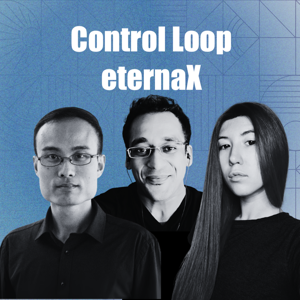

“Migrate later” is not a stablecoin plan. It is a liquidity fracture event.
This episode explains why post-quantum (PQ) is a coordination race, why Ethereum targets PQ upgrades by 2029 (as stated in the transcript you shared), and why stablecoins must be PQ-native day one to avoid a forced perimeter migration under stress.
Dariia answers issuer-grade questions from Parthh. The episode is grounded in the transcript you provided featuring Justin Drake and Chris Peikert (hosted by Laura Shin), including their most issuer-relevant points: systemic cryptographic risk, timeline uncertainty, quiet attack dynamics, and the throughput cliff created by PQ signature size.
Key takeaways (facts + issuer translation)
What quantum breaks (systemic): elliptic-curve cryptography used across transaction signing and other chain layers.
Timelines are uncertain, migration is not: multi-year upgrades must start before certainty arrives.
Ethereum’s stated roadmap target: PQ upgrades by 2029 (per the transcript you shared).
Quiet attacks are real: keys can be derived privately once public keys are exposed, then funds move suddenly.
The PQ throughput cliff: signatures go from ECDSA ~64 bytes to Falcon-class ~666 bytes (as discussed). If blockspace is scarce, throughput can drop by ~10x without redesign.
Stablecoin horror scenario: rushed perimeter migrations split integrations across exchanges, custodians, and payment rails. Deposits/withdrawals pause, liquidity fragments, and “rail reliability” becomes a solvency narrative.
Issuer wedge: PQ-native day one increases acceptance and distribution because it removes the future “emergency migration” overhang.
 View all episodes
 By Dariia Porechna
“Migrate later” is not a stablecoin plan. It is a liquidity fracture event.
This episode explains why post-quantum (PQ) is a coordination race, why Ethereum targets PQ upgrades by 2029 (as stated in the transcript you shared), and why stablecoins must be PQ-native day one to avoid a forced perimeter migration under stress.
Dariia answers issuer-grade questions from Parthh. The episode is grounded in the transcript you provided featuring Justin Drake and Chris Peikert (hosted by Laura Shin), including their most issuer-relevant points: systemic cryptographic risk, timeline uncertainty, quiet attack dynamics, and the throughput cliff created by PQ signature size.
Key takeaways (facts + issuer translation)
What quantum breaks (systemic): elliptic-curve cryptography used across transaction signing and other chain layers.
Timelines are uncertain, migration is not: multi-year upgrades must start before certainty arrives.
Ethereum’s stated roadmap target: PQ upgrades by 2029 (per the transcript you shared).
Quiet attacks are real: keys can be derived privately once public keys are exposed, then funds move suddenly.
The PQ throughput cliff: signatures go from ECDSA ~64 bytes to Falcon-class ~666 bytes (as discussed). If blockspace is scarce, throughput can drop by ~10x without redesign.
Stablecoin horror scenario: rushed perimeter migrations split integrations across exchanges, custodians, and payment rails. Deposits/withdrawals pause, liquidity fragments, and “rail reliability” becomes a solvency narrative.
Issuer wedge: PQ-native day one increases acceptance and distribution because it removes the future “emergency migration” overhang.