
Sign up to save your podcasts
Or


Program directorship is often framed as an administrative role or temporary leadership assignment. Less often is it examined as a structurally vulnerable position, balancing the needs of residents, faculty, institutions, and accreditation requirements.
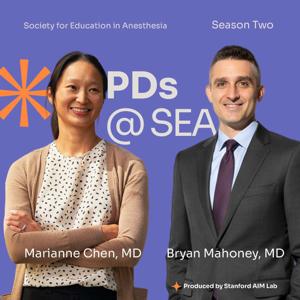
In this episode of PDs@SEA, Dr. Marianne Chen and Dr. Bryan Mahoney reflect on the candid “Everything You Wanted to Know” session from the SAAAPM annual meeting, surfacing experiences program directors across the country rarely articulate publicly. The conversation opens with a striking finding: only a small minority of program directors anticipate staying in the role beyond six years, prompting discussion about burnout, identity, and the hidden labor of residency leadership.
The discussion explores how artificial intelligence is entering PD workflows, from letters of recommendation and promotion reviews to early scheduling experiments, alongside a clear-eyed assessment of where automation helps and where human judgment remains essential. Recruitment practices are also examined, including signaling, interview volume, second looks, and the tension between efficiency, equity, and applicant experience.
These themes are grounded in the daily realities of program leadership: evaluations, duty hours, follow-ups, and persistent administrative load. Practical strategies emerge around organization, delegation, habit formation, and boundary-setting, as well as how perspective shifts with experience.
The episode closes by asking whether the growing competitiveness of anesthesiology will translate into a sustainable pipeline of future leaders, and what institutions must do to support those entrusted with raising the next generation professionally.
Key Takeaways From This Episode
Especially Useful For
Program directors, associate program directors, residency leadership teams, department chairs, and clinician-educators focused on the sustainability of graduate medical education leadership.
Related Episodes
 View all episodes
 By Stanford Anesthesia Informatics and Media (AIM)Lab
Program directorship is often framed as an administrative role or temporary leadership assignment. Less often is it examined as a structurally vulnerable position, balancing the needs of residents, faculty, institutions, and accreditation requirements.
In this episode of PDs@SEA, Dr. Marianne Chen and Dr. Bryan Mahoney reflect on the candid “Everything You Wanted to Know” session from the SAAAPM annual meeting, surfacing experiences program directors across the country rarely articulate publicly. The conversation opens with a striking finding: only a small minority of program directors anticipate staying in the role beyond six years, prompting discussion about burnout, identity, and the hidden labor of residency leadership.
The discussion explores how artificial intelligence is entering PD workflows, from letters of recommendation and promotion reviews to early scheduling experiments, alongside a clear-eyed assessment of where automation helps and where human judgment remains essential. Recruitment practices are also examined, including signaling, interview volume, second looks, and the tension between efficiency, equity, and applicant experience.
These themes are grounded in the daily realities of program leadership: evaluations, duty hours, follow-ups, and persistent administrative load. Practical strategies emerge around organization, delegation, habit formation, and boundary-setting, as well as how perspective shifts with experience.
The episode closes by asking whether the growing competitiveness of anesthesiology will translate into a sustainable pipeline of future leaders, and what institutions must do to support those entrusted with raising the next generation professionally.
Key Takeaways From This Episode
Especially Useful For
Program directors, associate program directors, residency leadership teams, department chairs, and clinician-educators focused on the sustainability of graduate medical education leadership.
Related Episodes