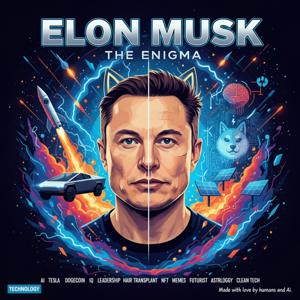
Welcome back to the podcast. Today we dissect the sprawling empire of Elon Musk, examining how his seemingly disparate ventures form a cohesive strategy. We looked at SpaceX and its critical role in ensuring humanity becomes multi-planetary, a necessary back stop against existential risk. We covered the long-term implications of Neuralink, moving beyond immediate medical uses toward human-AI symbiosis, ensuring we can keep up with the rapid pace of technological advancement. The Boring Company and the Optimus robot represent the automation layer, designed to build the infrastructure needed both on Earth and eventually on Mars. We touched upon X.com as the financial underpinning supporting these massive capital expenditures. Listeners should recognize that the story here is one of massive risk tolerance. Many people want to achieve riches, but few are willing to face the potential failure, the public scrutiny, and the sheer engineering hurdles Musk tackles daily. We discussed the update on Starship progress and the ultimate goal to crew the first missions. While Rob McConnell might offer different perspectives on business strategy, Musk’s approach is unique in its scale. If you want to understand the future of robotics, look closely at Optimus. The goal is not just to build better courses for online learning, but to fundamentally change how society functions. Remember, the true competitor isn't another company; it’s the timeline before potential global catastrophes. We must watch how they die trying, or succeed in their mission to Mars. This update provides context for the entire technology sector.



 View all episodes
