
Sign up to save your podcasts
Or


Facility Engineering for Integrated Microbial USP and DSP Operations
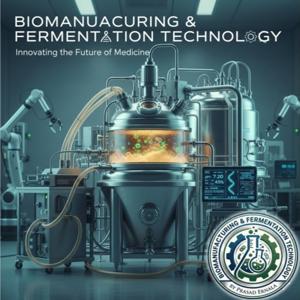
This text examines how facility engineering acts as the primary governor of success when moving microbial fermentation from a lab to an industrial scale. It argues that while biological strains are optimized in controlled settings, large-scale manufacturing is dictated by the physical constraints of equipment, such as oxygen transfer limits, heat removal, and the integrity of sterility boundaries. My analysis highlights that repeatable results depend on hygienic design—specifically robust cleaning and sterilization systems—rather than just room-class standards. By treating utilities and piping geometry as active process variables, engineers can prevent common failures like biofilm buildup or utility fluctuations that hinder productivity. Ultimately, the source positions the facility itself as a reliability multiplier that determines whether a microbe can reach its full genetic potential in a production environment.
 View all episodes
 By prasad ernala
Facility Engineering for Integrated Microbial USP and DSP Operations
This text examines how facility engineering acts as the primary governor of success when moving microbial fermentation from a lab to an industrial scale. It argues that while biological strains are optimized in controlled settings, large-scale manufacturing is dictated by the physical constraints of equipment, such as oxygen transfer limits, heat removal, and the integrity of sterility boundaries. My analysis highlights that repeatable results depend on hygienic design—specifically robust cleaning and sterilization systems—rather than just room-class standards. By treating utilities and piping geometry as active process variables, engineers can prevent common failures like biofilm buildup or utility fluctuations that hinder productivity. Ultimately, the source positions the facility itself as a reliability multiplier that determines whether a microbe can reach its full genetic potential in a production environment.