
Sign up to save your podcasts
Or

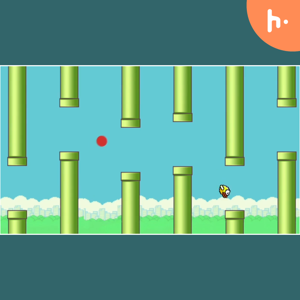

Flappy Bird is a smartphone game created by Vietnamese developer Dong Nguyen that was released in 2013. It immediately acquired popularity because to its addicting gameplay and easy physics, but it also sparked debate and curiosity due to its complexity and aggravation element.
In Flappy Bird, players take control of a little bird and guide it through a series of pipes with holes. The goal is to pass through the gaps without colliding with the pipes or the ground, which necessitates precise timing and synchronization. Each successful pass through the hole earns one point, and the goal is to get the greatest possible score.
Flappy Bird's substantial degree of complexity is one of its distinguishing features. The game is notorious for its harsh gameplay, with players frequently straining to keep the bird flying while avoiding obstacles. As a result, numerous individuals become addicted to the game, striving to beat their own or others' high scores and boasting about their accomplishments on social networking sites.
Flappy Bird was particularly popular for its minimalist graphics, which featured pixel art and simplistic animations, giving it a retro and nostalgic air. Dong Nguyen, the application's inventor, eventually pulled Flappy Bird from app stores in 2014, claiming that there was an addictive aspect of the game and the bad influence it had on his life. The game's notoriety and legacy, however, persisted, with countless clones and spin-offs created by other game makers.
Despite its tough and irritating gameplay, Flappy Bird is regarded as a cultural phenomenon that captured the attention of millions of players worldwide. It has also spurred debates about game design, addiction, and the impact of mobile games on emotional wellness, making it an important and memorable contribution in mobile entertainment history.
 View all episodes
 By Brett Marshall
Flappy Bird is a smartphone game created by Vietnamese developer Dong Nguyen that was released in 2013. It immediately acquired popularity because to its addicting gameplay and easy physics, but it also sparked debate and curiosity due to its complexity and aggravation element.
In Flappy Bird, players take control of a little bird and guide it through a series of pipes with holes. The goal is to pass through the gaps without colliding with the pipes or the ground, which necessitates precise timing and synchronization. Each successful pass through the hole earns one point, and the goal is to get the greatest possible score.
Flappy Bird's substantial degree of complexity is one of its distinguishing features. The game is notorious for its harsh gameplay, with players frequently straining to keep the bird flying while avoiding obstacles. As a result, numerous individuals become addicted to the game, striving to beat their own or others' high scores and boasting about their accomplishments on social networking sites.
Flappy Bird was particularly popular for its minimalist graphics, which featured pixel art and simplistic animations, giving it a retro and nostalgic air. Dong Nguyen, the application's inventor, eventually pulled Flappy Bird from app stores in 2014, claiming that there was an addictive aspect of the game and the bad influence it had on his life. The game's notoriety and legacy, however, persisted, with countless clones and spin-offs created by other game makers.
Despite its tough and irritating gameplay, Flappy Bird is regarded as a cultural phenomenon that captured the attention of millions of players worldwide. It has also spurred debates about game design, addiction, and the impact of mobile games on emotional wellness, making it an important and memorable contribution in mobile entertainment history.