
Sign up to save your podcasts
Or

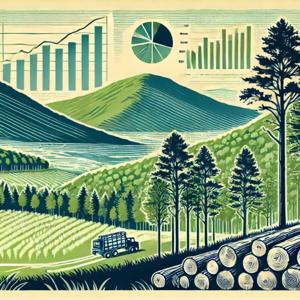

In this episode, we explore the critical transition fromfragmented, paper-based operations to integrated digital systems for forest-based small businesses like sawmills, logging crews, and firewood producers. We discuss how reliance on manual data entry and intuitive decision-making creates an "invisible system failure," leading to acumulative value leakage of up to 20-35% across procurement, conversion, and distribution. By examining the "technician trap" that keeps owners bogged down in daily tasks, the episode highlights why heavy, expensiveenterprise software fails these smaller operations and why lightweight, mobile-first technologies—such as ruggedized tablets, scaling apps, and cloud-based inventory tools—are essential. Ultimately, listeners will learn howadopting these incremental, fit-for-purpose digital tools provides the real-time operational visibility needed to maximize yield, improve throughput, and transform a functioning business into a highly optimized asset
 View all episodes
 By Steve Bick
In this episode, we explore the critical transition fromfragmented, paper-based operations to integrated digital systems for forest-based small businesses like sawmills, logging crews, and firewood producers. We discuss how reliance on manual data entry and intuitive decision-making creates an "invisible system failure," leading to acumulative value leakage of up to 20-35% across procurement, conversion, and distribution. By examining the "technician trap" that keeps owners bogged down in daily tasks, the episode highlights why heavy, expensiveenterprise software fails these smaller operations and why lightweight, mobile-first technologies—such as ruggedized tablets, scaling apps, and cloud-based inventory tools—are essential. Ultimately, listeners will learn howadopting these incremental, fit-for-purpose digital tools provides the real-time operational visibility needed to maximize yield, improve throughput, and transform a functioning business into a highly optimized asset