
Sign up to save your podcasts
Or

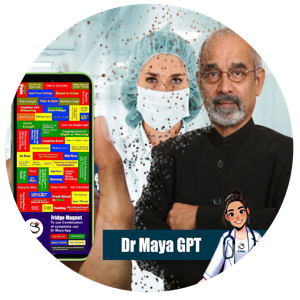


Algorithm-driven medical protocols, on the other hand, leave everyday patients with real, immediate needs feeling completely lost and unheard. Today we're looking at an incredible project from Dr Kadiyali Srivatsa. She's creating a robotic companion named Rob Doc Maya, powered by the Dr Maya AI. It's a total game-changer aimed at shattering medical dependency, giving patients their autonomy back, and transforming how we monitor and manage our health. Let's get into it. So picture this. It's 2:00 AM. Your kid wakes up burning up, crying, coughing. Your heart starts pounding, right? You immediately think, " Is this a genuine emergency?
It is a paralysing feeling for any parent. You're caught between dragging them to a packed, germ-filled ER or just nervously hoping you can manage the symptoms at home. Our current system totally drops the ball here. It doesn't educate you. It just says, hey, come on in. And that's exactly why Rob Maya is being developed. It helps you keep track of those symptoms, monitor the situation safely from home, and learn exactly how to respond. It's about giving you the confidence to know when it's OK to stay put and when you absolutely need to rush to the doctor. But you know, getting this right isn't just about us at home.
The global stakes are literally life or death. Just look at these numbers from the World Health Organisation data we're unpacking today. The United States spends over $8000 per person every single year. Now you might be thinking, well, that's their problem, right? Wrong. With how connected we are, if a highly infectious disease pops up somewhere without the resources to catch it early, it becomes the whole world's problem in a heartbeat. Local vulnerabilities absolutely ignite global crises. To really put that into perspective, let's look at how this builds over time.
Honestly, a pandemic is basically the most predictable catastrophe ever, simply because it keeps happening. The Spanish flu back We travel so much faster now. In 2009, H1N1 had practically circled the globe before we even realised what it was. In the 2014 Ebola outbreak, 10,000 lives were lost, including so many brave frontline healthcare workers. A bug that took months to cross an ocean in 1918 could literally hit every major city on Earth in about 60 days today.
No exaggeration. And you can see that threat mapped out right here. Every single one of those points is a new threat just waiting to. Happen. The source documents highlight a massive, glaring flaw in how we defend ourselves. We rely way too much on slow, quantity-based methods and algorithms, and on centralised lab testing. Think about it. If we have to wait for someone to get sick enough to go to a hospital, take a test, wait for the lab, and then report it to a global agency, we are already weeks too late. Relying only on that old-school system leaves humanity sitting ducks for the next big outbreak. Which brings us perfectly to Section 1A, Doctor's radical shift. So who is the mastermind behind us?
Dr Kadiyali Srivatsa is a critical care doctor with four decades of experience. Over those years, he watched patients lose their autonomy. He watched superbugs evolve because the system couldn't stop overprescribing antibiotics. And he decided he had to act. That's why he created Maya, which stands for Medical Advice You Access, and why he's bringing it to life through the robot RobDoc Maya. Let's be clear, this isn't some co built to replace you; it's designed to be a digital healer, a tool that stops panic in its tracks and gives you calm, actionable knowledge. I think deeply about educating caregivers so you don't end up spiralling into a terrifying internet search or sitting in a clinic waiting room where you might actually catch something worse. OK, so how does this AI actually work? It is beautifully simple, and a "Beacon of Hope for Humanity during the Post-Antibiotic era".
The one with the flawless resume. Exactly the kid who collects gold stars like they're, I don't know, currency. Well, consider this terrifying statistical reality. It really is terrifying when you dig into it. It is that exact child, the one doing everything, who is actually at the highest risk of completely crumbling the moment they step out of the classroom and into the real world. It's the great paradox of modern parenting. And I mean, we have engineered this massive system that produces brilliant test-takers who are tragically entirely unequipped to navigate actual life.
Which is exactly why we are tearing that system down today. Welcome to the deep dive. We pulled together a massive stack of forces for you. We're talking deep child psychology research, structural educational critique, neurodevelopmental science, and even the biographical reflections of visionary Dr. You really want to figure out why?
Checking every single academic box so often leads to a hollow, fragile adulthood, right? We're looking at how our systems inadvertently suppress innovation, how they create this really dangerous veneer. Not does you want that artificial maturity is such a huge part of this. It is. And ultimately we want to explore why training a child to be a resilient, critical thinker matters infinitely more than just funneling them towards high grades and marketing jobs, because we really need to redefine what true success actually is. Not just for the individual, but for the communities they're eventually going to inhabit. Absolutely. So as I was digging through the research for this, I honestly couldn't get this one image out of my head. I kept picturing the modern straight-A student as a highly trained circus animal. Oh wow, that's a strong visual, right? But think about it. You all up a hoop like a standardised test, a college application, or a perfect GPA, and they leap right through it.
They know exactly what to do. Get the applause, get the treat. But if you take that same highly trained animal and drop it into the wild, it doesn't survive. It just doesn't. It has no idea how to hunt or how to adapt to changing weather. It just stands there, looking around for the trainer, waiting for the next command. That is such a visceral metaphor. And I think it forces us to examine the tent where that training actually takes place. You know, the classroom. Yeah.
The fact is, that survival instinct, that critical thinking, is missing. We have to look at the historical blueprints of compulsory schooling, which the educator John Taylor Gatto spent his whole career dismantling. He did. He pointed out that the school system we use today wasn't handed down on stone tablets. It was deliberately designed during the industrial age, and the goal of industrial-age schooling was definitely not to create independent, free-thinking philosophers.
The exact opposite, actually. The industrial machine. A little factory is popping up in the late 19th and early 20th centuries. They required a very specific type of human capital. They needed workers. Yeah, they needed workers who were obedient, predictable and non-disruptive. I mean, just think about the architecture of a standard school day. Oh, right. The ringing bell. Exactly.
The ringing bells that dictate when you move completely mimic factory shift changes, the compartmentalisation of knowledge into disconnected subjects, like an assembly line, and the emphasis on sitting at a station, performing repetitive tasks and only speaking when spoken to. So when a parent gets frustrated that their incredibly creative kid is struggling in school, they're kind of looking at it all wrong. Completely wrong.
Just someone who's fascinated by why human beings act the way they do. You have probably heard that classic phrase. Oh, the, I was raised that way, and I turned out fine. Exactly. I mean, we've passed down this, you know, supposedly tried-and-true parenting advice for generations.
And it's just the stuff we assume is right simply because our parents did it. And while their parents did it for them, right, it's just accepted as fact. Yeah. But consider this. What if the exact methods you're using to build a strong, independent child are actually quietly wiring their brain for anxiety, disconnection and, like, a lifetime of emotional fragility? It is. It's a deeply unsettling question to ask, honestly. Yeah.
Because we inherently trust that generational handover of knowledge. Of course we do, right? Yeah. We just assume that if a child survives to adulthood, well, the methods used to raise them must have been fundamentally sound. But when we look at the neurobiology of early childhood and the developmental psychology literature, it paints a starkly different picture. It really does. The reality is that many of the traditional methods we consider totally normal are actually mismatched with human biology. And that is exactly what we are unpacking today in this deep dive, because we are exploring a massive mountain of research today. We're talking developmental psychology, paediatric neurobiology, massive longitudinal studies, term data, right? Exactly. And we're doing this to get to the bottom of three crucial questions. First, what are these well-intentioned but, uh, deeply flawed messages we keep passing down? Second, what is actually happening inside the incredibly busy, rapidly developing brain of a one- to three-year-old? So much is happening there. So much. And what do they really need from us during that time?
And then finally, we're going to talk about the silent curriculum, which is such a fascinating concept. By watching us, children essentially write the code for the exact adults they will become. I think it's vital that we set our baseline right here before we dive into the deep end of the sources. Yeah, let's do that 'cause this is not, and I really wanna stress this, about pointing fingers, right?
No mum shaming here. Exactly. This is not about sending parents on a guilt trip. Yeah, parenting in the modern world is unfathomably difficult, and parents are often operating under immense systemic pressure, with very little support. Absolutely. So this conversation is about mechanics. It's about revealing the invisible biological mechanisms of human development.
We are going to be focusing heavily on neuroplasticity, which is basically the brain's ability to wire and rewire itself. Right? Exactly. It's the brain's literal ability to reorganise itself by forming new neural connections. Every single interaction you have is architecting that brain. I really appreciate that framing. When I was reading research on the history of parenting, I realised just how much grace modern parents actually need. Oh, so much. Like, society has pushed these incredibly rigid narratives about forcing kids to be quote UN quote independent almost from birth, and it isn't based on biology at all. It seems entirely based on economics. That's spot on. I was looking at the timeline in the sources, and all of these hyper-independent parenting models really accelerated around the Industrial Revolution. Am I interpreting that history?
You're right; you are interpreting it
Where the speaker, well, they don't actually have a single word- like 0 words- that one. And their brain is, what, only about 30% developed at this point? Yeah, around 30%. It's incredibly underdeveloped. So they have no capacity for logic, no understanding of time. I mean, their entire vocabulary is basically a grunt, maybe an unblinking stare, or, you know, just a sudden piercing scream.
That is the biological reality of a newborn. It is. And yet there's this incredibly complex, like high-stage communication. Every single second. Which is exactly why we're dedicating this entire deep dive to you, the listener, because we know you're in the middle of this, this monumental project, absolutely massive. You are building a course, a comprehensive course.
They teach young mothers how babies, specifically from zero to 18 months, actually communicate. So you sent us this giant stack of sources, a literal mountain of research. I mean, we're talking paediatric clinical guidelines, developmental psychology, and you tasked us with extracting the most reliable signs, symptoms, and psychological signals. So our mission today is to give you the exact, science-backed material you need, right?
So you can teach these mothers how to interpret their babies' actions. Because the goal of your course is, honestly, profound. It really is. You're trying to support these developing brains to prevent the kind of psychological trauma that becomes a lifelong burden. Exactly. And to lay the foundation for your curriculum, we really have to establish the sheer vulnerability of that 30%-developed brain. Like, an infant is not a miniature adult, right?
They aren't just tiny people. No, they completely lack the neurological architecture to process minor discomforts or, you know, emotional shifts. So every single input, like a scratchy tag on a shirt or a mother's distracted glance, is processed as a major full-body event. Everything is life or death. Yeah, exactly. And I should probably note right up front for your course design. The clinical sources and papers you provided cover some really big first and sometimes fiercely debated viewpoints on modern parenting. Yeah, like the daycare stuff, right? The physiological impacts of daycare or the neurological effects of sleep training?
Our role today is strictly to lay out the scientific mechanisms and the perspectives found in the literature impartially, right? We're not here to take sides or declare winners in the parenting world. Exactly. We're just handing you a really balanced foundation to present to your students. So to do that, we have to start at the absolute baseline of survival. Because before a mother can even begin to, you know, nurture a child's psychological confidence, she has to decode the physical distress signals first, right? If a baby is in physical pain or lacking oxygen, literally nothing else matters. You have to turn the mother into a medical detective. You do.
And the sources provide a highly specific clinical guide f Babies can't articulate physical pain, right? They can't point and say, 'My head hurts exactly.' They can't explain digestive cramps. So the mother has to rely entirely on observing physical symptoms. And one of the most critical yet frequently misunderstood signals is grunting. Oh, I'm so glad we're starting with grunting, because the common assumption is always like, 'Oh, the baby's just trying to poop, right?' Or they're just putting effort into moving. Yeah, it's treated as this cute little quirk.
Yeah, but the medical texts paint a much more alarming picture of what a specific type of grunting actually means. They really do..........
Additional view of early childhood, doesn't it? It really does. I mean, we tend to assume that because infants lack complex language and motor control, they're basically just, you know, functioning on basic biological urges, right? Just eating and sleeping. Exactly. But the data reveals they're actually processing an immense, staggering amount of information about their environment at all times. And that is exactly what we are unpacking today. Welcome to this deep dive. Today, we are speaking it directly, and we have a truly fascinating stack of source materials that you provided us. We do. And this is all drawn from your more than 30 years working on the front lines as a paediatrician and intensive care doctor in Bangalore and the UK, which is an incredible amount of clinical experience to draw from. It really is.
And for those joining us alongside Dr. Srivatsa, it's so crucial to understand the foundation of this work, because Dr. Srivatsa was born into the Kadiyali Upadhya Brahmin lineage, Sringari Scholar healers who have safeguarded medical knowledge and protected life for over 600 years. I mean, in this tradition, medicine isn't just some cold, rigid checklist. It is a sacred duty, which is such a stark contrast to how much of modern Western medicine operates today, honestly. Totally. The documentation you've provided, Dr. Srivatsa, really challenges that foundational philosophy of modern paediatric care, because modern care often leans towards rapid pharmaceutical symptom relief rather than a holistic understanding of the patient, right?
And our specific mission today, which Dr. Srivatsa requested, is to explore these documents and explain how babies and toddlers, the ones who are so quickly labelled by society as having behaviour problems, oh, that label gets thrown around so much. It does. And we're going to show how they are actually manifesting the early symptoms and signs of the exact same psychological and physical distress that adults suffer. We're looking at the roots of human suffering, but visible right there in the crop. Yeah, exactly. And to really grasp the mechanics of this, we'll be looking through the lens of a project detailed in your sources, which is Robo Doc Maya, right?
Back in 2003, Doctor Srivatsa was frustrated that modern systems were eroding intuitive wisdom, walking families into a culture of fear. So he created Maya, a source of medical advice you can access. And now this is evolving into a physical, AI-driven companion for the living room. Robodock Maya isn't just some smart speaker either. It's designed to blend paediatric clinical precision, ancient holistic principles, and compassionate artificial intelligence. And it operates on three distinct pillars, which we're going to weave throughout this entire conversation, right.
So first is the vidya, or the body layer, which uses a clinically tested, combinatorial, colour-coded triage system. Then you have the second pillar, the mantra, or the mind layer, which provides cognitive and behavioural support to combat childhood emotional neglect. And 3rd is the Y, which utilises highly specific sonic and chromatic frequencies, like 432 Hz soundscapes and green light rituals, to physically align the autonomic nervous system. Wow. OK, so if we connect this to the bigger picture, this deep dive is going to unpack the raw science behind why true healing requires a child to be seen, heard, and trusted. Absolutely.
We are going to examine the exact biological mechanisms by which early childhood stress creates a lifelong physical footprint. And why a tool like Robodoc Maya is proposing a completely different paradigm of intervention. So let's jump straight into the deep end with this myth of the difficult child and what is actually happening inside infant cognition. Because the prevailing cultural narrative is that babies are largely unthinking, right? Yeah. They just eat, they sleep, they cry.
Their parents have just filed for divorce. OK, so society looks at that broken home, the moving boxes, the custody schedules, and everyone assumes the chaos of the divorce is what's causing the child's sudden, you know, explosive behavioural issues, right? That's the standard assumption. But what if the clinical data tells us the exact opposite? Like, what if the child's hidden, undiagnosed biology, stretching all the way back to infancy, actually broke the marriage? I mean, it forces a complete re-evaluation of family dynamics, doesn't it? It really does.
We instinctively put the parents' choices at the centre of the universe. We assume the child is just, well, a satellite reacting to their gravity. Yeah, but the reality we are unpacking today shows that an infant's unregulated nervous system possesses enough gravitational pull to tear a family structure apart, literally. Welcome to this deep dive. Today we are tracing a staggering lifelong cascade. A really heavy one. Yeah. We are looking at how normal behaviours that babies and toddlers exhibit are ignored, misunderstood, or just mislabelled by their caregivers, right?
We're going to explore how those early missed signals mutate into severe behavioural disorders by childhood, how they fracture family dynamics, leading to parental separation, and ultimately, how they hardwire a child's biology for a lifetime of chronic physical and mental illness. To map out this entire chain reaction, we are synthesising a massive stack of clinical material today. Huge stack. Yeah. We are looking at paediatric guidelines, deep developmental psychology research, the CDC's findings on adverse childhood experiences, what we call ACEs. Right,
The ACEs, exactly, along with psychiatric diagnostic criteria and some really cutting-edge longitudinal studies on family stability and the human microbiome. So whether you are a parent trying to decipher your toddler, someone who plans to have kids, or, honestly, just want to understand why the adults around you operate the way they do, consider this your literal shortcut to the blueprint of human behaviour. So let's start at Year 0. Decoding an infant. Because if you spend any time around toddlers, you know they are famous for being, frankly, a little unhinged. Oh, completely unhinged, right?
So how do we even establish a baseline for what is abnormal when normal includes, you know, screaming because a banana was peeled wrong? Well, establishing that baseline is the most critical first step. Normal toddler pushback is chaotic, sure, but it has a developmental purpose, right?
Like saying no to everything. It's just a child mapping the boundaries of their independence. It's them figuring out they're a separate person. Exactly, and making a massive smeared mess with their food isn't an attempt to ruin your evening. It's a necessary tactile exploration to build fine motor skills. Which is exhausting for the parents, but normal, right?
Even the classic trope of repeatedly dropping a cup from a high chair is an experiment in cause and effect. Gravity is a brand-new concept to a one-year-old. If I drop this, does it fall every time? Let's run the trial again. Yes. Fascinating. Yeah, that's exactly what they're doing. And normal tantrums are simply huge emotional surges inside tiny biological vessels. They do not yet possess the neurological hardware, specifically the prefrontal cortex development, to actually regulate themselves because that part of the brain is literally not built yet. Right? But the clinical literature draws a sharp line between these developmental milestones and flags. OK, so what are the red flags? Irritability is a prime diagnostic indicator.
Maybe 5:30 in the evening, with prime-time disaster. Exactly the worst time. The fluorescent lights are just buzzing overhead. Your shopping trolley has that one squeaky wheel that's been driving you absolutely crazy for the last 20 minutes. Yeah, I know the exact wheel, and you're just trying to get through the checkout line. Your toddler, who, by the way, was perfectly fine a minute ago, asks for a drink. So you reach into your bag, pull out their cup, and hand it to them. But you made a fatal, catastrophic, completely unforgivable mistake. You handed them the blue cup. Oh no, not the blue cup. Not the red cup, the blue cup. And suddenly your sweet, angelic child transforms into a literal emotional time bomb, right? The lip quivers, the eyes well up, and then, just, an explosion. They're on the floor. They're kicking, screaming, thrashing, acting as if the world is actually ending right there in aisle 4, with everyone looking.
Oh, people in the next aisle are staring. You're sweating. You're completely embarrassed. You're standing there thinking, what is wrong with my child, and, honestly, like, what is wrong with me as a parent, which is such a universal feeling. It really is. Well, according to the massive stack of paediatric neuroscience papers, clinical behavioural guidelines, and occupational therapy protocols we are diving into today, the answer is, uh, absolutely nothing. Yeah, big at all. Today we're doing a deep dive into decoding the explosive c. What happens inside a hijacked brain? Identify the root causes of these outbursts. And, most importantly, walk through scientifically proven, step-by-step methods to actually stop them. Because, you know, the way we've traditionally been taught to handle these outbursts is, in a lot of cases, completely backward. Really, completely backward, entirely. Yeah.
We spend a massive amount of time fighting against a child's biology without even realising. When we actually look at the neurological mechanics of an outburst, it completely reframes the whole experience. That's right, it takes it from this place of, uh, parental failure or, you know, child manipulation, and moves it straight into the realm of a physiological response. Yeah. And when I was going through these clinical guidelines, discovering that what feels to us like purely bad behaviour is actually this incredibly complex neurological process, it totally shifted my perspective. It's a game-changer. It really is. But before we can talk about how to stop the explosion, we have to know exactly what kind of explosion we're dealing with. Not all crying fits are created equal. No, they definitely aren't. We have to draw a very hard line between a tantrum and a meltdown. Yeah, and they look practically identical on the outside. Right.
You've got the crying, the screaming, the flailing limbs on the supermarket floor. Exactly. But internally, neurologically speaking, there are two completely different events. Doctor Arif Khan is a paediatric neurologist. He lays this out brilliantly in the source material. A tantrum is, well, it's essentially learned, goal-oriented behaviour. OK, so let's use the grocery store example again. Let's say your kid wants a candy bar from the checkout. They start using big, loud emotions to get it. They're crying, making a massive scene. Now, what happens if you cave? If you hand over the candy bar? Yeah, you hand it over. If it's a tantrum, the tears just magically stop, almost instantaneously. They sniffle once, take the candy, and they're totally fine because the goal was achieved. The brain has basically learned a very simple equation. It says that when I produce this level of noise and distress, my caregiver gets uncomfortable and gives me what I want. So it's totally transactional, highly transactional.
The child is entirely in control of their faculties during this. They're steering the ship.
Why early behaviour is so much more than just a passing phase. If you've ever felt completely overwhelmed by a child's sudden outburst, or wondered whether their sleep struggles were normal, you're absolutely in the right place. Let's get right into it. So picture this. You're at the park. It's time to go, and you give a crystal-clear five-minute warning, but leaving still ends in an explosive meltdown. If you've ever dealt with an intense reaction like that, is it boundary testing, or a subtle sign of something deeper?
Sometimes what we perceive as pure defiance is actually a tiny brain genuinely struggling to process time and shift its focus. To understand what's really happening during these highly charged moments, we have to zoom out and look at the powerful connection between a caregiver and a baby, specifically during those highly sensitive first three years of life. That physical and emotional bond isn't just comforting for the baby.
Let's look at Section 1, the critical first years. Get this. Epidemiological data shows that anywhere from 10 to 20% of children and adolescents experience mental health problems. And the developmental precursors to these conditions? They often begin incredibly early, sometimes as early as the perinatal and infant periods. This means we need to pay close attention from the start so we can address these issues before they snowball into lifelong struggles. Now, we're talking about things like excessive crying, which affects up to 26% of babies, or severe sleeping disturbances or feeding difficulties. These are all extremely common. But here's the catch. For a subset of children, when these issues persist, they aren't just transient phases you can wait out. They're actually foundational precursors to later psychological and functional impairments, both in childhood and way into adulthood.
Moving on to Section 2, uncovering the subtle signs here is practical. Check you can do it at home tonight. We call it the bedtime story test. It's a simple test of sustained attention. By 6 to 9 months old, a baby should generally be able to follow a very short board book right to the end, even if they try to chew on it first. But if your child consistently squirms, flips pages rapidly without even looking, or immediately crawls away, it could be an early, subtle sign of an attention-regulation issue like ADHD. And this brings us to a crucial distinction. N versus dangerous impulsivity. Think about it. All toddlers test boundaries by taking a few steps away from you to explore. That's normal. But dangerous impulsivity, often seen in early ADHD, involves suddenly running full speed towards a busy car park or traffic without any awareness of consequences. It is a terrifying moment for a parent, and it's driven entirely by a brain acting on raw impulse.
As kids get older, executive-functioning challenges become more apparent and incredibly diverse. It could be spacing out and responding inconsistently to their own name. It could be taking over 45 minutes to fall asleep every night. Maybe it's having explosive reactions to transitions because they literally cannot estimate time. 5 minutes feels like 30 seconds to them. Or constantly interrupting conversations with this extreme urgency.
True clinical regulatory problems require medical intervention. This distinction matters, and it comes down to three metrics: intensity, persistence, and systemic disruption to the family. OK, unpack that. According to the DC .05 diagnostic classification, which is the global standard for infant mental health, a baby isn't diagnosed with an RP just because they had a bad week of teething or a sleep regression. So it has to be ongoing, and RP is diagnosed when the functioning of the infant, or the entire family unit, is persistently impaired over a long period. So it's not just that the baby cries a lot; it's that the baby cries for hours, cannot be soothed by any known method, refuses to sleep for more than 40 minutes at a time for months on end, and the parents are suffering acute psychological distress because the family system has just collapsed. Exactly. Epidemiological data show that about 20% of infants display at least one regulatory problem, but there is a highly vulnerable subset with severe coexisting RPS, so they have all three at once, meaning they have severe crying, sleeping, and paining issues simultaneously.
Their central nervous system is in a constant, unyielding state of dysregulation, and the reason we focus on this 3.4% is what the longitudinal studies reveal. These aren't just phases they magically grow out of. No, they're not. The source is heavily cited, with reference to the Dunedin study and the ALS Pact study. Let's unpack the Dunedin study. Its scale is legendary in psychology. The Dunedin Multidisciplinary Health and Development Study is one of the most detailed longitudinal studies ever conducted. Researchers in New Zealand started tracking a birth cohort of over 1000 children in the early 1970s. Wow. And they have followed them with an astonishing 90% ret. For decades, they exhaustively mapped their behaviours, health, and neurodevelopment at age 3, then came back repeatedly as they grew into their 30s, 40s, and beyond.
Teacher row.
Assistant regulatory problems are markedly elevated by age 3. They also develop what researchers categorise as an under-controlled temperament. They are highly impulsive, irritable, and lack basic emotional regulation compared to their peers. The truly terrifying part is that it doesn't stop at age 3. No, that under-controlled temperament at age 3 is one of the most robust predictors of outcomes at age 3230 years later. Yes, the researchers found that these specific children, 3 decades later, had significantly higher rates of adult health issues, lower financial wealth, higher rates of criminal offending, and severe substance and gambling dependence. We have.
The inability to self-regulate in a cot, if left untreated, forms the exact neurological foundation for the inability to self-regulate impulses at a blackjack table or with the substance 30 years later. It is wild to connect those dots. It is the same mechanism in the brain. The failure of the prefrontal cortex to inhibit impulsive drives. It just expresses itself differently depending on age. That is exactly the biological reality. The failure of the braking system in childhood becomes the failure of the braking system in adulthood. Here is where it gets incredibly practical and, frankly, deeply fascinating. If persistent crying and sleeping issues are the earliest red flags in infancy, what do those red flags look like as the baby learns to walk and talk? Because it does evolve, right? How does this subtle dysregulation show up in a toddler?
Our sources include a deep dive by Doctor Lindsey Emerson, a clinical psychologist, who outlines 10 highly subtle early signs between the ages of six months and five years.
Every person tells the story of an illness as they have lived, experienced and remembered it, and so it always varies. Serious illness, which family doctors cannot help with, and so they advise them to go to the hospital. The other one is the one which can be managed in the community. Using these two criteria, I developed a small tool that differentiates between serious and non-serious, or well and unwell.
The symptoms which Maya is going to manage initially replicate what the doctors do. Maya handles the ones that don't require tests or clinical examinations.
So my tool, Dr Maya, is 100% safe. I didn't create it in one day. I've taken 10 years to develop this hypothesis. Hypothesis. OK. And you're an American doctor yourself.
Q: You're a medical specialist. Can you tell us something more about your previous experience
I'm a doctor who worked in paediatric intensive care and critical care for almost 2025 years. My job was to train junior doctors and medical students to learn, act, and decide what to do when a patient presents. I will be there simply. In other words, they should be able to work in the community, differentiate between common and serious illnesses, send serious cases straight to the hospital, and manage the common ones. This was what I trained for for almost 20 to 25 years. My job was to train junior doctors and medical students to learn, act, and decide what to do when a patient presents with symptoms. In other words, they should be able to work in the community, differentiate between common and serious illness, and make sure that serious illness is referred straight away to the hospital. The common ones are what I have been training for almost 2025 years.
And when I worked in England, we got new bags every six months. In other words, that's a repeated process for almost 20 years: I come up with a design, and I can deliver it to healthcare. The cost which every country in the world should be able to offer basic. But for who is this app intended?
But there are so many symptoms which are actually serious. But how do you differentiate these two from a common cough to a serious cough? My app helps you differentiate these two. So I don't want that. So the adopters must not be very happy with your app, actually. Because it reduces the number of hosted consultations. Mm-hmm. We see 10 patients a day in the morning. Out of that, 6 to 8 of them shouldn't have been there.
Where I started work, initially I selected trans symptoms, which are common. I tested this hypothesis a year later. I removed 3 symptoms from that. The reason was that for any of these symptoms, I had to see a patient or do an examination, like checking blood pressure, looking at the eyes, or feeling the pulse. Whatever it is, I took out three symptoms. OK.
And you have also visited some hospitals. Umm, did you, umm, in what way do you think that you yourself and maybe other members of the delegation can be of benefit for the healthcare sector? And then, besides the app that you already mentioned, you integrate the whole healthcare system into one package, utilise the best of each and everything, and make sure the cost goes down. And definitely I don't want people to be. Powering up in the hospital. The more crowds we have, the more infections occur. Cross-infection is going to be a major problem in the next five years, and I think we must address that right now. Otherwise, it will threaten the medical profession. Cross-infection is one We have to be very careful. If we don't stop abusing antibiotics, if we don't identify early, the whole community is going to be in trouble. fire.
From the publisher's feed
The Dr Maya Way is a podcast and YouTube channel created to answer the questions about symptoms, signs, illness, infections and disease that you are spending sleepless nights and…
Once a doctor comes to mind when something feels wrong with your body or your life. What does this symptom mean? Is it serious? Could it be an infection? Should I wait, speak to a chemist, ask a nurse, contact a doctor, or go to the hospital? Could fear itself be making me feel unwell?
Each episode explains symptoms, signs, disease, physical illness, mental well-being, infection, prevention, and complications in simple language anyone can understand. The aim is not to frighten you, but to help you think clearly, recognise danger earlier, protect your family, and make better decisions with greater awareness, courage, kindness, and confidence.
No complicated jargon. No fear marketing. No false promises. Just clear explanations to help you understand your body, calm your fears, and live with better judgment.
Understand more. Fear less. Protect better. Live The Dr Maya Way.