
Sign up to save your podcasts
Or

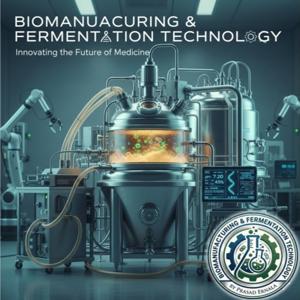

The episode argues that fermenter readiness should be viewed as a measurable, engineered state rather than a simple administrative checklist. My analysis highlights that consistent biological results at an industrial scale depend on the mechanical integrity of the sterile boundary and the rigorous management of SIP (Sterilization-in-Place) cycles. Effectively managing air removal, condensate drainage, and thermal cold spots is essential to prevent chronic contamination and ensure reproducible starting conditions. Furthermore, the sources highlight how instrumentation drift and sensor inaccuracy under process stress can lead to misinterpreted biological data. By treating equipment readiness as a foundation for upstream optimization, facilities can reduce environmental uncertainty and improve scale-up reliability. Ultimately, the text advocates for a mechanistic framework that validates equipment performance under real-world operating loads to ensure campaign robustness.
 View all episodes
 By prasad ernala
The episode argues that fermenter readiness should be viewed as a measurable, engineered state rather than a simple administrative checklist. My analysis highlights that consistent biological results at an industrial scale depend on the mechanical integrity of the sterile boundary and the rigorous management of SIP (Sterilization-in-Place) cycles. Effectively managing air removal, condensate drainage, and thermal cold spots is essential to prevent chronic contamination and ensure reproducible starting conditions. Furthermore, the sources highlight how instrumentation drift and sensor inaccuracy under process stress can lead to misinterpreted biological data. By treating equipment readiness as a foundation for upstream optimization, facilities can reduce environmental uncertainty and improve scale-up reliability. Ultimately, the text advocates for a mechanistic framework that validates equipment performance under real-world operating loads to ensure campaign robustness.