
Sign up to save your podcasts
Or

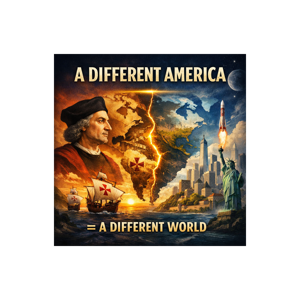

In this episode, we explore one of the most intriguing alternative-history scenarios of the Age of Discovery: what if Christopher Columbus had been financed not by Spain or Portugal, but by Florence—the city of bankers, merchants, Renaissance thinkers, and the Medici?
Instead of a New World shaped first by a conquering monarchy, America begins to develop under the influence of a commercial, urban, and financially driven republic. From 1500 to 1800, we follow how Florentine trading posts, port cities, banking networks, and Renaissance culture might have created a very different Atlantic world—one built less on crowns and feudal conquest, and more on contracts, capital, urban institutions, and mercantile power.
But this is not a gentler history. Florentine America would still face violence, disease, slavery, rivalry with Europe’s great powers, and growing internal tensions. The deeper question is whether such a world might have produced a different model of modernity itself: less monarchical, more urban; less imperial in the Castilian sense, more commercial and networked; and perhaps even an America shaped by the language and spirit of Renaissance Tuscany.
 View all episodes
 By Alan Maldam
In this episode, we explore one of the most intriguing alternative-history scenarios of the Age of Discovery: what if Christopher Columbus had been financed not by Spain or Portugal, but by Florence—the city of bankers, merchants, Renaissance thinkers, and the Medici?
Instead of a New World shaped first by a conquering monarchy, America begins to develop under the influence of a commercial, urban, and financially driven republic. From 1500 to 1800, we follow how Florentine trading posts, port cities, banking networks, and Renaissance culture might have created a very different Atlantic world—one built less on crowns and feudal conquest, and more on contracts, capital, urban institutions, and mercantile power.
But this is not a gentler history. Florentine America would still face violence, disease, slavery, rivalry with Europe’s great powers, and growing internal tensions. The deeper question is whether such a world might have produced a different model of modernity itself: less monarchical, more urban; less imperial in the Castilian sense, more commercial and networked; and perhaps even an America shaped by the language and spirit of Renaissance Tuscany.