
Sign up to save your podcasts
Or

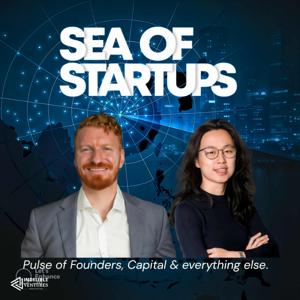

This week’s episode is a news episode. No guests. Just four stories that I think every founder, investor, and operator in Southeast Asia should be paying attention to right now.
Here’s what we cover, and why each one matters.
1. China forced Meta to unwind a completed acquisition. Mid-honeymoon.
In December, Meta acquired Manus — the AI agent startup that went viral in 2025 as China’s answer to deep research tools. The deal closed. Manus’s website was already saying it was part of Meta.
On April 28th, Beijing’s NDRC told both parties to reverse it.
The Singapore-washing playbook — where Chinese founders restructure as Singapore entities to access US capital — is now provably dead. Beijing just proved it can reach into a completed acquisition, across jurisdictions, and pull the plug.
But the surface story is not the interesting story. The interesting story is the mechanics of what an “unwind” actually looks like. Money has already flowed through to investors and their LPs. Engineers have been working inside Meta for weeks. Knowledge transfer has happened. How do you reverse that?
And then there’s the Meta question. Did they make a mistake — or did they knowingly race the regulator, betting that if they got the technology embedded before enforcement could land, a slow unwind would be better than no acquisition? Their public statement — “the transaction complied fully with applicable law, we anticipate an appropriate resolution” — says absolutely nothing. Which might be exactly the point.
Singapore has been conspicuously silent throughout all of this. What that silence costs them is a conversation the episode goes deeper on.
2. eFishery. Nine years. And it still doesn’t feel like enough.
Gibran Huzaifah was sentenced to nine years on April 29th. Two other former executives received nine and seven years respectively.
The numbers, if you haven’t heard them: the company told investors it generated $752 million in revenue from January to September 2024. Actual revenue was $157 million. They reported a $16 million profit. The actual result was a $35 million loss.
SoftBank. Temasek. KWAP — Malaysia’s civil servant pension fund. All recovering less than ten cents on the dollar.
But this episode is not a crime recap. The eFishery story is a prompt for a harder question about what kind of ecosystem we’re building here.
Fraud exists on a spectrum. At one end: criminal fabrication at scale. At the other: things that happen every week across the region that would never see a courtroom — vanity metrics dressed as traction, pilots treated as revenue, LOIs presented as signed contracts. None of that is eFishery. But it is on the same continuum.
And it is not only founders. Investors do it too.
The reason this matters beyond the immediate case is economic. In a high-uncertainty market like Southeast Asia, trust is the operating system. When it erodes — when every investor assumes every founder is telling the most optimistic version of the truth — the whole system gets more expensive. More friction. More time on verification. Fewer deals done.
A high-integrity environment is a high-output environment. The ecosystem gets the standards it is willing to enforce.
3. Indonesia capped ride-hailing commissions at 8%. GoTo just posted its first-ever profit. Congratulations.
On May 1st — International Workers’ Day, timing very much intentional — President Prabowo signed a regulation capping the maximum commission ride-hailing platforms can take from drivers at 8%. Down from 20%. Drivers now get a minimum of 92% of every fare.
GoTo shares dropped nearly 6% on the news. Analysts estimated the ride-hailing segment accounted for roughly 48% of GoTo’s EBITDA. Grab, which derives about 20% of its total EBITDA from Indonesia, is also in the firing line.
Both companies will either raise fares, eat the margin hit, or some combination of both. None of those options is clean.
Here is the part that might be unpopular in a room full of investors: Prabowo is not entirely wrong.
Indonesia has around four million ride-hailing drivers. The platform without the driver is just an app with nowhere to go. The economics for drivers have been genuinely rough. The system was designed to extract maximum value from a class of workers with very little negotiating power.
The underlying question — how do we ensure the people who actually do the work get a fair share of what they create — is legitimate. If platforms do not answer it voluntarily, governments will answer it for them.
The risk, of course, is that fares go up, volumes drop, and drivers end up worse off than before. That is the irony of heavy-handed regulation. But that is a problem for GoTo and Grab to solve. They had the data. They should have got ahead of this before a president had to sign a decree on Workers’ Day.
4. Malaysia is building gas plants to power AI data centres. The energy transition did not plan for this.
This week, a Melaka-based company called DPS Resources — until recently primarily a furniture and property developer — announced it signed an MOU with an Alibaba affiliate to explore building a $1.1 billion AGI data centre in Melaka. 150 to 180 megawatts. DPS provides the land, the power, the infrastructure. Alibaba’s entity handles operations and brings the computing demand.
This deal is not an anomaly. It is a perfect emblem of what is happening across Malaysia right now. Everyone wants a piece of the data centre gold rush. The question not being asked loudly enough is whether Malaysia actually has the power to sustain it.
TNB’s pipeline is 7,500MW across 56 data centre projects. Current actual load from those facilities: 850MW. The draw-down is coming as facilities rack up through 2026. At the same time, 6,400MW of coal-fired generation is scheduled for retirement between 2029 and 2031.
To cover those retirements and meet rising demand, Malaysia needs roughly 12,000MW of new generation by 2031.
Right now, the Energy Commission has an open tender — NewGen26 — for new gas-fired generation to plug that gap. Bids close July 1st. Eight weeks away. This is Malaysia racing to build baseload capacity before the demand wall hits. The fact that it is gas, not solar, tells you everything about the timeline pressure.
The Iran conflict makes this personal. TNB’s Automatic Fuel Adjustment mechanism means global oil and gas price spikes feed directly into Malaysian electricity bills within 30 days. Data centres in Johor were approved on the premise of cheap, stable Malaysian electricity. That premise is now under pressure from a war on the other side of the world.
The deeper question is who actually benefits from this boom. DPS provides the land and the power. Alibaba keeps the data, the models, and the IP. Research consistently shows data centres create the lowest number of jobs per square foot of any major facility type. Thousands of construction roles during the build, then roughly 200 operational staff when running.
Malaysia is providing the real estate, the utilities, and the environmental cost. The hyperscalers are keeping the value.
That is not a reason to stop. But it is a reason to be far more deliberate about what we are trading and what we are getting in return.
Watch the episode
Four stories. One theme running underneath all of them: the rules are being rewritten. Who controls AI. Who controls capital flows. Who gets a fair share of the value created. Who owns the infrastructure the future runs on.
These are not settled questions. They are live negotiations — between governments, between companies, between regions.
Southeast Asia is not a passive observer in any of this.
[Watch / listen to the full episode → link]
SEA of Startups is a podcast for founders, investors, and operators building in Southeast Asia. Real. Raw. Relatable.
 View all episodes
 By Decoding the Pulse of Founders, Capital & Conviction in Southeast Asia.
This week’s episode is a news episode. No guests. Just four stories that I think every founder, investor, and operator in Southeast Asia should be paying attention to right now.
Here’s what we cover, and why each one matters.
1. China forced Meta to unwind a completed acquisition. Mid-honeymoon.
In December, Meta acquired Manus — the AI agent startup that went viral in 2025 as China’s answer to deep research tools. The deal closed. Manus’s website was already saying it was part of Meta.
On April 28th, Beijing’s NDRC told both parties to reverse it.
The Singapore-washing playbook — where Chinese founders restructure as Singapore entities to access US capital — is now provably dead. Beijing just proved it can reach into a completed acquisition, across jurisdictions, and pull the plug.
But the surface story is not the interesting story. The interesting story is the mechanics of what an “unwind” actually looks like. Money has already flowed through to investors and their LPs. Engineers have been working inside Meta for weeks. Knowledge transfer has happened. How do you reverse that?
And then there’s the Meta question. Did they make a mistake — or did they knowingly race the regulator, betting that if they got the technology embedded before enforcement could land, a slow unwind would be better than no acquisition? Their public statement — “the transaction complied fully with applicable law, we anticipate an appropriate resolution” — says absolutely nothing. Which might be exactly the point.
Singapore has been conspicuously silent throughout all of this. What that silence costs them is a conversation the episode goes deeper on.
2. eFishery. Nine years. And it still doesn’t feel like enough.
Gibran Huzaifah was sentenced to nine years on April 29th. Two other former executives received nine and seven years respectively.
The numbers, if you haven’t heard them: the company told investors it generated $752 million in revenue from January to September 2024. Actual revenue was $157 million. They reported a $16 million profit. The actual result was a $35 million loss.
SoftBank. Temasek. KWAP — Malaysia’s civil servant pension fund. All recovering less than ten cents on the dollar.
But this episode is not a crime recap. The eFishery story is a prompt for a harder question about what kind of ecosystem we’re building here.
Fraud exists on a spectrum. At one end: criminal fabrication at scale. At the other: things that happen every week across the region that would never see a courtroom — vanity metrics dressed as traction, pilots treated as revenue, LOIs presented as signed contracts. None of that is eFishery. But it is on the same continuum.
And it is not only founders. Investors do it too.
The reason this matters beyond the immediate case is economic. In a high-uncertainty market like Southeast Asia, trust is the operating system. When it erodes — when every investor assumes every founder is telling the most optimistic version of the truth — the whole system gets more expensive. More friction. More time on verification. Fewer deals done.
A high-integrity environment is a high-output environment. The ecosystem gets the standards it is willing to enforce.
3. Indonesia capped ride-hailing commissions at 8%. GoTo just posted its first-ever profit. Congratulations.
On May 1st — International Workers’ Day, timing very much intentional — President Prabowo signed a regulation capping the maximum commission ride-hailing platforms can take from drivers at 8%. Down from 20%. Drivers now get a minimum of 92% of every fare.
GoTo shares dropped nearly 6% on the news. Analysts estimated the ride-hailing segment accounted for roughly 48% of GoTo’s EBITDA. Grab, which derives about 20% of its total EBITDA from Indonesia, is also in the firing line.
Both companies will either raise fares, eat the margin hit, or some combination of both. None of those options is clean.
Here is the part that might be unpopular in a room full of investors: Prabowo is not entirely wrong.
Indonesia has around four million ride-hailing drivers. The platform without the driver is just an app with nowhere to go. The economics for drivers have been genuinely rough. The system was designed to extract maximum value from a class of workers with very little negotiating power.
The underlying question — how do we ensure the people who actually do the work get a fair share of what they create — is legitimate. If platforms do not answer it voluntarily, governments will answer it for them.
The risk, of course, is that fares go up, volumes drop, and drivers end up worse off than before. That is the irony of heavy-handed regulation. But that is a problem for GoTo and Grab to solve. They had the data. They should have got ahead of this before a president had to sign a decree on Workers’ Day.
4. Malaysia is building gas plants to power AI data centres. The energy transition did not plan for this.
This week, a Melaka-based company called DPS Resources — until recently primarily a furniture and property developer — announced it signed an MOU with an Alibaba affiliate to explore building a $1.1 billion AGI data centre in Melaka. 150 to 180 megawatts. DPS provides the land, the power, the infrastructure. Alibaba’s entity handles operations and brings the computing demand.
This deal is not an anomaly. It is a perfect emblem of what is happening across Malaysia right now. Everyone wants a piece of the data centre gold rush. The question not being asked loudly enough is whether Malaysia actually has the power to sustain it.
TNB’s pipeline is 7,500MW across 56 data centre projects. Current actual load from those facilities: 850MW. The draw-down is coming as facilities rack up through 2026. At the same time, 6,400MW of coal-fired generation is scheduled for retirement between 2029 and 2031.
To cover those retirements and meet rising demand, Malaysia needs roughly 12,000MW of new generation by 2031.
Right now, the Energy Commission has an open tender — NewGen26 — for new gas-fired generation to plug that gap. Bids close July 1st. Eight weeks away. This is Malaysia racing to build baseload capacity before the demand wall hits. The fact that it is gas, not solar, tells you everything about the timeline pressure.
The Iran conflict makes this personal. TNB’s Automatic Fuel Adjustment mechanism means global oil and gas price spikes feed directly into Malaysian electricity bills within 30 days. Data centres in Johor were approved on the premise of cheap, stable Malaysian electricity. That premise is now under pressure from a war on the other side of the world.
The deeper question is who actually benefits from this boom. DPS provides the land and the power. Alibaba keeps the data, the models, and the IP. Research consistently shows data centres create the lowest number of jobs per square foot of any major facility type. Thousands of construction roles during the build, then roughly 200 operational staff when running.
Malaysia is providing the real estate, the utilities, and the environmental cost. The hyperscalers are keeping the value.
That is not a reason to stop. But it is a reason to be far more deliberate about what we are trading and what we are getting in return.
Watch the episode
Four stories. One theme running underneath all of them: the rules are being rewritten. Who controls AI. Who controls capital flows. Who gets a fair share of the value created. Who owns the infrastructure the future runs on.
These are not settled questions. They are live negotiations — between governments, between companies, between regions.
Southeast Asia is not a passive observer in any of this.
[Watch / listen to the full episode → link]
SEA of Startups is a podcast for founders, investors, and operators building in Southeast Asia. Real. Raw. Relatable.