
Sign up to save your podcasts
Or

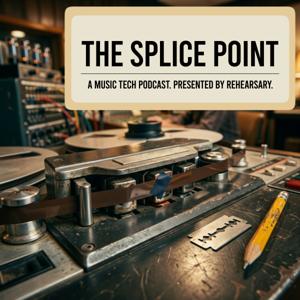

In the first half of the 20th century, recording music meant capturing one live take from start to finish. What you played was what you got. This episode covers how that changed, tracing the path from the fragile acetate disc to magnetic tape, and from tape to the invention of multi-track recording.
The story runs through Jack Mullin, the Army Signal Corps officer who found German Magnetophon tape machines in 1945 and shipped them home; Bing Crosby, who funded Ampex to build the first commercial reel-to-reel so he could pre-record his radio show; and Les Paul, who modified an Ampex machine in his garage to layer separate performances onto a single tape. We also look at how that idea spread through the industry, from Phil Spector's Wall of Sound to the Beatles recording Sgt. Pepper's on four tracks at Abbey Road.
Presented by Rehearsary.com
Subscribe to The Splice Point on Apple / Spotify
Follow Rehearsary on TikTok / Instagram / Rehearsary.com
---
- Mix Online. "John T. Mullin: The Man Who Put Bing Crosby on Tape." Mix, 1999.
- Hammar, Peter and Wilson, Bob. "Welcome to Ampex History: Technical Achievement." Ampex History.
- McQuade, Martin. "The Incredible Story of Les Paul's 'Lover' – the Breakthrough Multitrack Recording That Changed the World, Part 2." Guitar Player, 2023.
- "Les Paul and Mary Ford Show Alistair Cooke How They Record Multi-Track Songs Live on Television in 1953." Omnibus, CBS / Laughing Squid, 1953.
- "Chasing Sound." (Featuring interviews with Al Schmitt and Phil Ramone), 2007.
 View all episodes
 By Rehearsary
In the first half of the 20th century, recording music meant capturing one live take from start to finish. What you played was what you got. This episode covers how that changed, tracing the path from the fragile acetate disc to magnetic tape, and from tape to the invention of multi-track recording.
The story runs through Jack Mullin, the Army Signal Corps officer who found German Magnetophon tape machines in 1945 and shipped them home; Bing Crosby, who funded Ampex to build the first commercial reel-to-reel so he could pre-record his radio show; and Les Paul, who modified an Ampex machine in his garage to layer separate performances onto a single tape. We also look at how that idea spread through the industry, from Phil Spector's Wall of Sound to the Beatles recording Sgt. Pepper's on four tracks at Abbey Road.
Presented by Rehearsary.com
Subscribe to The Splice Point on Apple / Spotify
Follow Rehearsary on TikTok / Instagram / Rehearsary.com
---
- Mix Online. "John T. Mullin: The Man Who Put Bing Crosby on Tape." Mix, 1999.
- Hammar, Peter and Wilson, Bob. "Welcome to Ampex History: Technical Achievement." Ampex History.
- McQuade, Martin. "The Incredible Story of Les Paul's 'Lover' – the Breakthrough Multitrack Recording That Changed the World, Part 2." Guitar Player, 2023.
- "Les Paul and Mary Ford Show Alistair Cooke How They Record Multi-Track Songs Live on Television in 1953." Omnibus, CBS / Laughing Squid, 1953.
- "Chasing Sound." (Featuring interviews with Al Schmitt and Phil Ramone), 2007.