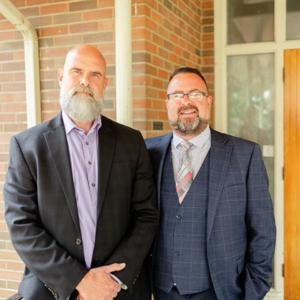
Scott and Dan welcome Dr. Heather Armstrong for a wide-ranging conversation on the gut–brain connection and its growing relevance for first responder health.
Dr. Armstrong explains how the research team—working closely with Andrew Martin and frontline agencies—is uncovering meaningful links between gut health, sleep, physiology, and mental health. Early data suggests first responders are experiencing poorer overall health across multiple biological systems compared to the general population, reinforcing the need for earlier, more personalized interventions.
The Better First Responders initiative continues to expand and is, in Dr. Armstrong’s words, only just getting started. While current efforts remain focused locally, discussions are underway to broaden participation across provinces and into North America through emerging international partnerships.
Who Can Participate
The study has now opened its doors widely across the first responder community. This includes:
• Police services
• Fire services (including wildland and community fire)
• Paramedics
• Correctional officers
• Security personnel and related first response roles
The team emphasized that correctional officers are absolutely considered part of the first responder community and that Andrew Martin has strongly advocated for their inclusion.
From a research standpoint, larger groups with similar schedules and job demands make statistical analysis easier and more powerful. However, the study remains wide open—even smaller groups or individuals are encouraged to participate, as every data point helps build the broader picture.
Practical, Participant-Focused Research
A central theme of the episode is sustainability. Rather than recommending overwhelming lifestyle overhauls, the research focuses on small, realistic changes that can create meaningful health improvements without adding stress to already demanding careers.
Transparency is another key differentiator. Participants receive their own biosampling results—including microbiome and blood analyses—along with plain-language explanations. Despite the significant cost of this work (approximately $12,000 per participant), the team is committed to ensuring first responders understand their own biology and health standing.
The researchers also maintain an open-door policy, actively inviting feedback from first responders about what should be studied next.
Call to Action
Importantly, individuals do not need to wait for their organization to sign on. Any eligible first responder can reach out directly and begin the intake process.
Interested participants can:
• Search the emergency responder MMR in GSI study title
• Visit the program website
• Connect via Facebook or Instagram
• Contact Team Manager John Jenvo (details available through the program)
Bottom line: This is collaborative, transparent research designed with first responders in mind—and the work to improve long-term health outcomes is still gaining momentum.
Become a supporter of this podcast: https://www.spreaker.com/podcast/just-us-on-justice-and-other-things--5542256/support.



 View all episodes
