
Sign up to save your podcasts
Or

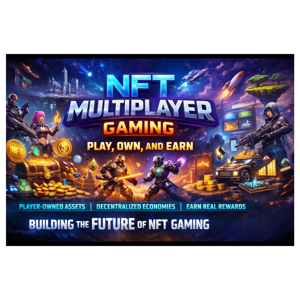

“What happens when multiplayer gaming meets true digital ownership? Imagine a world where every weapon you earn, every character you level up, and every piece of in-game land you acquire isn’t just data on a server, but an asset you truly own.
In today’s episode, we explore the revolutionary world of NFT game development and how it’s reshaping the way players interact, compete, and earn.”
How NFT Games Work
“So, how do NFT games actually work? Unlike traditional games, where your progress and items are controlled by the game’s servers, NFT games store digital assets on a blockchain. This means every sword, skin, character, or piece of land is unique, verifiable, and belongs to the player, not just the game company.
Because these assets exist on a blockchain, players can buy, sell, or trade them in decentralized marketplaces, giving digital items real-world value. Every action you take in the game can contribute to your personal digital economy, making play-to-earn models possible.”
Multiplayer Mechanics and Engagement
“In multiplayer environments, this ownership changes the game entirely. Players can form teams, guilds, or co-op parties, trade valuable items, and even earn rewards while competing.
Ownership fosters deeper engagement. When players know their items are valuable and portable across games or platforms, they invest more time, energy, and creativity into the experience. It’s not just playing, it’s playing to own, trade, and grow.”
Benefits for Developers and Players
“At GamesDapp, we see how NFT multiplayer games address long-standing challenges:
Low retention: Unique, player-owned assets keep players coming back.
Limited monetization: Developers earn revenue through NFT marketplaces, tokenomics, and digital collectibles.
Lack of ownership: Players finally have control over their in-game achievements.
Plus, NFT games open doors for scalable growth. Assets, characters, and achievements can carry across games, forming persistent, player-driven ecosystems where the value of your gameplay lasts far beyond a single session.”
Conclusion
“At GamesDapp, we’re at the forefront of NFT game development, helping creators build engaging, player-owned ecosystems. Multiplayer NFT games aren’t just about playing; they’re about owning, trading, and thriving in dynamic digital worlds.
Whether you’re a developer, founder, or gaming enthusiast, embracing NFTs in multiplayer gaming opens doors to new revenue streams, stronger player engagement, and scalable growth.
With GamesDapp, the future of multiplayer gaming is limitless, immersive, and truly player-driven. Stay ahead, and be part of this revolution.”
 View all episodes
 By Stephen Curry
“What happens when multiplayer gaming meets true digital ownership? Imagine a world where every weapon you earn, every character you level up, and every piece of in-game land you acquire isn’t just data on a server, but an asset you truly own.
In today’s episode, we explore the revolutionary world of NFT game development and how it’s reshaping the way players interact, compete, and earn.”
How NFT Games Work
“So, how do NFT games actually work? Unlike traditional games, where your progress and items are controlled by the game’s servers, NFT games store digital assets on a blockchain. This means every sword, skin, character, or piece of land is unique, verifiable, and belongs to the player, not just the game company.
Because these assets exist on a blockchain, players can buy, sell, or trade them in decentralized marketplaces, giving digital items real-world value. Every action you take in the game can contribute to your personal digital economy, making play-to-earn models possible.”
Multiplayer Mechanics and Engagement
“In multiplayer environments, this ownership changes the game entirely. Players can form teams, guilds, or co-op parties, trade valuable items, and even earn rewards while competing.
Ownership fosters deeper engagement. When players know their items are valuable and portable across games or platforms, they invest more time, energy, and creativity into the experience. It’s not just playing, it’s playing to own, trade, and grow.”
Benefits for Developers and Players
“At GamesDapp, we see how NFT multiplayer games address long-standing challenges:
Low retention: Unique, player-owned assets keep players coming back.
Limited monetization: Developers earn revenue through NFT marketplaces, tokenomics, and digital collectibles.
Lack of ownership: Players finally have control over their in-game achievements.
Plus, NFT games open doors for scalable growth. Assets, characters, and achievements can carry across games, forming persistent, player-driven ecosystems where the value of your gameplay lasts far beyond a single session.”
Conclusion
“At GamesDapp, we’re at the forefront of NFT game development, helping creators build engaging, player-owned ecosystems. Multiplayer NFT games aren’t just about playing; they’re about owning, trading, and thriving in dynamic digital worlds.
Whether you’re a developer, founder, or gaming enthusiast, embracing NFTs in multiplayer gaming opens doors to new revenue streams, stronger player engagement, and scalable growth.
With GamesDapp, the future of multiplayer gaming is limitless, immersive, and truly player-driven. Stay ahead, and be part of this revolution.”