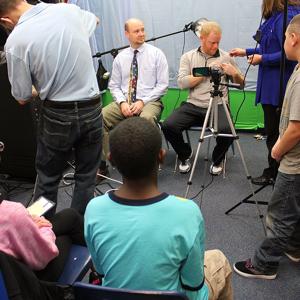
This snapshot was gathered in conjunction with the Museum on Main Street program at the Smithsonian Institution and its "Stories from Main Street" initiative. The project is intended to capture Americans' impressions and stories about their small-town and rural neighborhoods, waterways, personal memories, cultural traditions, work histories, and thoughts about American democracy. This story is from a group of narratives inspired by the Smithsonian traveling exhibition, "Voices and Votes: Democracy in America."
Gary Clark (00:01): My most interesting voting experience. The first time I voted, I was in college. I was old enough to vote for the first time. I thought that was... I can still remember walking to the polling place from where I lived on campus, walking to the polling place and casting my vote. I thought, what an awesome experience to be able to have a voice in who your leadership is going to be. Now, at the time, I was a cadet and I knew what it was like within the military structure to be promoted, to take leadership positions, to be appointed of leadership positions, things like that. And it was based on merit and all the things that count, grades and what you've done, contribution you made and stuff like that.
(01:07): Now I get a chance at the national level, oh my gosh, this is for a farm boy from Kansas, this was a big deal. This was a big deal that not only did I get to vote for the president, but I got to vote for the governor, who's going to be the governor and all the others that go, some of which I didn't recognize the names at all. Because as you go down the ballot, there's ones that you will not recognize unless you've done the due diligence of all of them. And that's important too. I fear that some people just vote because, "I like that name." Now let's do the due diligence. That's the thing we try to emphasize too. Understand who it is. We used to do it in the military. We would discuss some of the candidates. What do you know about this guy? What do you know about this guy? Even when we did absentee ballots.
(02:03): I think the one I did, probably the most significant one that I remember other than my first one was voting in Vietnam. It was an election year, 1972. It was an election year and you voted absentee. I sent in my ballot. There were some on the ballot that I did not know or didn't recognize, and I left blank because I'm not going to vote for somebody that I don't know. But the others on there that I knew, and it was a particularly difficult time, that period in history with Vietnam. And fortunately, the folks today that serve are viewed a lot differently than we were back then.
(02:56): But that was probably the most memorable one because it was a time at which there were things, there were currents in the country that were going to have lasting effects. We have seen that. Up until that point, I think, up until the Vietnam War, people generally trusted government. I think people generally felt that those who represented them were honorable people. I won't say that's still not true, honorable people. But what we saw with Vietnam is the start of what I would call a trend of distrusting government, being more cautious and sometimes in a very far-reaching effect. But I think the danger of that was not just distrusting government, but I think distrusting authority in general, and it's filtered down where you hear teachers saying, for example, "I won't go back in the classroom."
Asset ID: 2022.37.11.f
Find a complete transcript at www.museumonmainstreet.org



 View all episodes
