
Sign up to save your podcasts
Or

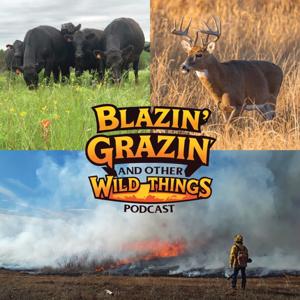

In this episode of Blazin' Grazin' and Other Wild Things, hosts John Weir, Dr. Laura Goodman, and Dr. Mark Turner dig deep into the value of growing season burns.
They discuss how summer fires, often underused due to misconceptions about safety, can be the most effective tool for land managers dealing with eastern redcedar, poor forage quality, and wildlife habitat degradation.
Drawing on years of OSU Extension research and firsthand experience, they reveal how fire during the warmer months can be slower-moving and safer than many think.
Listeners will learn how these burns enhance plant nutrition for both cattle and wildlife, why concerns about risk and liability are overblown, and how to plan burns that align with weather and vegetation goals.
From practical strategies like creating wide firebreaks and managing brush piles to the science behind fire behavior and plant responses, this episode delivers insights that could reshape your approach to land stewardship.
Key Takeaways:
Timestamps:
[00:02:00] What is a prescribed fire? Terminology and misconceptions
[00:04:00] The main reasons people burn in the Great Plains
[00:08:00] Forage quality and fire's impact on plant nutrition
[00:13:00] Liability and risk—what the data says about escapes and claims
[00:29:00] Cedar variability and how to burn effectively
[00:36:00] Comparing dormant vs. growing season burns
[00:43:00] Safety and practicality of summer burns
[00:48:00] Rain timing, regrowth, and maximizing burn effectiveness
Find all resources at BlazinGrazinWildThings.com
 View all episodes
 By AgNow Media LLC
In this episode of Blazin' Grazin' and Other Wild Things, hosts John Weir, Dr. Laura Goodman, and Dr. Mark Turner dig deep into the value of growing season burns.
They discuss how summer fires, often underused due to misconceptions about safety, can be the most effective tool for land managers dealing with eastern redcedar, poor forage quality, and wildlife habitat degradation.
Drawing on years of OSU Extension research and firsthand experience, they reveal how fire during the warmer months can be slower-moving and safer than many think.
Listeners will learn how these burns enhance plant nutrition for both cattle and wildlife, why concerns about risk and liability are overblown, and how to plan burns that align with weather and vegetation goals.
From practical strategies like creating wide firebreaks and managing brush piles to the science behind fire behavior and plant responses, this episode delivers insights that could reshape your approach to land stewardship.
Key Takeaways:
Timestamps:
[00:02:00] What is a prescribed fire? Terminology and misconceptions
[00:04:00] The main reasons people burn in the Great Plains
[00:08:00] Forage quality and fire's impact on plant nutrition
[00:13:00] Liability and risk—what the data says about escapes and claims
[00:29:00] Cedar variability and how to burn effectively
[00:36:00] Comparing dormant vs. growing season burns
[00:43:00] Safety and practicality of summer burns
[00:48:00] Rain timing, regrowth, and maximizing burn effectiveness
Find all resources at BlazinGrazinWildThings.com