
Sign up to save your podcasts
Or

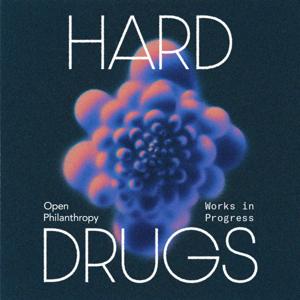


What if treating diseases was as simple as telling your cells to stop making a harmful protein? That’s the premise of siRNA, a technology that silences genes without changing DNA. Just a single dose of siRNA can last for months. Better, it can be reprogrammed to silence a different gene or mutation by simply switching its sequence.
In this episode, Jacob and Saloni explore why it took so long for siRNA to be turned into drugs, why most siRNA drugs so far have targeted liver diseases, and whether they could eventually be used to treat many diseases, from infections to heart disease to rare diseases to cancers.
Hard Drugs is a podcast from Works in Progress about medical innovation presented by Saloni Dattani and Jacob Trefethen.
You can watch or listen on YouTube, Spotify, or Apple Podcasts.
Chapters:
Saloni’s substack newsletter: https://www.scientificdiscovery.dev/
Jacob’s blog: https://blog.jacobtrefethen.com/
Acknowledgements:
Articles
GLP-1 drugs like Ozempic and Mounjaro have transformed the treatment of obesity as well as diabetes, help treat heart disease, kidney disease, sleep apnea, and maybe even Alzheimer’s. But they are far from the only medicine with more than one use. Aspirin, colchicine, minoxidil, and Viagra were all found to treat more conditions than expected, and about a third of drugs end up with a second approved use.
In this episode, Jacob and Saloni explore the idea of drug repurposing: taking a medicine made for one disease and finding it works against others. They trace how GLP-1 drugs emerged from an adorable Gila monster, why some drugs have multiple uses, why so many of those uses go untested, and how patents, competition, prizes, and platform trials shape whether we ever find them.
Hard Drugs is a podcast from Works in Progress about medical innovation presented by Saloni Dattani and Jacob Trefethen.
You can watch or listen on YouTube, Spotify, or Apple Podcasts.
Chapters:
Saloni’s substack newsletter: https://www.scientificdiscovery.dev/
Jacob’s blog: https://blog.jacobtrefethen.com/
Acknowledgements:
Correction: Saloni misdescribed the mechanism of immortal time bias - it comes from the pre-prescription time being counted in the treatment group, not the control group.
Blogs
Videos
Articles & reports
Web
Malaria is caused not by a virus or bacterium, but by a complex, shape-shifting parasite that has evolved alongside us for millennia. This has made vaccine development a brutal challenge.
In this episode, Jacob and Saloni are joined by Katharine Collins, who co-invented the second malaria vaccine, called R21, during her PhD. They discuss the gruelling process of reverse-engineering a vaccine and eureka moments along the way. They ask whether the biggest barriers to new vaccines are scientific or financial, and what it will take to finally eradicate one of natureʼs most vicious killers.
Hard Drugs is a podcast from Works in Progress about medical innovation presented by Saloni Dattani and Jacob Trefethen.
Timestamps:
00:00 Introduction
05:08 Our favourite parasites
10:12 How to invent a vaccine during your PhD
34:18 Why is it called the R21 vaccine?
37:32 Moving from the bench to billions of doses
41:43 The vicious life cycle of malaria parasites
46:15 Malaria research IN MICE
53:03 The murderer in malaria research
55:51 Would you volunteer to get infected by malaria?
1:08:21 Why did the first malaria vaccine take so long?
1:18:26 Could we have had the vaccine sooner?
1:40:48 Vaccine versus vaccine: which one’s better?
1:46:53 If we did this again today, could we make better vaccines?
2:04:55 Conclusion and our reasons for pessimism and optimism
You can watch or listen on YouTube, Spotify, or Apple Podcasts.
Saloni’s substack newsletter: https://www.scientificdiscovery.dev/
Jacob’s blog: https://blog.jacobtrefethen.com/
Acknowledgements:
Works in Progress
Thesis
Books
Articles and reports
Heart disease is the leading cause of death worldwide, but it’s also one of medicine’s biggest success stories. Since the 1950s, the risk of dying from cardiovascular disease has fallen dramatically, thanks to public health efforts, emergency care, medical innovation, and surgeries.
In this episode, Jacob and Saloni explore the cholesterol revolution: from statins discovered in fungi to new drugs that cut LDL cholesterol by 60% and last for months, driven by breakthroughs in genetics, monoclonal antibodies, RNA therapies, and modern medicinal chemistry. They talk about how cholesterol travels through the bloodstream, how it causes atherosclerosis and heart disease, and why it took nearly a century for scientists to form the consensus that lowering cholesterol saves lives.
Hard Drugs is a podcast from Works in Progress and Coefficient Giving about medical innovation presented by Saloni Dattani and Jacob Trefethen.
You can watch or listen on YouTube, Spotify, or Apple Podcasts.
Chapters:
0:00:00 Introduction
13:35 The decline in heart disease mortality
31:02 Surprising facts about cholesterol
55:40 The lipid hypothesis: 7 lines of evidence for the harms of LDL cholesterol
1:22:15 How cholesterol works
1:30:40 The discovery of statins
1:48:44 Should everyone be on statins?
1:57:10 PCSK9 drugs and beyond
2:22:56 Summary
Saloni’s substack newsletter: https://www.scientificdiscovery.dev/
Jacob’s blog: https://blog.jacobtrefethen.com/
Acknowledgements:
Works in Progress & Coefficient Giving
Correction: In the episode, Saloni makes an error in converting the number of heartbeats per lifetime. It is roughly 2.5 billion beats, not a trillion.
Books
Blog posts
Articles
Videos
Hepatitis B is a tiny virus that causes hundreds of thousands of deaths from liver disease and cancer each year. The vaccine against it became the first of many milestones: it was the first viral protein subunit vaccine, the first recombinant vaccine, and the first vaccine to prevent a type of cancer.
In this episode, Jacob and Saloni follow the trail of strange jaundice outbreaks that scientists traced to a stealthy liver virus, how scientists turned one viral surface protein into a lifesaving shot for newborns, and how it was all built upon breakthroughs in immunology.
Hard Drugs is a new podcast from Works in Progress and Coefficient Giving about medical innovation presented by Saloni Dattani and Jacob Trefethen.
You can watch or listen on YouTube, Spotify, or Apple Podcasts.
Chapters:
0:00:00 Introducing the hepatitis B vaccine
0:15:46 The mysterious trail of jaundice outbreaks
0:28:03 How a tiny virus causes cirrhosis and liver cancer
0:53:19 Maurice Hilleman's purified hep B vaccine
1:17:36 Turning the hep B vaccine recombinant
1:29:14 The impact of hep B vaccination
1:39:27 The 19th century battle for immunology
2:01:34 How the body makes an almost infinite number of antibodies
2:30:57 How subunit vaccines took over
2:45:33 Conclusion
Saloni’s substack newsletter: https://www.scientificdiscovery.dev/
Jacob’s blog: https://blog.jacobtrefethen.com/
Books:
Articles:
Correction: Urea was mentioned as a protein, but is actually the product of a protein breakdown process, not a protein itself.
Acknowledgements:
Works in Progress & Coefficient Giving
Before vaccines became routine, they were risky experiments. In this episode, Jacob and Saloni travel back to the world of smallpox, cowpox, and cow-based “vaccine farms” to see how scientists stumbled toward the first vaccines against infectious diseases: smallpox, rabies, TB, polio, and more. Through the stories of milkmaids and aristocrats, secret lab notebooks, microscopes and cell culture, they explore how trial and error turned gruesome folk practices into the science of immunization, and how it all began with a single pustule.
Hard Drugs is a new podcast from Works in Progress and Coefficient Giving about medical innovation presented by Saloni Dattani and Jacob Trefethen.
You can watch or listen on YouTube, Spotify, or Apple Podcasts.
Saloni’s substack newsletter: https://www.scientificdiscovery.dev/
Jacob’s blog: https://blog.jacobtrefethen.com/
Books:
Articles:
Acknowledgements:
Works in Progress & Coefficient Giving
Artificial intelligence is transforming how we discover and develop new medicines. But how far can it really take us? In this episode, Jacob and Saloni trace the path of drug development from discovery to testing, manufacturing, and delivery. They explore where AI could speed things up, and where it still hits the limits of biology, data, and economics. They ask what it would take, beyond algorithms, to actually cure and eradicate diseases.
Hard Drugs is a new podcast from Works in Progress and Open Philanthropy about medical innovation presented by Saloni Dattani and Jacob Trefethen.
You can watch or listen on YouTube, Spotify, or Apple Podcasts.
Saloni’s substack newsletter: https://www.scientificdiscovery.dev/
Jacob’s blog: https://blog.jacobtrefethen.com/
Chapters:
0:00:00 Intro
0:09:56 Drug discovery
1:02:20 Animal models
1:49:09 Drug efficacy
2:32:56 Drug safety
2:58:29 Manufacturing and healthcare
3:43:23 R&D funding
4:00:56 Trust and ambition
4:16:01 Summary
Blogposts:
Articles:
Books:
Theses:
Acknowledgements:
Works in Progress & Open Philanthropy
[Minor correction: Since the 1980s, malaria challenge trials no longer involve hundreds of bites; in the past, volunteers received many bites for the exposure part of the trial rather than the challenge part.]
What if you could design a protein never seen in nature? In this episode, Jacob and Saloni explore how researchers are using new tools like RFDiffusion, AlphaFold, and ProteinMPNN to ‘hallucinate’ entirely novel proteins: designing them from scratch to solve problems evolution hasn’t tackled. They talk about how these technologies could transform medicine, agriculture, and materials science. Along the way, they reflect on the surprising ways AI is changing the process of science itself.
Hard Drugs is a new podcast from Works in Progress and Open Philanthropy about medical innovation presented by Saloni Dattani and Jacob Trefethen.
Saloni’s substack newsletter: https://www.scientificdiscovery.dev/
Jacob’s blog: https://blog.jacobtrefethen.com/
Courses:
Articles:
Lectures:
Acknowledgements:
Works in Progress & Open Philanthropy
Nature didn’t evolve all the proteins we need, but maybe artificial intelligence can help. Jacob and Saloni explore how tools like AlphaFold and ProteinMPNN are helping researchers re-engineer proteins, to make them safer, more stable, and more effective. They talk about how new technologies could help make a long-sought vaccine against Strep A, which causes scarlet fever and rheumatic heart disease, and how similar tools have already led to breakthroughs against COVID and RSV.
Hard Drugs is a new podcast from Works in Progress and Open Philanthropy about medical innovation presented by Saloni Dattani and Jacob Trefethen.
Saloni’s substack newsletter: https://www.scientificdiscovery.dev/
Jacob’s blog: https://blog.jacobtrefethen.com/
Courses:
Articles:
Lectures:
Acknowledgements:
Works in Progress & Open Philanthropy
[Correction: The structure of RSV's prefusion F protein was initially determined by X-ray crystallography by Jason McLellan and colleagues, rather than cryo-electron microscopy, although the latter was used to visualize antibody binding and confirm its structure.]
A hundred years ago, insulin was scraped from pig pancreases. Today, it’s made by bacteria in giant tanks. In the second part of a mini series on proteins, drug development and AI, Saloni tells the story of how insulin went from a crude animal extract to the first genetically-engineered drug, kickstarting the biotech industry along the way.
Hard Drugs is a new podcast from Works in Progress and Open Philanthropy about medical innovation presented by Saloni Dattani and Jacob Trefethen.
Saloni’s substack newsletter: https://www.scientificdiscovery.dev/
Jacob’s blog: https://blog.jacobtrefethen.com/
Books:
Articles:
Podcasts:
Acknowledgements:
Works in Progress & Open Philanthropy
From the publisher's feed

1,972 Listeners

4,271 Listeners

2,447 Listeners

1,094 Listeners
188 Listeners
97 Listeners

557 Listeners

141 Listeners

62 Listeners

402 Listeners
98 Listeners
143 Listeners
89 Listeners

32 Listeners
9 Listeners

59 Listeners