
Sign up to save your podcasts
Or

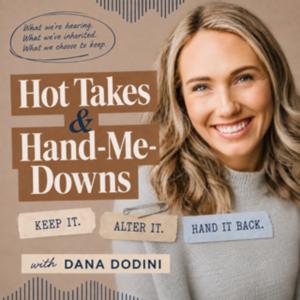


What happens when we get so good at outsourcing the answers that we stop trusting our own intuition? Host, Dana, kicks off with a monologue about "Chatty" — her AI friend who has consulted on everything from kitchen tile selections to weeknight dinners to questionable tummy aches. It's efficient, it's helpful, and it's quietly raising a question every parent should sit with: if AI can answer almost anything, what do our kids still need from us?
Then Dana sits down with Jess Guidoux— leadership development expert, mom, and creator of Prompting Parenthood — to unpack what AI can't replace. They dig into the World Economic Forum's "skills of the future" list (spoiler: 70% are human skills), the "manage vs. make" framework for auditing how you spend your time, and why the best thing you can do for your kids might be to stop solving every problem for them. Plus: family AI rules, the case for boredom, and a question for listeners — if AI gave you back an hour a day, what would you do with it?
Want AI Hacks for parents? Follow Jess at:
Prompting Parenthood
Can you be a stay-at-home mom and a feminist? Can you embrace traditional roles while still believing in equality for women?
In this episode of Hot Takes and Hand-Me-Downs, Dana is joined by Lauren Faber to unpack the stereotypes, assumptions, and inherited beliefs surrounding the word feminist.
Drawing from their personal experiences with careers, marriage, and motherhood, they explore what feminism really means, why women's choices so often become a source of judgment, and whether equality has to mean sameness. They also discuss the unseen biases women face, the importance of equal partnerships, and how men and women can work together to create meaningful change.
At its heart, this conversation isn't about choosing a label. It's about challenging expectations, embracing individual choices, and supporting women whose paths look different from our own.
Which beliefs about womanhood are worth keeping, altering, or handing back?
Most of us carry a quiet fantasy into marriage: the person who loves us most should just know. Know when we're overwhelmed. Know how we want to be loved. Know — without us ever saying a word. In this episode, Dana and her husband Luke put their own marriage under a microscope to challenge that fantasy head-on. They tackle the hand-me-down that's quietly wrecking marriages: "You shouldn't have to ask." They dig into why expecting your spouse to read your mind breeds resentment, what the difference is between a need and a behavior, and how vulnerability — even when it's uncomfortable — is the foundation for actually being known, and why expressing what you want isn't a sign your spouse isn't paying attention — it's the most intimate thing you can do. Plus: what "Buttly" means, and why it might just save your marriage.
Is being "low maintenance" actually a strength — or a belief that's costing you more than you realize? In this episode of Hot Takes and Hand-Me-Downs, host Dana Dodini unpacks the cultural and personal messaging behind the desire to be easygoing, flexible, and never asking for much. She explores how this "hand-me-down" idea can look like a strength on the surface but quietly lead to people-pleasing, unmet needs, and losing touch with what you actually want.
Dana is then joined by her sister Cara (sister #8 of 10 kids) for a candid conversation about growing up in a culture that celebrated putting others first, the difference between being low maintenance and having low expectations, and why self-care isn't just about pedicures — it's about nurturing your soul. Together they discuss redefining labels like "selfless," "high maintenance," and "low maintenance," the courage it takes to voice your needs with the people you love most, and why the goal isn't to flip from low maintenance to high maintenance — but to simply be honest. Because every person requires maintenance, and that's perfectly normal.
Dana unpacks a hand-me-down belief many of us inherit without ever being told directly: that a meaningful life must be an extraordinary one. Growing up as the youngest girl in a family of ten, Dana absorbed her father's drive for big, impactful pursuits — a value she admired but one that quietly turned into pressure to prove her potential. When she realizes she's been treating her everyday life as a "waiting room" for something bigger, she asks: what if the desire for an extraordinary life is actually keeping her from noticing the remarkable one she's already living?
Dana is joined by her sister Rachel — one of the oldest siblings, raised by the same parents in a completely different season — who shares her own journey of untangling worth from achievement. Rachel introduces what she calls the "prover paradigm": the cultural machinery that trains us from childhood to constantly prove we're good enough. Together they explore how that paradigm fueled Rachel's husband's addiction and shame cycles, how rebuilding from rubble became the most transformative experience of her life, and why the deepest impact often happens with an audience of one. This episode redefines what it means to live a life worth remarking on — and invites us to keep, alter, or hand back the idea that ordinary and meaningful are opposites.
Dana introduces the podcast by explaining the idea behind it: examining the beliefs, expectations, and “shoulds” we inherit or absorb from culture, family, faith, and social media, then deciding what to keep, alter, or hand back. This episode is a personal origin story and a clear setup for the show’s mission.In this solo episode, Dana shares why connection and writing are the foundation of the podcast, and how both help her sort through the ideas shaping her life as a wife, mother of three daughters, and woman in the middle of a busy season.
Timestamps:
00:00 - Welcome to the show and the “keep it, alter it, or hand it back” premise
00:29 - Dana introduces herself as a wife, mom of three, and someone in the thick of family life
00:54 - Why connection and conversation matter to her
01:21 - Writing as a tool for processing beliefs and thoughts
01:49 - Why the podcast needed both writing and discussion
02:14 - How beliefs get handed down through family, culture, church, and social media
02:38 - Defining “hot takes” and “hand-me-downs”
03:06 - Why the show is not about pretending everything is figured out
03:35 - The question behind the podcast: what have I accepted without questioning?
04:04 - How many beliefs are absorbed instead of chosen
04:33 - The “should” mindset and where it shows up in daily life
05:30 - Realizing rules and beliefs were accumulated without conscious choice
05:59 - Breaking down hand-me-downs as inherited advice and expectations
06:29 - Breaking down hot takes as current messages we absorb uncritically
06:59 - The cost of living by unexamined beliefs
07:28 - Why examining beliefs creates more intentional living
07:58 - The goal of deciding what to keep, alter, or give back
08:27 - Closing the episode and setting up the series
From the publisher's feed