
Sign up to save your podcasts
Or

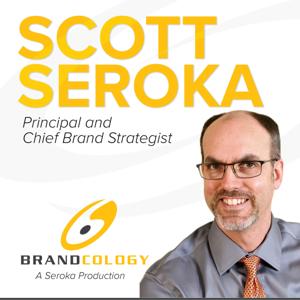

Hello everyone, my name is Scott Seroka, Chief Brand Strategist and Principal of Seroka, a brand development and strategic communications agency specializing in the mortgage and fintech industries. I want to welcome you to my very first, of what will be a robust series of podcasts, and I also want to thank you for your interest in listening, as I know you have many options available to you.
I’ll call this episode number one, and today’s topic will be focused on the five steps to creating a winning tagline.
This topic is actually quite controversial, namely because there are quite a few different definitions of what a tagline is, authored by many great brand leaders from very well-known brands. In fact, if you were to google the phrase, “definition of tagline,” you would have quite a few different results, and quite a few different versions. What I’ve found in my research is that, for the most part, many of those definitions share common denominators that most people would agree with.
So, let’s start here. Have you ever seen a tagline and wondered what in the heck it meant? Let me give you a few examples:
· Adidas adopted the tagline, Impossible is nothing, which no one really understood.
· FedEx actually had a tagline that read, Why fool around with anyone else?
· FileMaker Pro, promoted the tagline, What’s your problem?
· And, Blockbuster video had the tagline, No more late fees. The start of more.
Now, each one of these taglines lived a very short life, anywhere from just a few days to a week because as soon as they were released into the wild, they were quickly met with ridicule and criticism.
In my estimation, this is typically what happens when the desire to be cute and clever gets in the way of what a tagline is really meant to do: provide a memorable and succinct statement that sums up the essence of a brand.
My point in sharing these examples with is this: If consumers need to stop and think about what your tagline means, it failed to do its job. Game over.
Going to market with such profound or philosophical taglines simply creates brand confusion and hence, alienates the very people the brand wishes to attract.
So, let’s talk about you and your company. I’m assuming you’re not a CEO who needs, or would benefit from having a compelling tagline that tells people exactly why they should be doing business with you, versus with your competition.
I’m going to set the stage by breaking this down into two unique parts. The first part is defining what you do, and what I mean by that is defining your business model as well as your product and service offerings. The second part is focused on defining the essence of your brand.
I want to cite two of my favorite tagline examples to support my points. The first one is Avis. Avis is a very well-known rental car company. What Avis does is rent vehicles. However, the essence of the Avis brand is going above and beyond, which was intelligently communicated through their tagline, We try harder.
This happens to be one of my favorite examples because it is a very compelling tagline, and it tells customers that Avis will try harder than other rental car companies to make its customers happy. It is a brilliant example of how they separate themselves from other rental car companies.
Another example is Apple. What Apple does is design and manufacture cool computers and electric devices. However, the essence Apple’s brand is challenging the status quo. They communicated this in their early tagline Think different. The bonus to this tagline was that it was also a call to action for consumers. Apple has stayed true to this brand since the beginning, and they have successfully&
 View all episodes
 By Scott Seroka
Hello everyone, my name is Scott Seroka, Chief Brand Strategist and Principal of Seroka, a brand development and strategic communications agency specializing in the mortgage and fintech industries. I want to welcome you to my very first, of what will be a robust series of podcasts, and I also want to thank you for your interest in listening, as I know you have many options available to you.
I’ll call this episode number one, and today’s topic will be focused on the five steps to creating a winning tagline.
This topic is actually quite controversial, namely because there are quite a few different definitions of what a tagline is, authored by many great brand leaders from very well-known brands. In fact, if you were to google the phrase, “definition of tagline,” you would have quite a few different results, and quite a few different versions. What I’ve found in my research is that, for the most part, many of those definitions share common denominators that most people would agree with.
So, let’s start here. Have you ever seen a tagline and wondered what in the heck it meant? Let me give you a few examples:
· Adidas adopted the tagline, Impossible is nothing, which no one really understood.
· FedEx actually had a tagline that read, Why fool around with anyone else?
· FileMaker Pro, promoted the tagline, What’s your problem?
· And, Blockbuster video had the tagline, No more late fees. The start of more.
Now, each one of these taglines lived a very short life, anywhere from just a few days to a week because as soon as they were released into the wild, they were quickly met with ridicule and criticism.
In my estimation, this is typically what happens when the desire to be cute and clever gets in the way of what a tagline is really meant to do: provide a memorable and succinct statement that sums up the essence of a brand.
My point in sharing these examples with is this: If consumers need to stop and think about what your tagline means, it failed to do its job. Game over.
Going to market with such profound or philosophical taglines simply creates brand confusion and hence, alienates the very people the brand wishes to attract.
So, let’s talk about you and your company. I’m assuming you’re not a CEO who needs, or would benefit from having a compelling tagline that tells people exactly why they should be doing business with you, versus with your competition.
I’m going to set the stage by breaking this down into two unique parts. The first part is defining what you do, and what I mean by that is defining your business model as well as your product and service offerings. The second part is focused on defining the essence of your brand.
I want to cite two of my favorite tagline examples to support my points. The first one is Avis. Avis is a very well-known rental car company. What Avis does is rent vehicles. However, the essence of the Avis brand is going above and beyond, which was intelligently communicated through their tagline, We try harder.
This happens to be one of my favorite examples because it is a very compelling tagline, and it tells customers that Avis will try harder than other rental car companies to make its customers happy. It is a brilliant example of how they separate themselves from other rental car companies.
Another example is Apple. What Apple does is design and manufacture cool computers and electric devices. However, the essence Apple’s brand is challenging the status quo. They communicated this in their early tagline Think different. The bonus to this tagline was that it was also a call to action for consumers. Apple has stayed true to this brand since the beginning, and they have successfully&