
Sign up to save your podcasts
Or

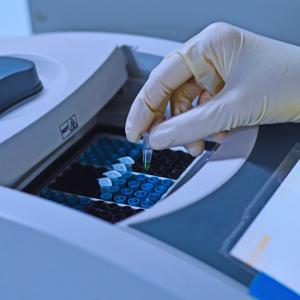

A 96-well plates is a plastic plate designed for polymerase chain reaction (PCR) in thermal cyclers. Each well holds a small reaction volume, allowing multiple samples to run at once. These plates improve efficiency, reduce reagent use, and support automated processes. This article explains how to optimize your PCR workflow using 96-well PCR plates by focusing on setup, efficiency, accuracy, and reproducibility.
A 96-well PCR plate is a flat plate with 96 wells arranged in 8 rows and 12 columns. Each well can hold between 10–200 µL of PCR mix. These plates are made from thin-walled polypropylene to allow rapid heat transfer during thermal cycling.
Standard layout: 8 rows × 12 columns
Material: Polypropylene
Wall design: Thin walls for fast and even temperature changes
Format: Skirted, semi-skirted, or non-skirted (for thermal cycler compatibility)
These features make the plate suitable for efficient thermal cycling.
 View all episodes
 By Mark
A 96-well plates is a plastic plate designed for polymerase chain reaction (PCR) in thermal cyclers. Each well holds a small reaction volume, allowing multiple samples to run at once. These plates improve efficiency, reduce reagent use, and support automated processes. This article explains how to optimize your PCR workflow using 96-well PCR plates by focusing on setup, efficiency, accuracy, and reproducibility.
A 96-well PCR plate is a flat plate with 96 wells arranged in 8 rows and 12 columns. Each well can hold between 10–200 µL of PCR mix. These plates are made from thin-walled polypropylene to allow rapid heat transfer during thermal cycling.
Standard layout: 8 rows × 12 columns
Material: Polypropylene
Wall design: Thin walls for fast and even temperature changes
Format: Skirted, semi-skirted, or non-skirted (for thermal cycler compatibility)
These features make the plate suitable for efficient thermal cycling.