
Sign up to save your podcasts
Or

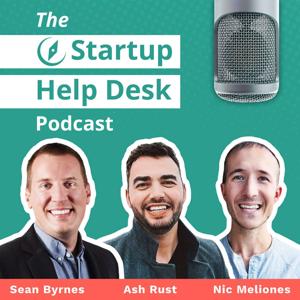

We discuss questions on the minds of many companies these days: How do we sell the company? Whether you want to sell or need to sell, few people have experience doing it and even fewer have ever done it well. We address common questions about the selling process based on years of experience selling and buying companies including:
You can submit questions for us to answer on our website https://www.thestartuphelpdesk.com/ or on Twitter @thestartuphd - we'd love to hear from you!
Episode Notes
Reminder: this is not legal advice or investment advice.
Q1: When do you need to start planning a sale?
As the saying goes - companies are bought not sold. Thus, step 1 is to make sure your company has potential value for an acquirer.
We discussed two theories:
Theory 1: don’t think about and acquisition unless someone approaches you inbound OR it is your last resort. In either case, remember the probability of success is very low.
If someone approaches you:
If you have to sell: it usually takes at least 6 months and 1-2 people’s full time focus for a small chance of success at best.
Theory 2: the acquisition process starts MUCH earlier than you think. You need to increase your surface area for luck. Build great relationships with:
Acquisitions take time. Much like finding the right co-founder requires a lot of effort and relationship-building, acquisitions require rarely come together very quickly.
Q2: How do you sell a company?
There are three common phases that go into an acquisition:
To connect with potential acquirers, target 150-200 leaders, aiming for 50 first meetings.
Try to get any offer at all:
Anticipate a lengthy legal process. This means:
Q3: How do you close a sale?
The faster you move towards close, the more likely it will close.
Your potential acquirer wants to solve a key problem and become the better version of itself. If you keep reaching key milestones – and sharing these results with your potential acquirer – you can demonstrate how you help the acquirer become the future, better version of itself faster.
 View all episodes
 By Sean Byrnes, Ash Rust & Nic Meliones
We discuss questions on the minds of many companies these days: How do we sell the company? Whether you want to sell or need to sell, few people have experience doing it and even fewer have ever done it well. We address common questions about the selling process based on years of experience selling and buying companies including:
You can submit questions for us to answer on our website https://www.thestartuphelpdesk.com/ or on Twitter @thestartuphd - we'd love to hear from you!
Episode Notes
Reminder: this is not legal advice or investment advice.
Q1: When do you need to start planning a sale?
As the saying goes - companies are bought not sold. Thus, step 1 is to make sure your company has potential value for an acquirer.
We discussed two theories:
Theory 1: don’t think about and acquisition unless someone approaches you inbound OR it is your last resort. In either case, remember the probability of success is very low.
If someone approaches you:
If you have to sell: it usually takes at least 6 months and 1-2 people’s full time focus for a small chance of success at best.
Theory 2: the acquisition process starts MUCH earlier than you think. You need to increase your surface area for luck. Build great relationships with:
Acquisitions take time. Much like finding the right co-founder requires a lot of effort and relationship-building, acquisitions require rarely come together very quickly.
Q2: How do you sell a company?
There are three common phases that go into an acquisition:
To connect with potential acquirers, target 150-200 leaders, aiming for 50 first meetings.
Try to get any offer at all:
Anticipate a lengthy legal process. This means:
Q3: How do you close a sale?
The faster you move towards close, the more likely it will close.
Your potential acquirer wants to solve a key problem and become the better version of itself. If you keep reaching key milestones – and sharing these results with your potential acquirer – you can demonstrate how you help the acquirer become the future, better version of itself faster.