
Sign up to save your podcasts
Or


Send us Fan Mail
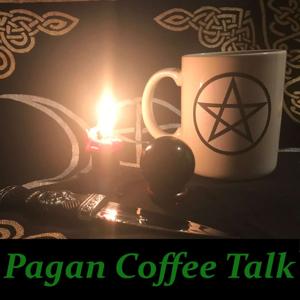
In this episode of Pagan Coffee Talk, Oswin and Lord Night explore the deeper meaning behind the power of words and how language shapes not only communication, but personal reality, spiritual practice, and self-identity. Drawing from both psychological insight and lived experience within paganism, witchcraft, and Wicca, they examine how the words people choose—especially the ones they repeat to themselves—can directly influence mindset, behavior, and spiritual growth.
The conversation begins with a practical look at internal dialogue, focusing on how limiting beliefs such as “I can’t” can block progress in meditation, energy work, and personal development. By contrasting negative self-talk with affirmations and intentional thinking, they break down how practitioners can either empower or sabotage their own spiritual path through repeated language patterns. This naturally ties into broader discussions of mindfulness, perception, and the role of belief in shaping outcomes within both magical practice and everyday life.
From there, the discussion expands into the structure and meaning of language itself, questioning whether words or the concepts behind them hold more power. Oswin and Lord Night explore how definitions evolve over time, how cultural shifts can alter meaning, and why clarity in communication is essential—especially in spiritual communities where complex ideas, rituals, and philosophical concepts are constantly being shared and reinterpreted. They highlight the importance of understanding what words truly represent, rather than relying on surface-level usage or constantly shifting definitions.
The episode then moves into a candid examination of modern identity language, particularly the contrast between saying “I identify as” versus “I am.” Through a pagan and witchcraft lens, they discuss how these phrases reflect fundamentally different mindsets—one rooted in uncertainty and fluidity, the other in certainty, ownership, and personal power. For practitioners, this distinction becomes especially important, as confidence and clarity of self are often seen as foundational to effective ritual work, intention-setting, and spiritual identity.
Blending philosophy, psychology, and real-world experience, this episode offers a grounded perspective on how language, belief, and identity intersect within paganism and modern spiritual practice. It challenges listeners to become more aware of the words they use, the meanings they assign, and the internal narratives they create—while reinforcing the idea that true power in the Craft begins with clarity of thought, strength of identity, and the simple, unwavering statement of “I am.”
Join us on
Discord: https://discord.gg/MdcMwqUjPZ
Facebook: (7) Life Temple and Seminary | Facebook
 View all episodes
 By Life Temple and Seminary


3.4
1515 ratings
Send us Fan Mail
In this episode of Pagan Coffee Talk, Oswin and Lord Night explore the deeper meaning behind the power of words and how language shapes not only communication, but personal reality, spiritual practice, and self-identity. Drawing from both psychological insight and lived experience within paganism, witchcraft, and Wicca, they examine how the words people choose—especially the ones they repeat to themselves—can directly influence mindset, behavior, and spiritual growth.
The conversation begins with a practical look at internal dialogue, focusing on how limiting beliefs such as “I can’t” can block progress in meditation, energy work, and personal development. By contrasting negative self-talk with affirmations and intentional thinking, they break down how practitioners can either empower or sabotage their own spiritual path through repeated language patterns. This naturally ties into broader discussions of mindfulness, perception, and the role of belief in shaping outcomes within both magical practice and everyday life.
From there, the discussion expands into the structure and meaning of language itself, questioning whether words or the concepts behind them hold more power. Oswin and Lord Night explore how definitions evolve over time, how cultural shifts can alter meaning, and why clarity in communication is essential—especially in spiritual communities where complex ideas, rituals, and philosophical concepts are constantly being shared and reinterpreted. They highlight the importance of understanding what words truly represent, rather than relying on surface-level usage or constantly shifting definitions.
The episode then moves into a candid examination of modern identity language, particularly the contrast between saying “I identify as” versus “I am.” Through a pagan and witchcraft lens, they discuss how these phrases reflect fundamentally different mindsets—one rooted in uncertainty and fluidity, the other in certainty, ownership, and personal power. For practitioners, this distinction becomes especially important, as confidence and clarity of self are often seen as foundational to effective ritual work, intention-setting, and spiritual identity.
Blending philosophy, psychology, and real-world experience, this episode offers a grounded perspective on how language, belief, and identity intersect within paganism and modern spiritual practice. It challenges listeners to become more aware of the words they use, the meanings they assign, and the internal narratives they create—while reinforcing the idea that true power in the Craft begins with clarity of thought, strength of identity, and the simple, unwavering statement of “I am.”
Join us on
Discord: https://discord.gg/MdcMwqUjPZ
Facebook: (7) Life Temple and Seminary | Facebook
2,555 Listeners
211 Listeners
341 Listeners