
Sign up to save your podcasts
Or

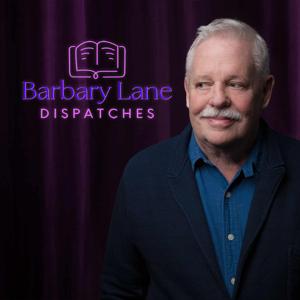

Here’s a transcript of the video:
I moved to San Francisco in 1971. I got a job with the Associated Press. They first offered me Buffalo, and I had several people tell me that Buffalo was one place you don’t want to shuffle off to. So I turned them down. I was very disappointed, but I didn’t think I could handle Buffalo.
A few days later they came back and said, “We’ve just had an opening in San Francisco. Would you like to go there?” So I leapt at that one, of course.
I drove across the country in my little Opel GT — a ridiculous car, very tiny. You practically had to lie down to drive it. Along the way I stopped in Clinton, Iowa, to visit my friend Tom Nielsen, who had been in what we called “the commune” in Vietnam. While we were having dinner with his parents, a call came in from the White House saying they wanted Tom to come there for an event, a meeting with the president. And by the way, did they know where Armistead Maupin was? So they got two birds with one stone. It was very exciting that I was going to be invited to the White House.
I guess I was just full of myself. I went to Washington to meet with Richard Nixon and bragged about it when I got back to San Francisco to anybody who would listen — which was not many people. They were mostly horrified. It would be like saying today that you’d met with President Trump. It was just that bad.
I was a young conservative. I’d grown up that way. I didn’t realize how different it was in San Francisco, how people didn’t feel that way there, for the most part. I had never been around a liberal community, and I didn’t realize how much I was about to change because of living there, because of knowing the people who lived there.
I found a place off Lafayette Park in a little Victorian. A pretty little place. I had a parrot at the time — I’d forgotten about that parrot — a real pain in the ass. He could say about two things: “How are you?” And I think that was about it. He drove me crazy, constantly taking my temperature.
I discovered that Lafayette Park was a place where gay men hung out at night, and I had a few adventures there because it felt so random and anonymous. Eventually I found a more permanent place to live over on Russian Hill. I had the top-floor flat — I called it the “pentshack”, because it was a little house on the roof. Very small, but it had this breathtaking view.
There in the pentshack I came to the realization that I had landed in a beautiful place, a magical place, where the people were really nice and I felt quite free all of a sudden. I hung a picture of me shaking hands with Nixon on the wall, and it was amazing how many people came in and looked horrified. What was I doing with that? How did I have this nefarious connection?
I had people who helped me adjust to the new city in a very nice, understanding way. Peggy Knickerbocker was one — still my friend after all these years. She showed me places, we did things together, and she was so funny and sweet. Another was Jan Fox, this flaming redhead who, in a way, inspired Mona Ramsey. I was picking little pieces out of the air as I was there, trying to find my story.
I remember making a vow to myself that I would not go into a gay bar. That didn’t last very long. I discovered the town was full of queers, and I wanted to meet some of them. At first the bars were on Polk Street. I didn’t get over to the Castro for a number of years.
In Charleston I had had sex a couple of times — well, maybe more than a couple — with people I picked up on the Battery. But I’d never really marched into a gay bar and had a good time. It was always about how do you meet people and how do you keep it quiet. San Francisco was a revelation. There were bars everywhere on Polk Street, and it was easy to meet people. I quickly began to realize it wasn’t something I needed to keep quiet.
When I stammered and was hesitant about the secret I had to tell Jan Fox, I said, “I’m gay.” And she said, “Big f*****g deal. Half of our friends are gay.” That was the biggest eye-opener of all. I needed to relax into myself. And that’s what I began to do.
Talk about born again — I was born again in the sense that I was really feeling like a human being for the first time. Truth would set me free. Pretty soon I was confessing to everybody. Cab drivers would hear my story because I wanted to be honest, wanted to be truthful.
Very early on I made up my mind that I wanted to have a lover, some permanent person in my life. I didn’t let go of that for the longest time, and it took the form of making some bad choices. They tended to be kind of stuffy and conservative — not the kind of person I’d want to be with anymore. It didn’t matter in the long run that I was unsuccessful at falling in love. I could find sex, and that was a brand-new substitute for everything.
It was as if I had landed in a world where everything was possible. Sometimes there were rude awakenings, but most of the time it was a grand adventure because everybody was out looking — for somebody for the night or for life. We were all looking at the same time. It was exhilarating to be part of.
There were a lot of people like me, agreeing that they could change the world by telling the truth about themselves. There was great power in that — and power in the numbers we had. It was less a scary proposition than coming out in the Midwest, for instance. It was gay heaven, and it inspired most of us to do something about it.
There was a freshness then to a gay pride march. It wasn’t about commercial enterprises showing up. It was fresh and new and inspirational. We felt we were inventing our freedom. I don’t want to exaggerate it, but it was pretty great. I think it’s inspired marches ever since.
I think back on the people I knew — Gilbert Baker was one. I used to buy pot at his house. He invented the gay pride flag, which we see everywhere now. And of course there was Harvey Milk, who really put a brave face on being a queer. He wore suits and ties and knew he had to be an example from the very beginning. Harvey and I used to do events together — anything that required a queer to be present, we’d both be there. We had him for such a short time. Such a short time.
Among my lesbian friends were Del Martin and Phyllis Lyon, pioneers of the movement. But it has to be said that for a long time gays and lesbians weren’t in the same boat together. We simply weren’t. I knew that wasn’t a good thing. I was building a story in the Chronicle in which lesbians figured prominently. It took AIDS, really, for the communities to come together.
Many lesbians were heroic about stepping into the breach and supporting dying brothers. It was amazing to see, and I think it inspired many of us to get rid of any reservations we had. I didn’t have any at all. I think I understood what lesbians were and I wanted to celebrate them in my work. But it took that crisis to bring us all together and to get over ourselves.
We tend to break into little camps and see a narrow version of the world as opposed to the inclusive one we claim to believe in. I think lesbians stepping forward in support of dying gay men touched many people and helped them see what was important.
That was a special time. We had a lot to learn about ourselves, but you could feel the movement growing. Even though it was taken away from us with AIDS, it wasn’t really. Many people felt they were being punished because of the good times we had. That breaks my heart to think that anybody ever took that route.
I’m grateful to have had that time and that place and that experience because it helped shape me. I learned what I could be and what I had to do to keep on being that. Those few euphoric years before AIDS showed me how beautiful life could be. And I still believe it, in spite of everything that fucked us in the end. I still believe in our goodness, in the rightness of what we’re fighting for.
And I know that the work we did then has paved the way for everything today. These gay-straight alliances in high schools, for heaven’s sakes. The way the culture has changed, in terms of understanding who we are. It all started with people wanting to tell the truth back then, and who kept on telling it in spite of the fact that a terrible epidemic came along. The exhilaration we felt has infected everything in modern life. We are better because of those early days of ultimate freedom.
I’m so grateful I moved to San Francisco when I did, that I hit that moment in history to be a gay man. If it hadn’t happened, I would be quite a different man today. I probably would have found my way out one way or another — maybe not in North Carolina. San Francisco taught me who I could become, and I’ve lived in that joy and freedom all these years.
I was a lucky b*****d to have found San Francisco when I did. It changed who I became completely. It affected my work. It affected so many things in my life. I was very, very blessed to have come along when I did.
So thank you for coming along on this visit. I appreciate it very much. I’ll see you soon.
 View all episodes
 By Armistead Maupin
Here’s a transcript of the video:
I moved to San Francisco in 1971. I got a job with the Associated Press. They first offered me Buffalo, and I had several people tell me that Buffalo was one place you don’t want to shuffle off to. So I turned them down. I was very disappointed, but I didn’t think I could handle Buffalo.
A few days later they came back and said, “We’ve just had an opening in San Francisco. Would you like to go there?” So I leapt at that one, of course.
I drove across the country in my little Opel GT — a ridiculous car, very tiny. You practically had to lie down to drive it. Along the way I stopped in Clinton, Iowa, to visit my friend Tom Nielsen, who had been in what we called “the commune” in Vietnam. While we were having dinner with his parents, a call came in from the White House saying they wanted Tom to come there for an event, a meeting with the president. And by the way, did they know where Armistead Maupin was? So they got two birds with one stone. It was very exciting that I was going to be invited to the White House.
I guess I was just full of myself. I went to Washington to meet with Richard Nixon and bragged about it when I got back to San Francisco to anybody who would listen — which was not many people. They were mostly horrified. It would be like saying today that you’d met with President Trump. It was just that bad.
I was a young conservative. I’d grown up that way. I didn’t realize how different it was in San Francisco, how people didn’t feel that way there, for the most part. I had never been around a liberal community, and I didn’t realize how much I was about to change because of living there, because of knowing the people who lived there.
I found a place off Lafayette Park in a little Victorian. A pretty little place. I had a parrot at the time — I’d forgotten about that parrot — a real pain in the ass. He could say about two things: “How are you?” And I think that was about it. He drove me crazy, constantly taking my temperature.
I discovered that Lafayette Park was a place where gay men hung out at night, and I had a few adventures there because it felt so random and anonymous. Eventually I found a more permanent place to live over on Russian Hill. I had the top-floor flat — I called it the “pentshack”, because it was a little house on the roof. Very small, but it had this breathtaking view.
There in the pentshack I came to the realization that I had landed in a beautiful place, a magical place, where the people were really nice and I felt quite free all of a sudden. I hung a picture of me shaking hands with Nixon on the wall, and it was amazing how many people came in and looked horrified. What was I doing with that? How did I have this nefarious connection?
I had people who helped me adjust to the new city in a very nice, understanding way. Peggy Knickerbocker was one — still my friend after all these years. She showed me places, we did things together, and she was so funny and sweet. Another was Jan Fox, this flaming redhead who, in a way, inspired Mona Ramsey. I was picking little pieces out of the air as I was there, trying to find my story.
I remember making a vow to myself that I would not go into a gay bar. That didn’t last very long. I discovered the town was full of queers, and I wanted to meet some of them. At first the bars were on Polk Street. I didn’t get over to the Castro for a number of years.
In Charleston I had had sex a couple of times — well, maybe more than a couple — with people I picked up on the Battery. But I’d never really marched into a gay bar and had a good time. It was always about how do you meet people and how do you keep it quiet. San Francisco was a revelation. There were bars everywhere on Polk Street, and it was easy to meet people. I quickly began to realize it wasn’t something I needed to keep quiet.
When I stammered and was hesitant about the secret I had to tell Jan Fox, I said, “I’m gay.” And she said, “Big f*****g deal. Half of our friends are gay.” That was the biggest eye-opener of all. I needed to relax into myself. And that’s what I began to do.
Talk about born again — I was born again in the sense that I was really feeling like a human being for the first time. Truth would set me free. Pretty soon I was confessing to everybody. Cab drivers would hear my story because I wanted to be honest, wanted to be truthful.
Very early on I made up my mind that I wanted to have a lover, some permanent person in my life. I didn’t let go of that for the longest time, and it took the form of making some bad choices. They tended to be kind of stuffy and conservative — not the kind of person I’d want to be with anymore. It didn’t matter in the long run that I was unsuccessful at falling in love. I could find sex, and that was a brand-new substitute for everything.
It was as if I had landed in a world where everything was possible. Sometimes there were rude awakenings, but most of the time it was a grand adventure because everybody was out looking — for somebody for the night or for life. We were all looking at the same time. It was exhilarating to be part of.
There were a lot of people like me, agreeing that they could change the world by telling the truth about themselves. There was great power in that — and power in the numbers we had. It was less a scary proposition than coming out in the Midwest, for instance. It was gay heaven, and it inspired most of us to do something about it.
There was a freshness then to a gay pride march. It wasn’t about commercial enterprises showing up. It was fresh and new and inspirational. We felt we were inventing our freedom. I don’t want to exaggerate it, but it was pretty great. I think it’s inspired marches ever since.
I think back on the people I knew — Gilbert Baker was one. I used to buy pot at his house. He invented the gay pride flag, which we see everywhere now. And of course there was Harvey Milk, who really put a brave face on being a queer. He wore suits and ties and knew he had to be an example from the very beginning. Harvey and I used to do events together — anything that required a queer to be present, we’d both be there. We had him for such a short time. Such a short time.
Among my lesbian friends were Del Martin and Phyllis Lyon, pioneers of the movement. But it has to be said that for a long time gays and lesbians weren’t in the same boat together. We simply weren’t. I knew that wasn’t a good thing. I was building a story in the Chronicle in which lesbians figured prominently. It took AIDS, really, for the communities to come together.
Many lesbians were heroic about stepping into the breach and supporting dying brothers. It was amazing to see, and I think it inspired many of us to get rid of any reservations we had. I didn’t have any at all. I think I understood what lesbians were and I wanted to celebrate them in my work. But it took that crisis to bring us all together and to get over ourselves.
We tend to break into little camps and see a narrow version of the world as opposed to the inclusive one we claim to believe in. I think lesbians stepping forward in support of dying gay men touched many people and helped them see what was important.
That was a special time. We had a lot to learn about ourselves, but you could feel the movement growing. Even though it was taken away from us with AIDS, it wasn’t really. Many people felt they were being punished because of the good times we had. That breaks my heart to think that anybody ever took that route.
I’m grateful to have had that time and that place and that experience because it helped shape me. I learned what I could be and what I had to do to keep on being that. Those few euphoric years before AIDS showed me how beautiful life could be. And I still believe it, in spite of everything that fucked us in the end. I still believe in our goodness, in the rightness of what we’re fighting for.
And I know that the work we did then has paved the way for everything today. These gay-straight alliances in high schools, for heaven’s sakes. The way the culture has changed, in terms of understanding who we are. It all started with people wanting to tell the truth back then, and who kept on telling it in spite of the fact that a terrible epidemic came along. The exhilaration we felt has infected everything in modern life. We are better because of those early days of ultimate freedom.
I’m so grateful I moved to San Francisco when I did, that I hit that moment in history to be a gay man. If it hadn’t happened, I would be quite a different man today. I probably would have found my way out one way or another — maybe not in North Carolina. San Francisco taught me who I could become, and I’ve lived in that joy and freedom all these years.
I was a lucky b*****d to have found San Francisco when I did. It changed who I became completely. It affected my work. It affected so many things in my life. I was very, very blessed to have come along when I did.
So thank you for coming along on this visit. I appreciate it very much. I’ll see you soon.