
Sign up to save your podcasts
Or

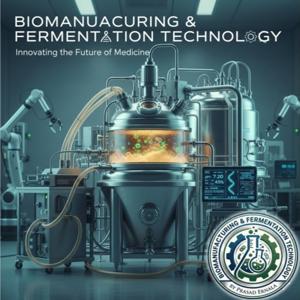

In this episode we discuss transition of microbial fermentation from controlled laboratory settings to the complex realities of industrial manufacturing. It characterizes productivity not as a simple biological trait, but as an emergent property shaped by mechanical constraints like oxygen transfer limits, non-ideal mixing, and equipment drift. I would like to emphasize that performance often declines at scale because large vessels create spatial gradients and environmental oscillations that small-scale reactors do not replicate. Successful scale translation requires prioritizing operational resilience and robustness over the pursuit of maximum theoretical yields. Ultimately, the sources argue for using scale-down modeling and conservative design to align biological potential with the inevitable engineering variability of a factory environment.
 View all episodes
 By prasad ernala
In this episode we discuss transition of microbial fermentation from controlled laboratory settings to the complex realities of industrial manufacturing. It characterizes productivity not as a simple biological trait, but as an emergent property shaped by mechanical constraints like oxygen transfer limits, non-ideal mixing, and equipment drift. I would like to emphasize that performance often declines at scale because large vessels create spatial gradients and environmental oscillations that small-scale reactors do not replicate. Successful scale translation requires prioritizing operational resilience and robustness over the pursuit of maximum theoretical yields. Ultimately, the sources argue for using scale-down modeling and conservative design to align biological potential with the inevitable engineering variability of a factory environment.