
Sign up to save your podcasts
Or

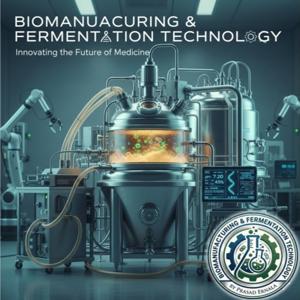

In this episode we explores sterile boundary management as a continuous, evolving challenge in industrial fermentation rather than a one-time achievement. My analysis highlights that boundary crossings, such as sampling and feeding, act as repeated stress tests that can lead to subclinical contamination, where foreign microbes subtly distort a culture’s metabolism without triggering traditional alarms. These sources argue that sterility is a dynamic system property influenced by mechanical wear, automation failures, and the cumulative risks inherent in long production campaigns. To combat these hidden threats, the text suggests monitoring diagnostic signatures like respiratory trends and substrate decoupling to detect leaks early. Ultimately, maintaining a sterile environment requires a transition from simple procedural compliance to a reliability engineering approach that accounts for equipment fatigue and operational frequency.
#Bioprocess#ScaleUp and #TechTransfer,
#Industrial#Microbiology,
#MetabolicEngineeringand #SystemsBiology,
#Bioprocessing,
#MicrobialFermentation,
#Bio-manufacturing,
#Industrial#Biotechnology,
#FermentationEngineering,
#ProcessDevelopment,
#Microbiology,#Biochemistry
#BiochemicalEngineering,
#Applied#MicrobialPhysiology,
#Microbial#ProcessEngineering,
#Upstream#BioprocessDevelopment,
#DownstreamProcessing and #Purification,
#CellCultureand #MicrobialSystems Engineering,
#Bioreaction#Enzymes
#Biocatalyst
#scientific
#Scientist
#Research
 View all episodes
 By prasad ernala
In this episode we explores sterile boundary management as a continuous, evolving challenge in industrial fermentation rather than a one-time achievement. My analysis highlights that boundary crossings, such as sampling and feeding, act as repeated stress tests that can lead to subclinical contamination, where foreign microbes subtly distort a culture’s metabolism without triggering traditional alarms. These sources argue that sterility is a dynamic system property influenced by mechanical wear, automation failures, and the cumulative risks inherent in long production campaigns. To combat these hidden threats, the text suggests monitoring diagnostic signatures like respiratory trends and substrate decoupling to detect leaks early. Ultimately, maintaining a sterile environment requires a transition from simple procedural compliance to a reliability engineering approach that accounts for equipment fatigue and operational frequency.
#Bioprocess#ScaleUp and #TechTransfer,
#Industrial#Microbiology,
#MetabolicEngineeringand #SystemsBiology,
#Bioprocessing,
#MicrobialFermentation,
#Bio-manufacturing,
#Industrial#Biotechnology,
#FermentationEngineering,
#ProcessDevelopment,
#Microbiology,#Biochemistry
#BiochemicalEngineering,
#Applied#MicrobialPhysiology,
#Microbial#ProcessEngineering,
#Upstream#BioprocessDevelopment,
#DownstreamProcessing and #Purification,
#CellCultureand #MicrobialSystems Engineering,
#Bioreaction#Enzymes
#Biocatalyst
#scientific
#Scientist
#Research